
Reviewed · SCUBA DIVING
Boracay: Introduction to Scuba Diving Experience
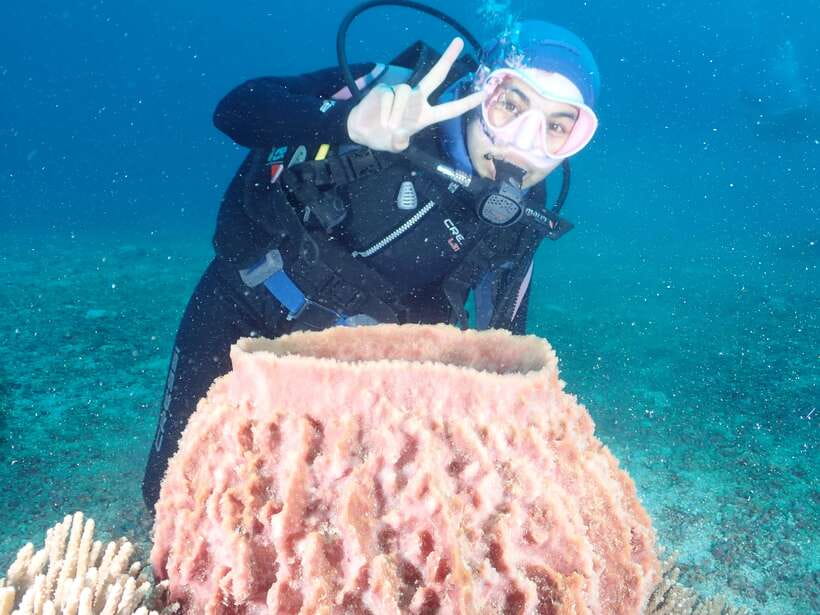
Boracay’s best first taste of scuba happens below the postcard beach. After a careful lesson and shallow-water practice, you take a short boat ride to a reef where your instructor guides you along the ocean floor. Colorful fish, coral, and the strange calm of breathing underwater make this more than a quick swim.
I especially like the small guide groups, usually one instructor for two to four people, and the fact that photos and videos are included. Guides such as Butch, Roy, Romeo, Joliou, and Bong have helped nervous beginners feel at ease. The main caution is that the actual open-water session lasts about 30 to 40 minutes, and the quality of the included photos can vary.
Key points to know before booking
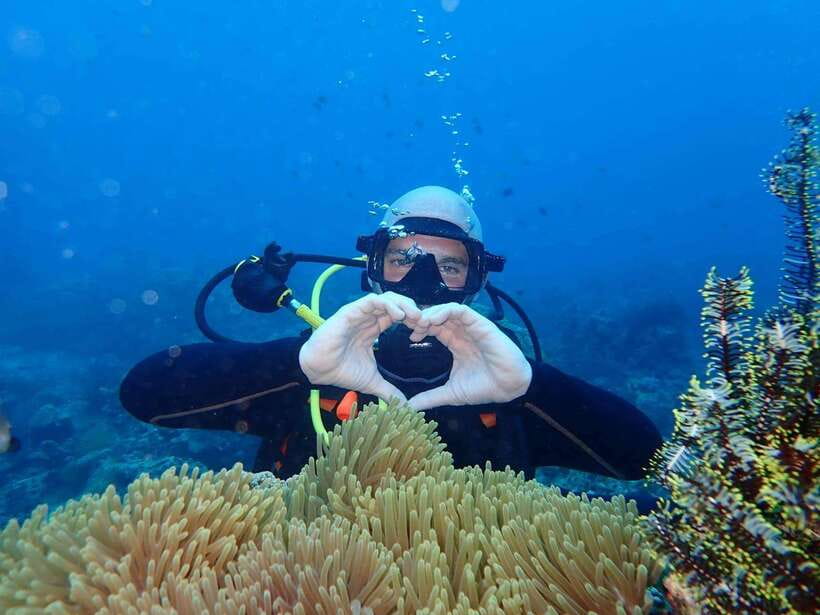
- You practice first in shallow water, including mask clearing and recovering your regulator.
- The reef session usually reaches about 6 meters, with an operator limit of up to 12 meters.
- Your guide remains beside you, with a stated ratio of one instructor for two to four participants.
- A boat ride adds access to an offshore site, rather than keeping the whole experience beside the beach.
- Photos, videos, and a digital certificate are included at no extra charge.
- Do not schedule this close to a flight, since flying is restricted for 12 to 24 hours after scuba activity.
A gentle first step below Boracay’s water
This three-hour experience is built for people with no scuba certification. You do not need to arrive knowing how to assemble equipment or communicate underwater. A certified PADI instructor or Divemaster teaches the basics, fits your gear, and stays nearby once you leave the beach.
That beginner focus matters. The first moments underwater can feel odd, especially when you breathe through a regulator instead of through your nose. Several parts of the session are designed to take the surprise out of it before you head offshore.
You meet at Astoria Station 1 Beach Front, in front of Tiger Sugar Cafe. Look for the Boracay Adventures guide holding GetYourGuide signage. You can choose a 9:00 AM or 1:00 PM start, though you should allow about three hours from meeting time to return.
One small point needs checking when you book: the supplied location information lists Catanduanes Province, while the meeting point, schedule, and entire experience refer to Boracay. Confirm the exact operating location before paying, especially if you are comparing activities across Philippine islands.
A few more Boracay trips to weigh up
- Boracay: Helmet Diving Experience with Photos and Videos
★ 4.7 · 155 reviews - WaterColors – Discover Scuba Diving in Boracay
★ 5.0 · 127 reviews - DiveGurus -Scuba Diving in Boracay
★ 5.0 · 25 reviews
The briefing turns unfamiliar gear into simple steps
Your instructor begins with theory and safety. The lesson covers breathing underwater, equalizing pressure, equipment use, hand signals, and what to do if water enters your mask or your regulator comes out.
This is not filler. Equalizing pressure is one of the skills that can make or break your first session. One participant found it difficult underwater but was able to continue with coaching. If your ears do not clear easily, tell the instructor at once and never force the descent.
You learn the main pieces of equipment before putting them on. The package includes a mask, snorkel, fins, wetsuit, regulator, tank, weights, and buoyancy control device, commonly called a BCD. The BCD is the vest that holds the tank and helps you control your position in the water.
Your instructor helps with the fit. That is particularly useful for first-timers, since a loose mask, awkward fins, or poorly adjusted BCD can distract you from the underwater scenery. The equipment made a good impression for one participant, though one account described a boat as slightly worn. I would treat the gear as functional rather than expect a polished luxury setup.
Shallow-water practice builds confidence before the boat
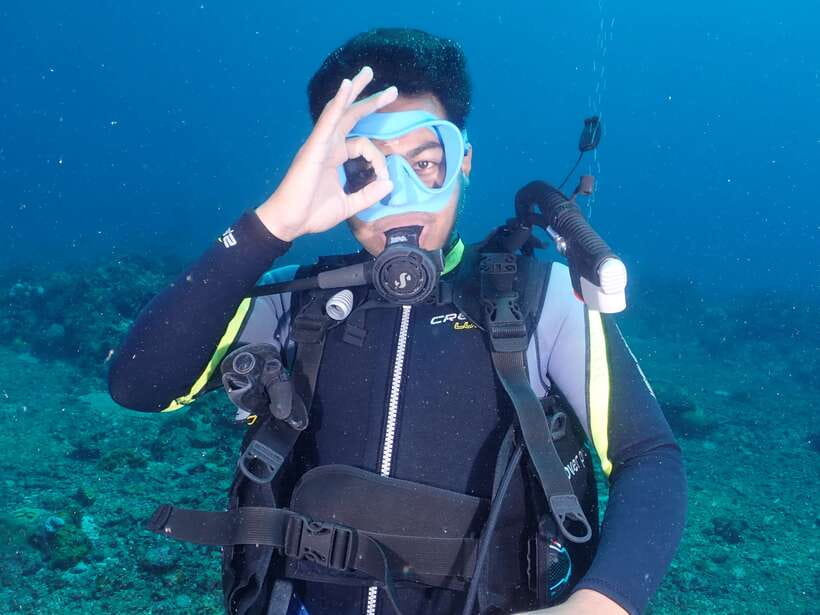
Before heading to the open sea, you practice in calm, confined water near the beach. The instructor has you breathe through the regulator, clear water from the mask, and recover the regulator if it leaves your mouth.
These are basic skills, but they give you a plan if something feels wrong later. You also learn the hand signals used to say you are okay, need attention, or need to stop. Instructors check on you before descending and during the underwater session.
The practice period is where nervous people should speak up. If you dislike the sensation of the mask or cannot relax with the regulator, this is the right moment to pause. You are not being graded, and a first attempt should be comfortable rather than rushed.
The group size helps here. The stated ratio is one guide for two to four participants. Some sessions become more personal if another participant does not attend. One person had an instructor and a second guide taking photos, while other groups of three were looked after carefully.
The short boat ride opens up the experience
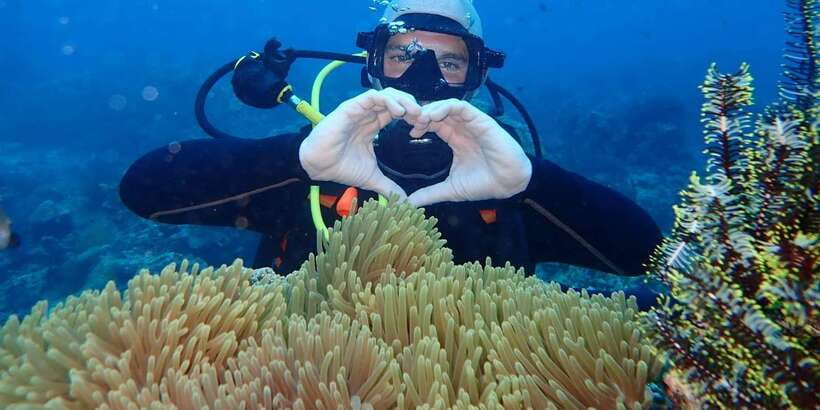
Once you are ready, you board a local boat for a brief trip to a beginner-friendly site. From the water, you get a different view of Boracay’s famous white coastline, and the ride provides a clear change of scene from beach instruction to offshore exploration.
The boat transfer is included in the $50 price, which improves the value. You are not paying separately for transport, tank hire, weights, or a wetsuit. Meals and hotel transfers are not included, so plan your own way to Station 1 and eat before or after the session.
Entry into the water deserves a little attention. Most people handled it without trouble, but one family found the boat entry too rushed and wanted to use the steps rather than make a backward entry. If you have a stiff back, limited mobility, or simply dislike jumping backward into the water, ask the crew about the entry method before you board.
That point is worth raising early, not at the side of the boat. The official restrictions exclude people with back problems, and the activity is not suitable for pregnant women, children under 10, people with altitude sickness, people with certain pre-existing medical conditions, or hearing-impaired people.
Same islands, a completely different day on the water:
- Boracay: Island and Beach-Hopping Boat Tour with Snorkeling
★ 4.3 · 587 reviews - Boracay: Sunset Cruise with Water Activities
★ 4.7 · 276 reviews - Boracay Sunset Cruise with Party DJ & Unlimited Food and Drinks
★ 5.0 · 211 reviews - 4 Hour Private Boracay Island Hopping Tour
★ 5.0 · 167 reviews
The open-water session reaches a beginner-friendly depth
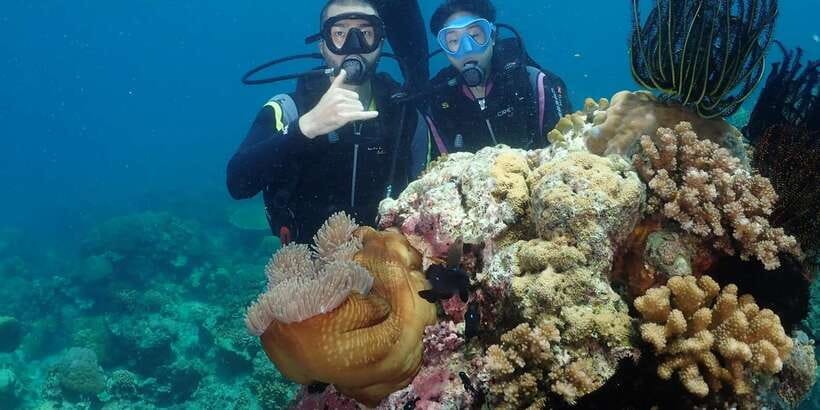
The underwater portion lasts about 30 to 40 minutes. The operator lists one open-water session with a maximum of up to 12 meters, or 40 feet, while noting that beginners typically remain at about 6 meters, or 20 feet.
Some participants reported going to around 9.5 feet or 10 meters, while another described reaching 12 meters. Your actual depth depends on your comfort, training, conditions, and instructor. Do not treat the maximum as a target. For a first experience, staying shallow and relaxed is the sensible choice.
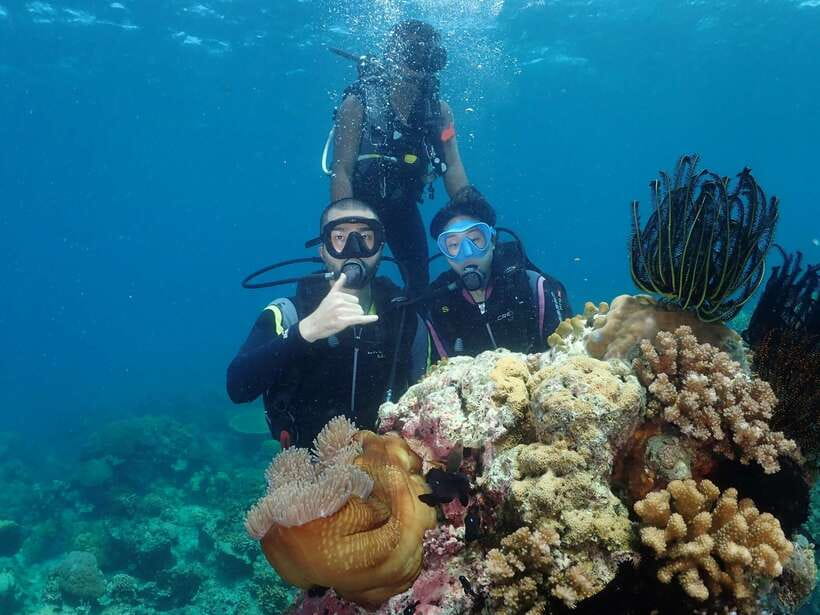
At depth, your guide leads you over coral gardens and points out marine life. You might see parrotfish, clownfish, and other reef fish, with a turtle possible. One beginner was thrilled to encounter a large turtle, but wildlife is never guaranteed, so book this for the experience of being underwater rather than for one particular animal.
The sensation is different from snorkeling. You are not looking down from the surface and holding your breath. You hover above the reef, breathing steadily, with your instructor close enough to help and communicate through hand signals. The quiet can be the most memorable part.
You should expect the guide to set the pace. The instruction is to follow closely, and guides regularly check that you are comfortable. That makes this a good match for a cautious beginner, but it also means you will not have the freedom of a certified scuba trip. You are there to learn and observe, not set your own route.
The guides are the strongest part of the package
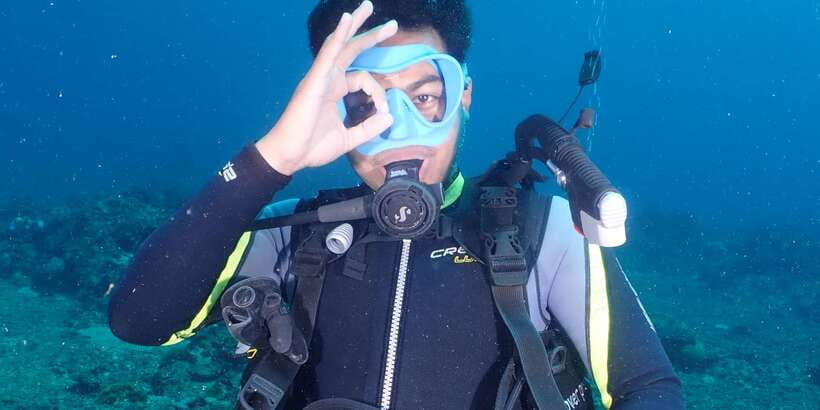
The instructors receive the most consistent praise, and the names that come up include Butch, Roy, Romeo, Joliou, Bong, Richie, Kai, Gary, Ben, Gel, and Luis. The important pattern is not any one name. It is the patient, close supervision that nervous beginners need.
Roy was praised for explaining mask and regulator procedures in shallow water before heading offshore. Butch helped ease nerves and kept the fundamentals clear. Joliou was especially patient with a first-timer, while Richie helped a less confident swimmer feel safe.
The staff speaks English, Chinese, and Korean. That language range is useful during a technical lesson, where a misunderstood instruction is more serious than a missed sightseeing detail. If you have a medical concern, ear problem, or fear of water, explain it clearly before the session begins.
The experience is not a certification course. You receive a participation certificate, but it does not qualify you to scuba independently. It is a useful introduction if you are considering a full PADI course later, and several participants left wanting to pursue certification at home.
Photos and videos add real value, with one caveat
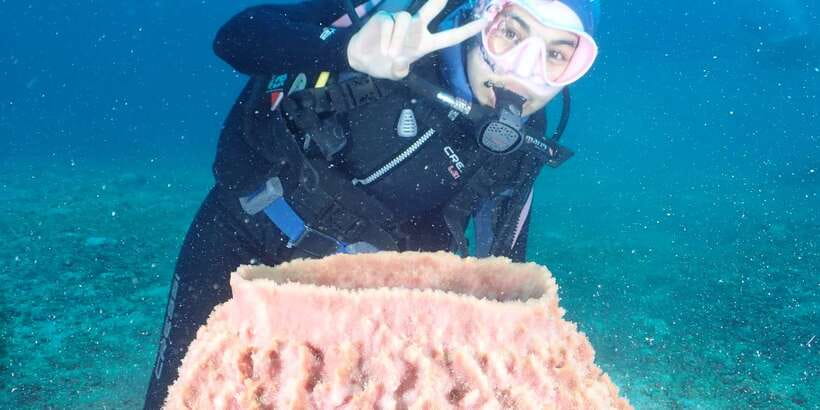
Underwater photos and videos are included, which is a strong feature at this price. You receive a record of your first session without needing to manage a camera while learning to breathe, equalize, and stay with your guide.
The media can also help you remember details you missed in the moment. A second guide may act as photographer, especially when the group is small. Several participants received appealing images and videos and considered them a highlight.
Still, do not expect every image to be perfect. Some people found the photos poor or wanted longer videos. Water, movement, lighting, and the photographer’s position all affect the result. Think of the media as a welcome bonus, not a professional underwater photo shoot.
The digital certificate is another small but pleasant touch. It marks your first scuba session, though you should understand that it is a completion memento, not a diving license.
Is $50 good value for three hours?
At $50 per person, the package is competitively priced for a guided first experience. You receive the briefing, instruction, equipment, shallow-water practice, boat transport, one open-water session, photos or videos, and a digital certificate.
The value is strongest if you want to try scuba without committing to a multi-day course. You can find simpler beach-based options on Boracay, but this package includes a boat ride to an offshore site. That can give you a more complete sense of what scuba is like, though the actual time underwater remains limited.
You are paying for supervision as much as scenery. A guide for two to four participants is reassuring when you are learning to control your breathing and buoyancy. A private arrangement may happen if the group is small, but you should not assume private instruction is guaranteed.
The package does not include meals, hotel pickup, or drop-off. Since the meeting point is at Station 1, you need to arrange your own transport and arrive ready for the start time. The morning and afternoon options make it easier to fit around other Boracay plans, but do not put this immediately before a flight.
Who should book this Boracay scuba experience?
I would recommend it to adults and older children who meet the health requirements, can follow instructions, and want a guided introduction rather than formal certification. It suits cautious first-timers particularly well, since the session begins on land and in shallow water.
It is also a good choice for couples or friends with mixed confidence levels. The instructor can stay close to the less confident person, while the small ratio keeps the group manageable.
You should think twice if you want a long underwater session, a luxury boat, or guaranteed professional-quality photographs. You may also prefer a different arrangement if entering the water backward from a boat would be difficult for you.
Children must be at least 10 years old according to the official information. One account describes a 10-year-old taking part successfully with a patient instructor, but age alone does not tell you if a child is ready. The child must be comfortable following safety instructions and breathing through the regulator.
Do not book if you have a listed medical restriction. You also cannot take part if you have a flight scheduled within 12 to 24 hours after the session. This rule is important because pressure changes after scuba can create a serious health risk.
Should you book it?
For $50, this is a sensible, well-supported introduction to Boracay’s underwater world. The patient instructors, small groups, equipment, boat ride, and included media make it a strong first try.
Book it if you want to test scuba before pursuing certification, especially if you feel nervous and value close guidance. Skip it if your priority is a long session, polished boat service, or guaranteed perfect photos. Confirm the meeting location, discuss water entry and medical concerns in advance, and leave enough time before flying. For the right beginner, this can turn a curious idea into a new favorite way to see the Philippines.
FAQ
Where does the Boracay scuba experience meet?
Meet at Astoria Station 1 Beach Front, in front of Tiger Sugar Cafe. Look for a Boracay Adventures guide holding GetYourGuide signage.
How long does the activity last?
The full experience takes approximately three hours, including the briefing, gear fitting, shallow-water practice, boat transfer, and open-water session.
What start times are available?
You can choose a 9:00 AM or 1:00 PM start time, subject to availability.
How deep will I go?
Beginners typically go to about 6 meters, or 20 feet. The listed maximum is up to 12 meters, or 40 feet, depending on conditions, comfort, training, and the instructor.
Is previous scuba certification required?
No. This experience is designed for beginners with no prior scuba certification.
Are equipment and underwater photos included?
Yes. The package includes the scuba equipment, boat transfers, and complimentary photos or videos of the session. The quality and length of the media can vary.
Can I fly soon after the activity?
No. You should not scuba if you have a flight scheduled within 12 to 24 hours after your last session.
Just added around Boracay
- 2 Days SSI Advanced Open Water Course in Boracay★ 5.0 · 3 reviews
- DiveGurus – Open Water Diver Course SSI/PADI★ 5.0 · 13 reviews
- Discover Scuba Diving in Boracay with U/W Photo and Video★ 5.0 · 14 reviews
- Scuba Diving in Boracay: SSI Basic Diver for Beginners★ 5.0 · 20 reviews
- WaterColors – PADI Scuba Diver Certification in Boracay★ 5.0 · 12 reviews
- Boracay PADI Discover Scuba Diving★ 5.0 · 9 reviews
- Mainland ZipLine Experience in Boracay★ 5.0 · 8 reviews
- Iloilo City Tour (Garin Farm, Molo Mansion/Church, Vanishing Mansion)★ 3.0 · 3 reviews
Scuba Diving, compared.
Helmet Diving Experience with Photos and Videos
Read our review →
Discover Scuba Diving with Manta Rays in Sibaltan
Read our review →
Scuba Diving in Boracay: SSI Basic Diver for Beginners
Read our review →Browse the lists this tour appears in