
Reviewed · CANOES & KAYAKS
From Tagbilaran City/Panglao Island: Bohol Mangrove Kayaking
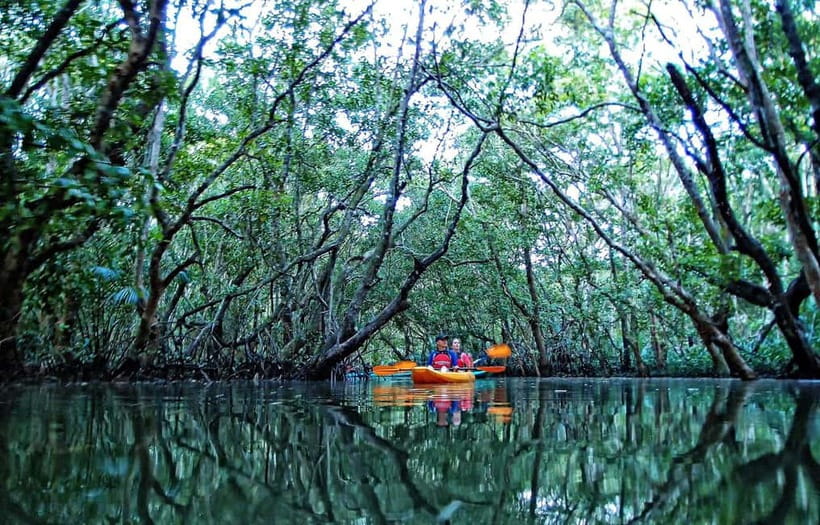
The best part of this Bohol outing is the Mangrove Tunnels Trail, where you steer your own kayak through narrow, winding waterways instead of sitting in a motorboat. I like the quiet pace and the chance to learn how 32 mangrove species protect river life, shorelines, and fish nurseries. I also like that the route supports a local conservation corridor rather than turning the river into a noisy sightseeing stop.
The main thing to consider is the transfer time. From Tagbilaran City, the river station is about 15 minutes away, but the trip can take about an hour from Panglao Island or Loboc. You also get a maximum of two hours on the water, so this is a focused half-day nature outing, not an all-day kayaking expedition.
Key points
- Narrow mangrove tunnels: Paddle through natural corridors that open into wider sections of the Abatan River.
- Local guides: Guides such as Vince and Jeremy explain the plants, birds, river life, and local community connection.
- Beginner-friendly setup: A basic lesson, safety briefing, kayak equipment, and guidance are included.
- Small-group feel: Limited slots help keep the experience quiet and reduce pressure on the ecosystem.
- Practical comforts: Round-trip transport, lockers, changing rooms, water refills, food, and local snacks are covered.
- Strong conservation focus: Your river fees help support the community and the protection of the mangrove corridor.
Why the Abatan River feels different from Bohol’s usual stops
Bohol is famous for beaches, viewpoints, chocolate-colored hills, and the tarsier sanctuary. The Abatan River offers a different look at the island. Here, the attraction is not a single photo stop. It is the slow movement through a living water system.
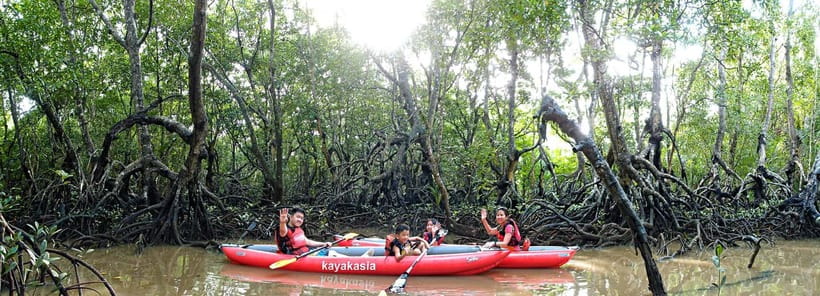
You paddle through flooded forest, where mangrove roots grip the mud and narrow channels lead into darker, quieter sections. Some passages are described as secret routes into the forest. Others open onto the main river, where your guide can talk about local culture and the people who depend on this waterway.
I like that you are doing the work yourself. You are not a passenger being carried past the scenery. You set the pace, make the turns, and hear the small sounds around you. The experience has no engine noise and no loud commentary from a motorboat. Your paddle, the water, and the occasional bird overhead become the soundtrack.
The route forms part of an active conservation area. The mangroves help reduce coastal erosion, shelter young fish, store carbon, and soften the effects of storms. One species found here, Camptostemon philippinense, is endangered. The tour gives the forest practical value to the local community, which is one of the better reasons to choose a nature activity in Bohol.
A few more Bohol trips to weigh up
- Bohol: SUSTAINABLE Mangrove Tunnels & Firefly Kayaking trail
★ 5.0 · 26 reviews - El Nido: Big Lagoon Kayaking & Island Adventure
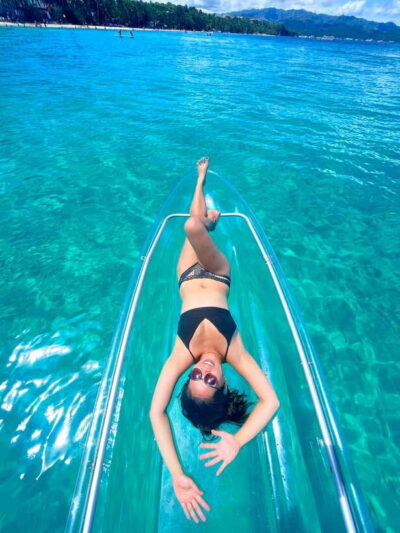
★ 4.4 · 132 reviews - Boracay: Crystal Kayak Photo-op Experience
★ 4.7 · 72 reviews
Getting from your hotel to the river
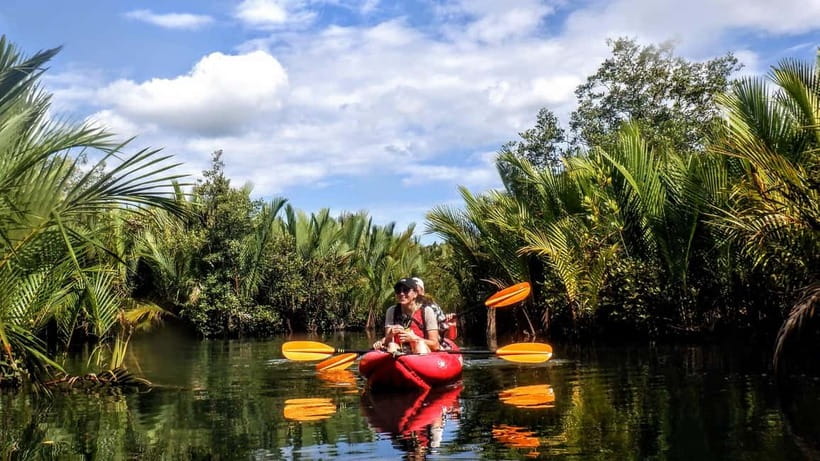
Pickup is included from resorts in Panglao Island and Tagbilaran City. The transfer is by van, with the driving time depending on where you stay.
If you are in Tagbilaran City, allow roughly 15 minutes to reach the river station. From Panglao Island or Loboc, allow about an hour. The general itinerary also describes a van ride of about 30 minutes, so your actual transfer may depend on the pickup point and route used that day. Check the starting time carefully and leave room in your schedule.
This transport adds real value to the $64 price. You do not need to arrange a separate car, find the river station, or work out local transport after kayaking. It also makes the outing easier for visitors staying in Panglao, where many activities are centered on the coast.
The drive itself is part of the change in mood. You leave the resort areas and head toward a quieter river setting. Once you arrive, the focus shifts from road travel to preparation: equipment, safety, and a quick introduction to paddling.
Your first paddle lesson and safety briefing
You do not need advanced kayaking skills. The operator provides a basic lesson and a full safety briefing before you enter the water. That matters because mangrove channels can be narrow, and steering is more useful here than speed.
You will receive the kayak gear and equipment needed for the outing. The guide explains how to handle the paddle, how to control the boat, and how to move safely through the river corridors. This is also the time to ask questions if you have never kayaked before.
The experience is suitable for beginners, but it is not suitable for non-swimmers, children under six, or people with mobility impairments. You should be comfortable getting into a kayak and paddling for up to two hours. The tour is gentle in spirit, but it still requires physical effort.
Bring swimwear or comfortable clothes that can get wet. Sunscreen, insect repellent, a camera, and drinking water are useful, although water refills are provided. You can also use the lockers, washroom, and changing rooms, which makes it easier to continue with the rest of your day afterward.
Inside the Mangrove Tunnels Trail
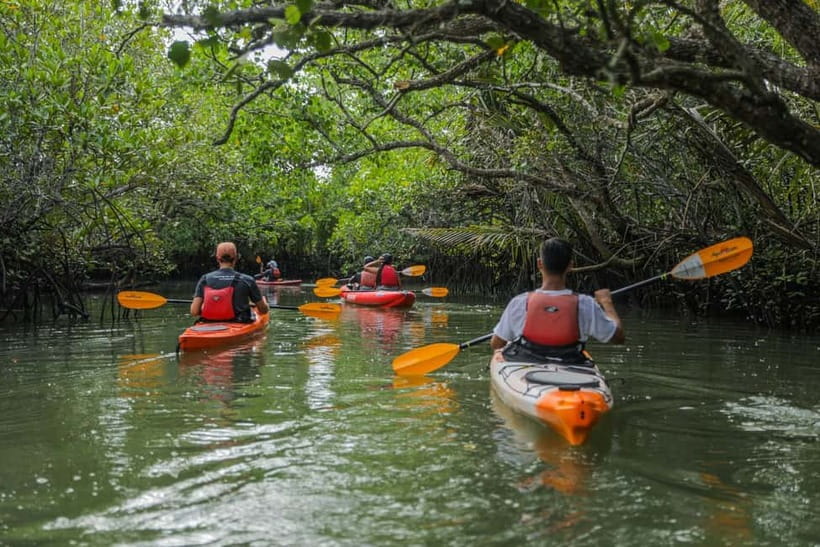
The main kayaking section lasts up to two hours. That is enough time to explore the mangrove corridors without turning the outing into an exhausting endurance test.
You move through sections of flooded forest, following channels that can feel enclosed before opening into the wider river. The scenery changes through the paddle. One moment you are steering between mangrove roots. The next, you are in a more open stretch with broader views and room to listen to the guide.
The waterway is the star here, so do not expect a checklist of major sights. Wildlife viewing is part of the experience, but animals are never guaranteed. Your guide may point out birds, plants, and crab holes in the mud. The supplied tour details mention herons and a variety of birdlife, but nature decides how much you see on a given morning or afternoon.
The guides make the quiet sections more useful. They explain why mangroves matter, how the forest supports fish nurseries, and how the trees help protect the river and coast. They also discuss the effects of typhoons and the way the mangroves are recovering and helping the area withstand storms.
Guides such as Vince and Jeremy have received especially strong praise for their explanations and relaxed pace. Vince is noted for taking many photos and allowing plenty of time, while Jeremy is described as having a strong background in the environment. Your assigned guide may be someone else, but the expected approach is local, personal, and educational rather than scripted.
Same islands, a completely different day on the water:
- Bohol: Premium Chocolate Hills, Tarsiers & River Experience
★ 4.7 · 804 reviews - Bohol: Boat Tour to Sandbar and Snorkeling with Turtles
★ 4.3 · 186 reviews - Bohol: Chocolate Hills and Countryside Tour
★ 4.6 · 175 reviews - Bohol: Dolphin Watching & Sea Turtle Swim Island Tour
★ 4.2 · 159 reviews
What makes the conservation work important
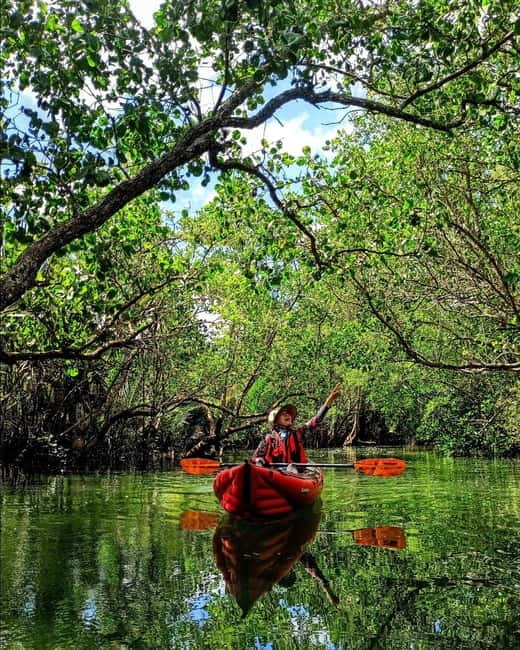
It is easy for an eco-tour to use the language of sustainability without changing much on the ground. This experience gives you a clearer connection between your visit and the place you are seeing.
The corridor contains 32 mangrove species, including the endangered Camptostemon philippinense. Mangroves are not simply attractive trees along the river. Their roots hold soil in place, reduce erosion, shelter fish, and store carbon. They also form useful barriers during storms.
The tour is run with limited slots and small groups. That keeps the water quieter and reduces the amount of traffic through the tunnels. It also gives you more direct time with the guide, which is important when the subject is the ecosystem rather than a famous monument.
River usage and community fees are included. That means part of the cost goes toward access and local participation instead of treating the river as a free backdrop. You are not asked to plant a tree or make a separate donation, but your booking helps give the protected area economic value.
I would still keep expectations realistic. No small-group tour can remove all impact, and the experience does not promise a specific animal sighting. Its value is in the low-key design, the local guides, and the decision to make conservation part of the activity rather than a side note.
Food, local snacks, and the return to land
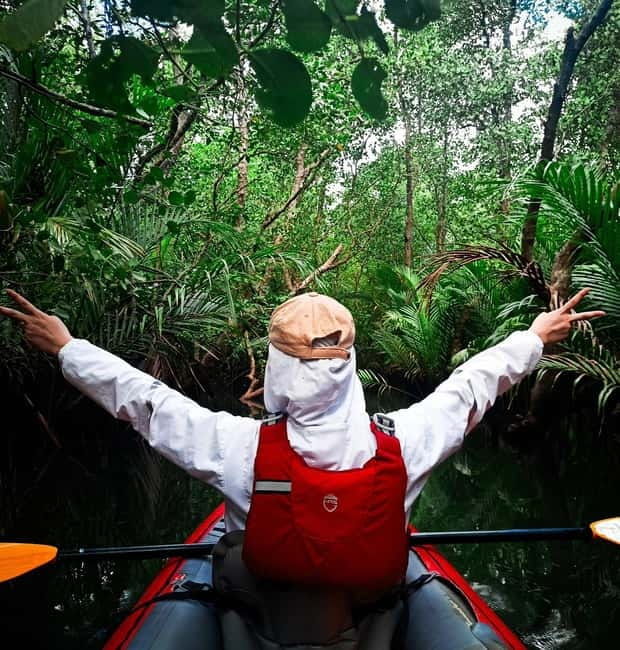
After the river portion, you receive local snacks, with food and drinks included during and after the kayaking. The timing gives you a chance to settle down, change clothes, and talk through the outing before returning to Bohol.
The meal has been singled out for its taste and generous portions. That matters after two hours of paddling. You are not finishing the tour with a quick bottle of water and a rushed departure. Food is built into the experience, along with water refills and access to changing facilities.
Do not read this as a restaurant tour. The meal supports the practical rhythm of the day. You paddle, eat, clean up, and ride back. If you have dietary restrictions, ask before booking because no specific dietary arrangements are provided in the tour details.
Is $64 a fair price?
At $64 per person, this is not the cheapest way to spend a morning in Bohol. It is also more than a basic kayak rental. The price includes round-trip transport from Panglao or Tagbilaran, equipment, instruction, a professional guide, river and community fees, food, drinks, lockers, changing rooms, and water refills.
That package is useful if you are staying in Panglao and would otherwise need to arrange a car to a more remote river area. It is also a fairer comparison with guided nature tours than with a simple hourly boat or kayak hire.
The value improves if you care about quiet surroundings and interpretation. You are paying for access to a particular water route, a guide who can explain the ecosystem, and a small-group format that limits pressure on the forest. If you only want to paddle for a short time or take a few photos, the price may feel high.
I would choose it for the quality of the setting and the complete half-day arrangement. I would skip it if your priority is a long, intense paddle or a packed sightseeing schedule. The maximum water time is two hours, and the rest of the five-hour experience includes transfers, preparation, food, and changing time.
Who will enjoy this outing most
This is a good choice for you if you want something quieter and more local than a beach club or a busy sightseeing stop. It suits beginners who are willing to paddle, nature lovers who want explanations rather than just scenery, and visitors who want to support a conservation-based activity.
It also works well for people with one free half-day. The transport and equipment make planning simple, while the two-hour water limit keeps the physical demand manageable for many first-time paddlers.
You should think twice if you cannot swim, have a mobility impairment, or are bringing a child under six. The activity also may not suit anyone hoping for guaranteed wildlife sightings, dramatic rapids, or a full-day expedition.
Bring clothes that can handle splashes, insect repellent, sunscreen, and a camera. Store valuables in the provided lockers rather than trying to balance them in the kayak. Since guides may take photos, you can enjoy the paddle without holding your camera the entire time, though you should confirm how photos are handled on the day.
Booking flexibility and language
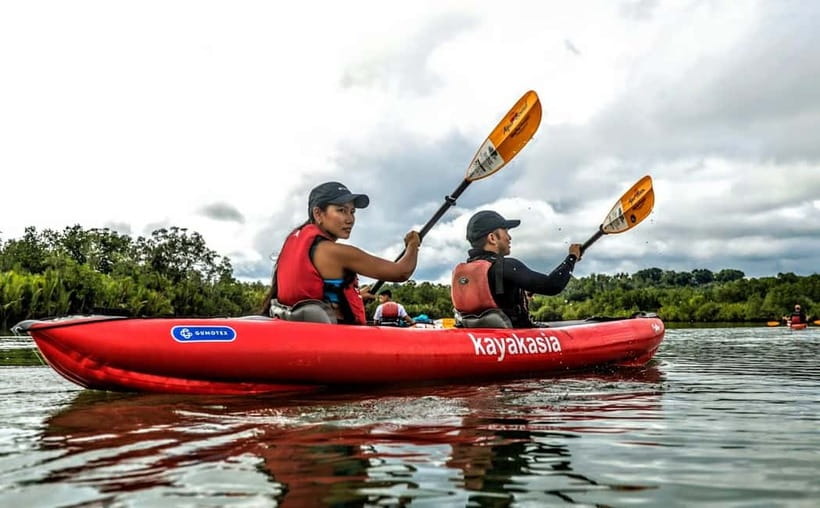
The experience lasts five hours, with starting times depending on availability. English and Tagalog guiding are available.
You can cancel up to 24 hours before the activity for a full refund. A reserve-now, pay-later option is also available, which helps if your Bohol plans are still shifting. These policies are useful, but the bigger practical question is your location. Panglao pickups require more road time, so do not place this tour immediately before a flight or another fixed appointment.
Should you book the Abatan River kayak tour?
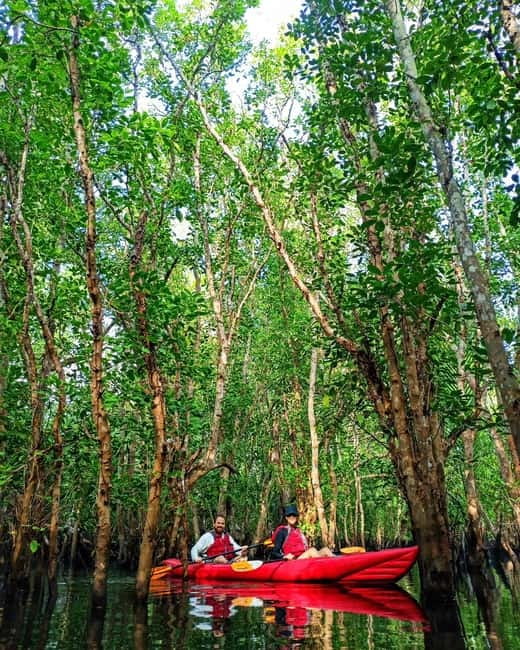
Book it if you want to see Bohol through its waterways rather than collect another roadside photo. The quiet mangrove tunnels, local instruction, conservation work, included meal, and easy transport make this one of the more thoughtful half-day choices on the island.
I especially like the way the tour balances access and restraint. You get a real paddle, not a ride-along, but the route is supported with a lesson and guide. You get wildlife viewing, but no promise of a staged animal encounter. You get food and facilities, but the river remains the main event.
Skip it if you want a long kayaking workout, guaranteed wildlife, or a low-cost rental with no added structure. For everyone else, especially first-time kayakers staying in Panglao or Tagbilaran, the $64 price is reasonable for a quiet, well-supported outing with a clear conservation purpose.
FAQ
How long does the Bohol mangrove kayaking experience last?
The full activity lasts five hours. The maximum time on the water is two hours, with the remaining time used for transportation, preparation, food, and changing.
Where does the tour pick up?
Round-trip transport is provided from resorts in Panglao Island or Tagbilaran City.
How long is the drive to the Abatan River?
The river station is about 15 minutes from Tagbilaran City. From Panglao Island or Loboc, the drive can take about one hour.
Is kayaking experience required?
No. Beginners are welcome, and a basic kayaking lesson and safety briefing are provided before the tour.
Is the tour suitable for non-swimmers?
No. Non-swimmers are listed among those who should not join the activity.
Are young children allowed?
Children under six years old cannot take part.
What languages are available for the guided tour?
Live guiding is available in English and Tagalog.
What is included in the price?
The price includes transport, kayak equipment, instruction, a professional guide, river and community fees, food and drinks, lockers, washroom and changing-room use, and water refills.
What should I bring?
Bring swimwear, comfortable clothes, sunscreen, insect repellent, water, and a camera.
Can I cancel or pay later?
You can cancel up to 24 hours in advance for a full refund. A reserve-now, pay-later option is also available.
Just added around Bohol
- Kawasan Falls and Mantayupan Falls in One Day from Cebu★ 5.0 · 5 reviews
- Kalanggaman Island Day Tour Package from Cebu City or Mactan★ 3.0 · 6 reviews
- 2025 Tarsier, Waterfalls & Chocolate Hills Tour★ 5.0 · 3 reviews
- Kawasan Canyoneering Adventure Package from Cebu★ 5.0 · 11 reviews
- Famous Bohol Chocolate Hills Loboc River Cruise Tarsier Tour★ 4.0 · 5 reviews
- Bohol Firefly Watching (Private)★ 4.5 · 7 reviews
- Exclusive Bohol,Philippines Chocolate Hills-Tarsier Tour★ 4.5 · 5 reviews
- BOHOL Tour 2026 – Chocolate Hills, Tarsier and River Cruise Lunch★ 5.0 · 5 reviews
Canoes & Kayaks, compared.
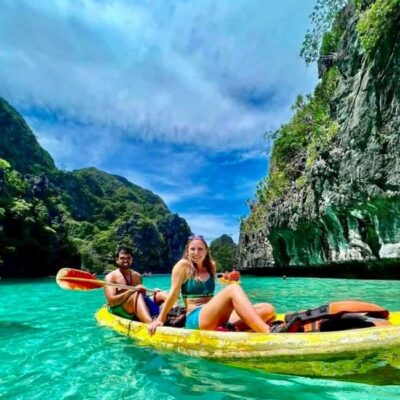

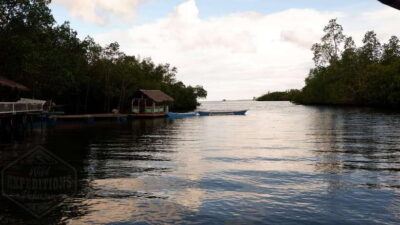
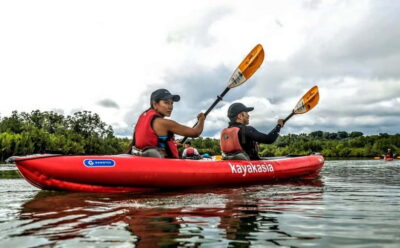
SUSTAINABLE Mangrove Tunnels & Firefly Kayaking trail
Read our review →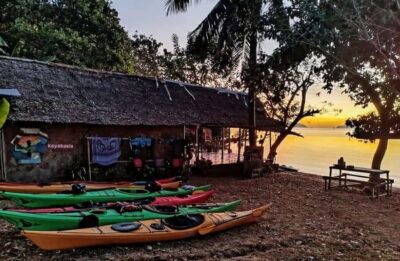
North Face Kayaking Tour with Lunch and Snorkeling
Read our review →
Shared Underground River with Mangrove Paddle Boat & LUNCH
Read our review →Browse the lists this tour appears in