
Reviewed · COOKING CLASSES
Manila Filipino Cooking Class: Meryenda Favorites
Filipino food tells a story of islands, family, and generous snacks. In this small Makati cooking class, Chyl guides you through a full meryenda spread: a filling noodle dish, crisp spring rolls, and sweet treats. You do not just watch. You cook.
I like the individual cooking stations, which give you real hands-on time, and the practical recipes made with basic ingredients. Chyl is patient and attentive, checking each dish as you work. The main drawback is the fixed 2 p.m. start, plus the fact that the class requires good weather.
Key points to know before booking
- Meryenda is the theme: You prepare a complete Filipino snack spread, not one isolated dish.
- Chyl leads the class: She is described as warm, patient, attentive, and easy to talk with.
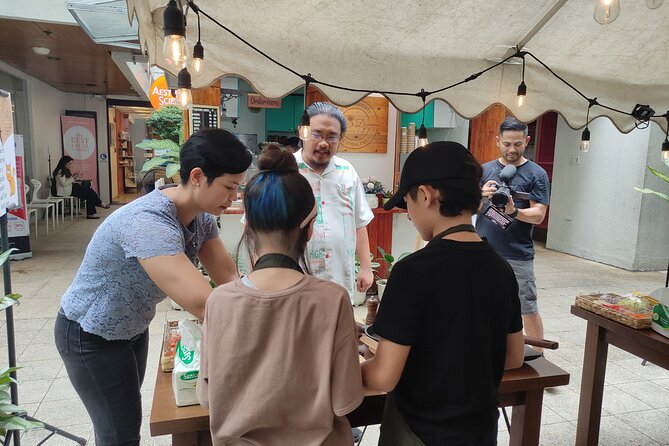
- You cook at your own station: This is an active class, not a demonstration where you simply watch.
- The menu covers three styles: Expect a noodle dish, savory crunchy spring rolls, and sweet treats.
- The group is capped at four people: That allows for close guidance and plenty of food preparation.
- Makati location is convenient: Meet at Somerset Olympia Makati at 2 p.m., with the class ending at the same place.
Why Filipino meryenda makes a smart cooking lesson
Meryenda means a snack or light meal, but Filipino meryenda can be far more filling than the word suggests. It is part of everyday food culture, a pause in the day built around something savory, sweet, fried, comforting, or easy to share.
That makes this class a good introduction to Filipino cooking. You are not being asked to master an elaborate banquet in two hours. Instead, you work with familiar snack formats that show how Filipino food balances texture and flavor: soft noodles, crisp spring rolls, and sweet finishing bites.
I like this approach because it gives you a clear way into the cuisine. A large regional menu can feel confusing, especially if you are new to Filipino food. Meryenda narrows the focus without making the meal feel small.
The class also connects food with Filipino identity. The introduction explains how cooking traditions developed across more than 7,000 islands, from mountain communities to coastal areas. You will not cover the entire country in one afternoon, but you will get a useful sense of why food matters so much in Filipino life.
A few more Luzon trips to weigh up
- Private Filipino cooking class in a local Manila Home
★ 5.0 · 28 reviews - Private Market Tour and Filipino Cooking Class in Manila with Isi
★ 4.5 · 15 reviews - Private Filipino Cooking Class in the Heart of Manila,Makati City
★ 5.0 · 5 reviews
Arriving at Somerset Olympia Makati at 2 p.m.
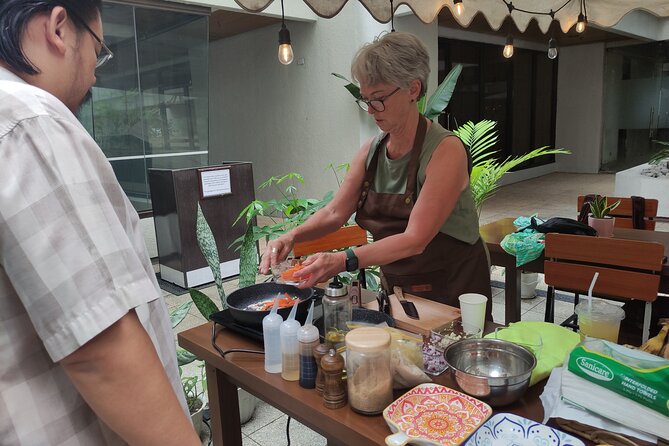
The meeting point is Somerset Olympia Makati, at 7912 Makati Avenue in Makati City. The activity begins at 2 p.m. and ends back at the same location, so you do not need to arrange a separate ride after the class.
That simple start and finish can help when planning a day in Manila. You can treat the cooking class as a contained afternoon activity rather than trying to coordinate several stops across the city.
The location is near public transportation, which is useful in Makati, where traffic can affect even short journeys. Still, give yourself enough time to arrive. The class has a fixed start, and a late arrival could cut into your cooking time.
This is not a market tour or a restaurant crawl. The value begins once you reach the kitchen. If you want to spend the afternoon moving from place to place, choose another activity. If you prefer one central location and a hands-on lesson, the setup works well.
The first lesson: Filipino food through meryenda
The class begins with an introduction to Philippine cooking and the place of meryenda in daily life. This background matters because it helps you understand the dishes as more than recipes.
Filipino cooking reflects many local traditions spread across a large island nation. The class presents that variety in a simple, usable way. You learn food that connects with home cooking and casual sharing, rather than a highly formal menu.
Chyl is an important part of the experience. Her teaching style is patient and personal, with attention given to each participant. One especially useful detail is that she checks on each dish as you work, helping you correct small problems before they become bigger ones.
That makes the class suitable if you have little cooking experience. It also helps if you have eaten Filipino food for years but never learned the basic methods. The format can bridge both groups: beginners get clear guidance, while more confident cooks can ask about technique and ingredients.
A family connection to Filipino food does not hurt, either. The class has welcomed people raised outside the Philippines who grew up eating Filipino food but had never learned to cook it. You can use the lesson to reconnect with familiar flavors or to meet the cuisine for the first time.
Cooking the noodle dish
The noodle dish is the filling part of the meryenda menu. It gives the class a practical center because noodles are easy to understand, adaptable, and suitable for home cooking.
The supplied details do not name the exact noodle recipe, so you should not book expecting one specific regional dish. What you can expect is a classic Filipino noodle preparation taught as part of the snack spread, with ingredients and cooking equipment provided.
This is where the class earns its keep. You are not only tasting a finished plate. You are learning a recipe that can be repeated at home, using basic ingredients rather than hard-to-find specialist products.
Pay attention to the order of preparation and the texture of the finished noodles. Those details often matter as much as the ingredient list. Chyl’s close supervision should help you understand how the dish comes together, rather than leaving you with a recipe that looks clear on paper but feels uncertain in your own kitchen.
The noodle dish also makes the meal satisfying. Paired with spring rolls and sweets, it turns the class into a substantial snack session. Several portions can be enough to take home or continue eating later, depending on what you finish during the class.
Same islands, a completely different day on the water:
- Manila Old and New: Sightseeing Tour Including Intramuros and Fort Santiago
★ 4.5 · 377 reviews - Manila’s Walled City: Intramuros Walking Tour
★ 5.0 · 82 reviews - Batad Guided Tour
★ 5.0 · 78 reviews - Manila Super Saver: Manila Sightseeing plus Tagaytay Tour with Taal Volcano
★ 4.0 · 75 reviews
Rolling and cooking the spring rolls
The second major part of the class is a savory, crunchy spring roll. This adds a different kind of cooking task, since you prepare a filled item and work toward a crisp final texture.
Spring rolls are especially useful for a lesson because the process is easy to see and repeat. You can learn how the filling is handled, how the wrapper is prepared, and what helps produce a crunchy result.
The class is described as producing a mountain of food, so you should expect more than a tiny sample. That is good news if you are hungry, but keep it in mind if you plan a large dinner afterward.
The spring rolls also give the menu a social quality. They are the kind of food that can be shared at home, served as a snack, or brought out when friends and family gather. Learning them in Manila gives you a recipe with a clear use after your trip.
If you are cooking with children, the activity has a family-friendly format. A Japanese-speaking family joined with a three-year-old and an infant, and staff helped when the children needed attention. That suggests some flexibility for parents, though the available information does not promise specific childcare or equipment, so you should still plan around your children.
Ending with Filipino sweets
The sweet treats finish the meryenda spread. This part keeps the lesson from becoming only a savory cooking exercise and shows the broader range of Filipino snack culture.
The exact sweets are not specified, so it is best to think of this as a sweet component rather than booking for a named dessert. The useful point is that you prepare several kinds of food in one class, ending with something sweet and memorable.
That variety is one of the strongest reasons to choose this activity. In about two hours, you work across several textures and cooking styles. You also leave with a better sense of how a Filipino snack table can move from filling food to crisp bites and dessert.
The sweet course may be especially appealing to families and food-focused visitors who want a relaxed class rather than a technical culinary workshop. You get a broad taste of the cuisine without spending a full day in a professional kitchen.
What the small group changes
The maximum group size is four people. That is a major advantage for a cooking class, since shared lessons can become frustrating when everyone is waiting for a turn.
With an individual cooking station, you can take part in the preparation instead of standing behind another person. You also have a better chance of asking Chyl about the ingredients, the cooking process, or how to recreate the dish at home.
A small group does not guarantee a private class, but it should make the lesson feel more personal than a large workshop. It also suits solo visitors, couples, families, and friends who want conversation along with the food.
The class has a friendly social side. Chyl talks with participants about food, the Philippines, and everyday life while keeping an eye on the cooking. That balance is valuable. You get cultural context without sitting through a long lecture.
The tradeoff is that a small class may have limited availability. The activity had more than five bookings in the previous month, and the group cap is low, so book ahead if your schedule in Manila is tight.
The food value at $60 per person
At $60 per person, this is not the cheapest way to eat a snack in Manila. You are paying for instruction, ingredients, equipment, a small group, and the chance to prepare several dishes yourself.
I would judge the price by what you want from the afternoon. If you only want a cheap meal, spend the money elsewhere. If you want recipes, guidance, and a food memory you can repeat at home, the cost is easier to justify.
The individual station matters here. A class where you only watch a chef prepare food would offer less practical value. This one gives you direct cooking time and a finished spread to eat afterward.
The included nonalcoholic drink is a small but useful touch. Gratuity is optional and not included, so factor that into your budget if Chyl’s teaching makes the afternoon worthwhile.
Group discounts are available, which may improve the value for families or friends booking together. Since the class accepts a maximum of four people, a small group can also create a more comfortable setting without paying for a private activity.
Who will enjoy this class most
I would recommend the class to you if you enjoy food as a way to understand a place. It is especially useful if you want to bring home recipes instead of only photographs.
It suits:
- First-time visitors to Filipino cuisine
- Home cooks looking for repeatable recipes
- People of Filipino heritage who want to learn cooking basics
- Families seeking a food activity in Makati
- Couples and small groups who prefer personal instruction
- Visitors who enjoy chatting with a local host while working
You do not need to be an expert cook. The teaching is designed to be simple and family friendly, and Chyl’s patient approach should help if you are unsure of a technique.
You might prefer a different activity if you want a large social group, a named menu with precise dishes listed in advance, or a full tour of Manila’s food markets and neighborhoods. This is a focused kitchen class, not a broad city food tour.
Practical details that affect your afternoon
The class lasts about two hours. That is long enough to cook several dishes, talk about Filipino food, and eat what you prepare, while still leaving time for another evening plan.
You should arrive at Somerset Olympia Makati before the 2 p.m. start. The activity ends at the meeting point, and public transportation is nearby. Confirmation is provided at booking.
All cooking equipment and food ingredients are included. You do not need to arrange those separately, which makes the class easy to add to a Manila itinerary.
The activity requires good weather. If poor weather causes cancellation, you are offered another date or a full refund. You can also cancel for a full refund if you do so at least 24 hours before the start time. Cancellations or changes made within 24 hours are not refunded or accepted.
Because the class may include outdoor cooking, weather could affect the day even though the meeting point is in Makati. Keep your schedule flexible if rain is likely.
How to get the most from Chyl’s instruction
Come ready to participate. The main benefit is not simply eating the noodle dish, spring rolls, and sweets. It is learning enough about the process to repeat them later.
Ask questions as you cook. Chyl’s teaching style is attentive, so use that time to ask about substitutions, preparation order, texture, and how to handle the recipes in your own kitchen.
Take mental notes about the ingredients that feel familiar. One of the class’s best features is its home-cooking focus. You are not being shown food that depends on restaurant equipment or an impossible shopping list.
Also, plan to eat lightly before arriving. The class prepares a large amount of food, and the meal includes several parts. You may still have leftovers the next day, especially if you are part of a small group.
Should you book the Makati meryenda class?
Book it if you want a friendly, hands-on introduction to Filipino food and value recipes you can use at home. The small group, individual cooking stations, and Chyl’s patient instruction make this more useful than a simple tasting.
The $60 price is fair for a two-hour lesson with ingredients, equipment, a drink, and several dishes, but it is not a bargain meal. Choose it for the cooking and cultural connection, not just for the food.
I would be most likely to recommend it to families, first-time Filipino food fans, and people with Filipino roots who want to learn the basics. If you need a precisely named menu or cannot commit to a 2 p.m. start, check those points before booking.
FAQ
Where does the Filipino cooking class begin?
The class begins at Somerset Olympia Makati, 7912 Makati Avenue, Makati City, 1200 Metro Manila, Philippines.
What time does the class start?
The scheduled start time is 2 p.m.
How long does the activity last?
The cooking class lasts approximately two hours.
What food will I prepare?
You will prepare a Filipino meryenda spread with a filling noodle dish, savory crunchy spring rolls, and sweet treats.
Are ingredients and cooking equipment included?
Yes. Cooking equipment and food ingredients are included, along with a nonalcoholic drink.
How many people can join the class?
The activity has a maximum of four participants. Group discounts are available.
Can I cancel for a refund?
Yes. You can receive a full refund by canceling at least 24 hours before the experience start time. Cancellations or changes made less than 24 hours before the start are not refunded or accepted.
Just added around Luzon
- Villa Escudero Tour with Lunch From Manila (SHARED)★ 5.0 · 5 reviews
- Private Filipino Cooking Class in the Heart of Manila,Makati City★ 5.0 · 5 reviews
- Villa Escudero Coconut Plantation Day Trip from Manila★ 3.5 · 9 reviews
- Angeles City / Clark Airport to La Union (Bauang, San Fernando, San Juan)★ 3.5 · 4 reviews
- The Jeepney & Tuk Tuk Adventure ride with Local Guide★ 4.5 · 4 reviews
- VILLA ESCUDERO DAY TOUR with Carabao Cart Ride and Bamboo from Manila★ 4.0 · 6 reviews
- Manila ATV Mountain Trail Adventure(with Transfers***)★ 4.5 · 19 reviews
- Sagada and Banaue Rice Terraces 4-Day Tour★ 5.0 · 4 reviews
Cooking Classes, compared.
Private Filipino cooking class in a local Manila Home
Read our review →
Private Market Tour and Filipino Cooking Class in Manila with Isi
Read our review →
Private Filipino Cooking Class in the Heart of Manila,Makati City
Read our review →
Browse the lists this tour appears in