
Reviewed · SCUBA DIVING
WaterColors – PADI Scuba Diver Certification in Boracay
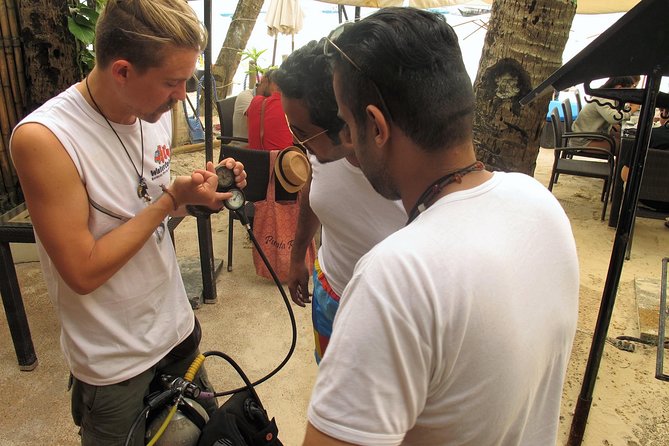
Boracay’s White Beach is the unusual classroom here. At WaterColors, you begin with PADI lessons on shore, move into shallow water, then practice skills where you cannot stand before heading by boat to suitable open-water sites. The course is built for beginners, not certified experts looking for a quick splash.
I like the equipment-inclusive price and the steady teaching approach. Coffee, tea, and water are supplied each day, while instructors such as Jimmy and Jenny Jara are known for patient, careful coaching. The main catch is time: this is a serious two-day course, and food, hotel transfers, and souvenir photos cost extra.
Key points to know before booking
- Two days of real certification work: Expect theory, quizzes, confined-water practice, two open-water sessions, paperwork, and logged skills.
- A beach-based training start: You practice first in shallow water, then move to an area too deep to stand in.
- Small-group pricing: The maximum is 15 people, with group discounts available.
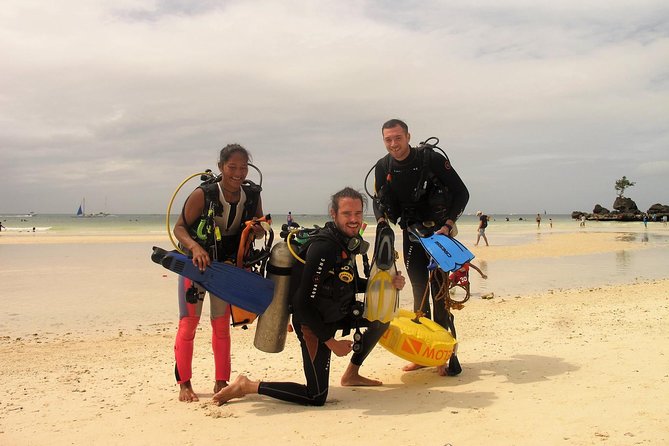
- Equipment and course materials included: You do not need to rent a tank, mask, fins, or other scuba gear separately.
- Patient instructors are a major part of the experience: Jimmy, Jenny Jara, and Jacob are named in the available course feedback, though instructor assignment can vary.
- Plan around flights and meals: Do not fly within 48 hours after scuba activity, and bring time for lunch because meals are not included.
What this Boracay certification actually gives you
This is not a casual introductory swim. You are working toward a PADI scuba qualification through a set program of lessons, skills, and open-water sessions. That matters because the course asks you to understand the equipment and procedures, not simply follow an instructor around underwater.
The day begins with registration and paperwork. You will complete a health questionnaire, and you need to bring the required PADI documents, printed and signed where needed. The school asks for your height and weight at booking, so provide accurate figures rather than leaving this until arrival.
The course includes a PADI instructor, study materials, certification processing, and scuba equipment. Coffee, tea, and water are also provided. You pay separately for lunch and other food, hotel transportation, and optional photos.
The published price is $485 per person. That is a substantial amount, but it covers two days of instruction, equipment use, learning material, and certification processing. If you were to arrange each part separately, the value would depend on local rental rates and course fees. The clearest saving comes when you book with others, since group discounts are available.
The maximum group size is 15. That is not a private lesson, but it is still a controlled class size for a certification course. If you want more individual help, ask about the group size and instructor arrangement before paying. The school’s staff has also handled one-on-one instruction, which can be useful if you are nervous or need extra time with a skill.
A few more Panay Island trips to weigh up
- DiveGurus -Scuba Diving in Boracay
★ 5.0 · 25 reviews - Scuba Diving in Boracay: SSI Basic Diver for Beginners
★ 5.0 · 20 reviews - Boracay Helmet Diving
★ 4.5 · 17 reviews
Day one: from paperwork to your first boat session
The schedule lists an 8 a.m. start at WaterColors Boracay Dive Resort, beside White Beach in Station 1, near Willy’s Rock and Balabag Plaza. The detailed plan puts registration at 10 a.m., with an option to begin at 8:30 a.m. and finish earlier the next day. Because those times do not match perfectly, confirm your exact arrival time with the operator.
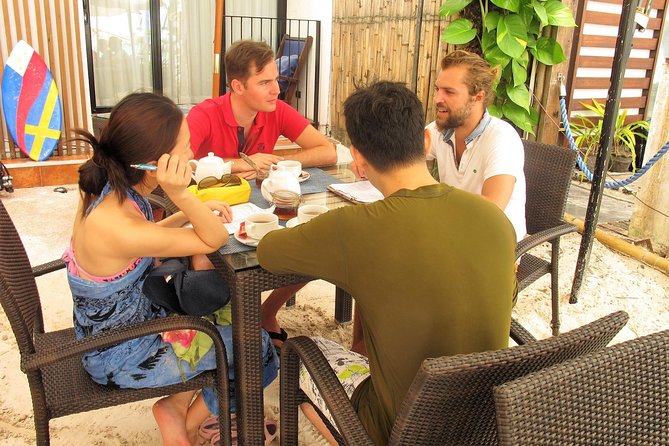
Registration is more than a quick name check. You will handle documentation and complete the medical screening before entering the water. Certain conditions, including asthma and heart problems, may require medical clearance or may prevent participation. Read the PADI Medical Statement before your holiday and ask your doctor if the form raises any concerns.
At 11 a.m., the theory work begins. Expect briefings, videos, reading, knowledge reviews, quizzes, logged sessions, and debriefings. By the end of the course, the plan calls for three videos, three knowledge reviews, and two quizzes.
This classroom part may be the least glamorous section of your Boracay stay, but it is where you learn the rules that keep the underwater work manageable. Pay attention to pressure, equipment checks, communication, and what to do when something feels wrong. If you rush the theory, the practical sessions become harder than they need to be.
Lunch is scheduled at noon. Since food is not included, you can buy your own meal, but keep it sensible and allow enough time to return promptly. Coffee, tea, and water are included, which is helpful during a long training day.
Confined-water practice on White Beach
At 1 p.m., you move to confined water with your instructor. The first practice takes place at the beach in shallow water. Once you are comfortable, the group progresses to water too deep for standing.
This gradual change is one of the most useful parts of the course. You can first focus on the feel of the mask, fins, buoyancy equipment, and breathing system without immediately dealing with a boat site. Then you learn to perform skills while relying on the equipment and your instructor rather than the sandy bottom beneath you.
The first day includes three confined-water training modules. These sessions are not a race. Your instructor needs to see that you can perform the required skills with control before moving on. If you need a repeat, ask for one. Patient teaching is a recurring strength associated with WaterColors, and that patience matters more than a fast timetable.
The beach location also keeps the first practical stage simple. You meet the equipment in a familiar setting, with the resort close by for briefings and rest. On the other hand, White Beach can be an active public area, and the setting may not feel as quiet as a private training pool. The course is about proper instruction, not solitude.
The first open-water session at a suitable depth
Around 3 p.m., you take your first boat session. The instructor chooses a site and depth appropriate for the course. You are not expected to arrive as an experienced scuba user, but you do need enough physical fitness to manage the equipment and follow instructions in the water.
The first open-water session is a test of how well the shore practice carries over. You will use the skills learned in confined water while managing a boat entry, underwater communication, and the unfamiliar feeling of being unable to stand. The exact site is not specified, so do not book this expecting a particular reef, animal, or underwater feature.
By the end of the course, the plan includes two open-water sessions. This is important for anyone comparing a true certification course with a short introductory activity. Two sessions give you more than one chance to apply the basics, but they also make the schedule demanding.
At about 4:30 p.m., you return to log the session and continue theory. Expect the first day to feel full. You begin with paperwork and classroom work, spend time on the beach, go by boat, then return to study. You will want a calm evening, not a late night out.
Same islands, a completely different day on the water:
- Boracay Sunset Cruise with Party DJ & Unlimited Food and Drinks
★ 5.0 · 211 reviews - 4 Hour Private Boracay Island Hopping Tour
★ 5.0 · 167 reviews - WaterColors – Open Water Diver Certification in Boracay
★ 5.0 · 35 reviews - Boracay ATV Adventure
★ 5.0 · 17 reviews
Day two: finish the required skills
The second day starts with confined-water practice at 8 a.m. This is your chance to repeat skills, correct small mistakes, and build confidence before the final open-water work. If the first day felt like a lot of new information, this morning helps turn instructions into routine.
At 9 a.m., the schedule places the second open-water session. You will use the training in a more complete setting and work toward the required logged performance. The instructor still has the final say on readiness. Certification is not simply automatic because you have paid for the course.
Theory returns at 11 a.m., followed by lunch at noon. The 1 p.m. block is reserved for unfinished skills, sessions, or theory, then the school handles certification paperwork. If everything is complete, you celebrate at the end of the day.
This flexible final block is useful. Not every beginner learns at the same speed, and a small problem with one skill should not force you into a frantic finish. Still, the course is only about two days, so do not schedule a major flight, ferry connection, or other fixed appointment immediately afterward.
The instructors and teaching style
The strongest personal detail connected with WaterColors is the repeated praise for patient instruction. Jimmy is named as an instructor who takes time to explain skills carefully and works at the student’s pace. Jenny Jara is also associated with clear explanations and careful checks during certification training.
Jacob receives a friendly mention as part of the support team, while Bo is associated with underwater photography at the school. These names give you useful points of contact, but instructor availability can change. Ask when booking if you have a strong preference.
I like that the teaching emphasis appears to be on comfort and understanding rather than simply getting through a checklist. That is especially valuable for an 11-year-old student, a first-time ocean participant, or anyone who feels uneasy about breathing underwater. The minimum age is 10, but the course still requires good physical fitness and a completed medical questionnaire.
The course may be conducted by a multilingual guide. Ask which languages are available for your dates if instruction in a particular language would help. Clear communication is a safety issue, not just a convenience.
What the $485 price covers, and what it does not
At $485, the course is best judged as an all-in certification package rather than a low-cost beach activity. You receive the PADI instructor, course materials, certification processing, and the use of scuba equipment. Those are the expensive and essential pieces.
You also receive coffee, tea, and water each day. That is a small benefit, but it helps during long classroom and water sessions.
You still need to budget for:
- Lunch and other food
- Hotel transfers
- Optional souvenir photos
The meeting point is WaterColors Boracay Dive Resort on White Beach in Station 1. The activity finishes back there. Since hotel transfers are not included, check your route to the resort before the first morning, especially if you are staying away from Station 1.
The group maximum is 15 people. Group booking can lower the cost, but ask how many people are scheduled for your date. A smaller class may be worth more to you than a slightly lower rate, particularly if you are anxious or want extra practice.
Health, flights, and practical planning
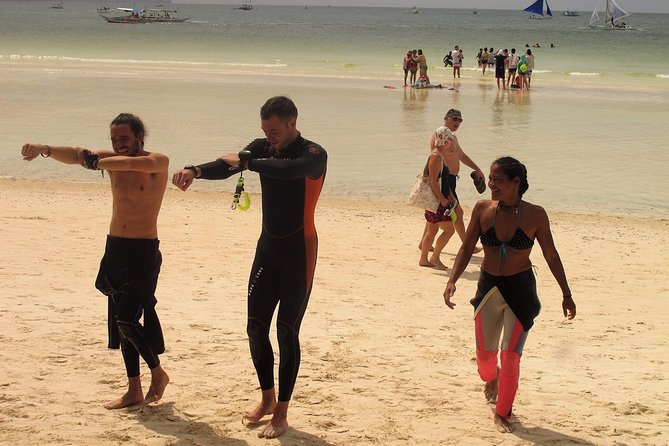
You should not fly within 48 hours after scuba activity. This is one of the most important planning points in the entire course. Put the certification before your final flight, not on the last two days of your holiday.
You must complete a health questionnaire before entering the water. Review the PADI medical statement in advance, and consult a doctor if you have a condition that may require special clearance. The supplied guidance specifically points to asthma and heart conditions as examples that could affect participation.
Tell the operator everyone’s height and weight at booking. These details help with equipment preparation. You should also bring the required PADI documents, printed and signed, using the forms provided by WaterColors.
The course is near public transportation and allows service animals. Those points do not remove the need for physical readiness. You should have a strong fitness level and be prepared for a full day that combines study, beach work, boat transport, and equipment use.
Weather can change the plan. The activity requires good conditions, so poor weather may lead to a new date or a full refund. You can cancel for a full refund if you do so at least 24 hours before the scheduled start. A late cancellation or late change is not accepted for a refund.
Who will get the most from this course
This course suits you if you want a recognized scuba qualification rather than a single trial session. It also works well if you prefer learning in a warm beach setting and like having an instructor guide each stage from theory through certification.
It may be a good family choice for a parent and child who meet the age and health requirements. The minimum age is 10, but young participants still need the strength, maturity, and attention required for a full training program.
You should think twice if your Boracay schedule is tight. Two days of lessons leave little room for delays, poor weather, or a slower learning pace. It is also a poor fit if you plan to fly home immediately afterward.
If you are mainly interested in a short, easy ocean activity, this course may feel too academic. You will spend time watching videos, completing reviews, taking quizzes, logging sessions, and repeating skills. That work is the point, but it is not a shortcut.
Should you book WaterColors Boracay?
Book this course if you want a full beginner certification with equipment, PADI materials, instructor support, and two open-water sessions in a famous Philippine beach setting. The most persuasive reason is the teaching approach: instructors such as Jimmy and Jenny Jara are associated with careful explanations and patience when students need more time.
Before booking, confirm the exact start time, expected class size, instructor language, and weather plan. Bring the medical paperwork, budget for meals and transport, and leave at least 48 hours between your last session and any flight.
I would choose it for a first certification, especially if you value patient coaching more than a rushed schedule. I would skip it only if you want a brief introduction, cannot spare two full days, or have a flight too close to the course.
FAQ
Where does the course begin?
It begins at WaterColors Boracay Dive Resort on Boracay Highway Central, White Beach, Station 1, near Willy’s Rock and Balabag Plaza in Malay, Aklan.
What time should I arrive?
The meeting information gives an 8 a.m. start. The detailed schedule lists registration at 10 a.m., with an option to begin at 8:30 a.m. and finish earlier the next day. Confirm your exact start time with WaterColors.
How long does the certification course take?
The course takes approximately two days.
What is included in the price?
The price includes a PADI scuba instructor, PADI course materials, certification processing, scuba equipment, and coffee, tea, or water.
Are meals included?
No. Food and drinks are not included unless specifically stated. Coffee, tea, and water are provided each day.
What is the minimum age?
The minimum age is 10 years.
Do I need to bring medical paperwork?
Yes. You must complete a health questionnaire and should print and bring the required PADI documents. Check the PADI Medical Statement in advance and consult a doctor if you may need special clearance.
Can I fly right after the course?
No. Scuba activity within 48 hours of flying is not recommended, so plan your departure accordingly.
What happens if bad weather cancels the course?
If poor weather causes cancellation, you will be offered a different date or a full refund. Free cancellation is also available when you cancel at least 24 hours before the scheduled start time.
Just added around Panay Island
- DiveGurus – Open Water Diver Course SSI/PADI★ 5.0 · 13 reviews
- Discover Scuba Diving in Boracay with U/W Photo and Video★ 5.0 · 14 reviews
- 2 Days SSI Advanced Open Water Course in Boracay★ 5.0 · 3 reviews
- Scuba Diving in Boracay: SSI Basic Diver for Beginners★ 5.0 · 20 reviews
- Boracay PADI Discover Scuba Diving★ 5.0 · 9 reviews
- Mainland ZipLine Experience in Boracay★ 5.0 · 8 reviews
- Iloilo City Tour (Garin Farm, Molo Mansion/Church, Vanishing Mansion)★ 3.0 · 3 reviews
- Boracay ATV Adventure★ 5.0 · 17 reviews
Scuba Diving, compared.
Helmet Diving Experience with Photos and Videos
Read our review →
Discover Scuba Diving with Manta Rays in Sibaltan
Read our review →
Browse the lists this tour appears in