
Reviewed · HISTORICAL TOURS
BEST OF CEBU: Cebu City Heritage with Uphill Tour | Joiners
Cebu’s past and present come together on this 4 to 5 hour city-and-hills tour. You move from old stone walls and Spanish-era churches to mountain viewpoints, flower displays, and grand modern monuments. It is a quick way to see how varied Cebu can be.
I like the mix of history and highland scenery, and I like having a driver handle Cebu’s traffic while you look around. Guides such as Rix and Tyler have made the day lively with clear stories, humor, and flexibility. The main drawback is time: traffic can eat into visits, and the Temple of Leah or Sirao Garden may feel too made-for-photos for some.
Key points at a glance
- A broad Cebu sampler: Cover historic downtown, Chinese religious architecture, mountain gardens, and a Roman-inspired hilltop monument in one outing.
- Small-group format: The vehicle holds a maximum of 10 people, giving the tour a more personal feel than a large coach trip.
- Strong guiding is part of the appeal: Rix, Tyler, and Olivier are named guides associated with friendly, informative, and entertaining tours.
- Traffic shapes the day: Cebu roads can slow the schedule, especially between the city center and uphill stops.
- Dress modestly for church visits: Proper dress is required to enter the Basilica Minore del Santo Niño.
- Good for first-time visitors: You see many major sights without arranging separate rides, tickets, and route planning.
What this Cebu tour is really trying to do
This is not a slow, single-theme history walk. It is a broad orientation tour that links Cebu’s best-known city sights with the uphill attractions around Busay and Sirao.
The first part moves through Cebu’s old core. You see the Cebu Heritage Monument, the Yap-Sandiego Ancestral House, Fort San Pedro, Magellan’s Cross, the Basilica Minore del Santo Niño, Fuente Osmeña, and the Cebu Capitol area. The route then changes character at the Cebu Taoist Temple before heading to Sirao Flower Garden and Temple of Leah.
That range is the point. In one half-day, you get colonial-era landmarks, Filipino-Chinese culture, religious sites, government architecture, city views, and two polished hill attractions. You will not have long at every stop, but you will come away with a useful map of Cebu in your head.
The tour includes an air-conditioned vehicle, bottled water, entry fees listed in the package, a professional guide, and a Cebu souvenir. For $63.50 per person, the value rests mainly in the transport and route planning. Cebu traffic and uphill roads can make independent sightseeing awkward, especially if you want to cover this many places before lunch or late afternoon.
A few more Cebu trips to weigh up
- The Original Cebu City Historical and Food Walking Tour
★ 4.5 · 81 reviews - Cebu: Exploring Cebu City’s rich history and Uphill Tour
★ 4.5 · 68 reviews - Cebu City: Historical Street and Food Tour
★ 4.9 · 31 reviews
Cebu Heritage Monument and Yap-Sandiego House
The Cebu Heritage Monument is a good opening stop because it compresses local history into one sculptural scene. The work depicts important people and events connected with Cebu, giving you a visual introduction before you visit the actual historic sites.
You have about 30 minutes here, with no separate admission charge. That is enough time to study the figures, take photographs, and hear the guide explain what you are seeing. Pay attention to the stories behind the individual scenes rather than treating it as a quick photo stop.
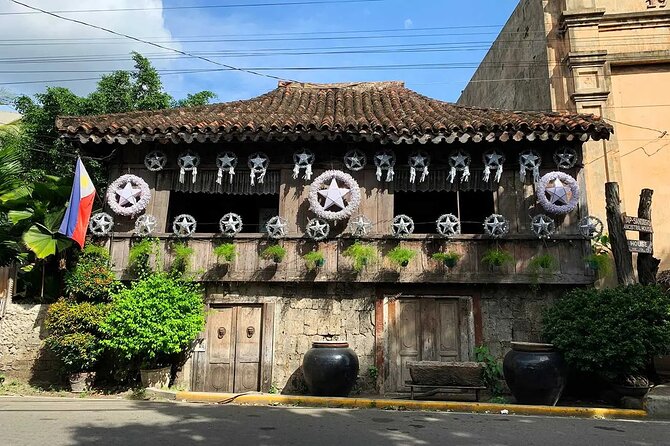
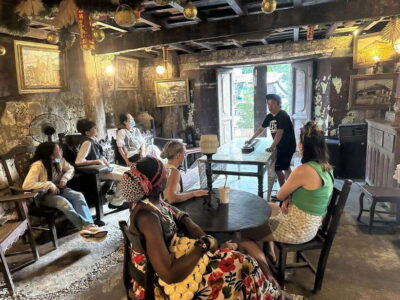
The nearby Yap-Sandiego Ancestral House gives you a sharper sense of everyday life. Built in the 17th century, it is one of the oldest preserved houses in the Philippines. Its design reflects both Spanish and Chinese influences, a useful reminder that Cebu’s past was shaped by trade and several cultures, not only by Spanish rule.
The house is more intimate than the monument. You are looking at an old domestic space rather than a grand public structure. The 30-minute visit is brief, but it gives the morning some texture. If you enjoy old furniture, family homes, and signs of how people lived, this may be one of the more satisfying stops.
Fort San Pedro, Magellan’s Cross, and Santo Niño
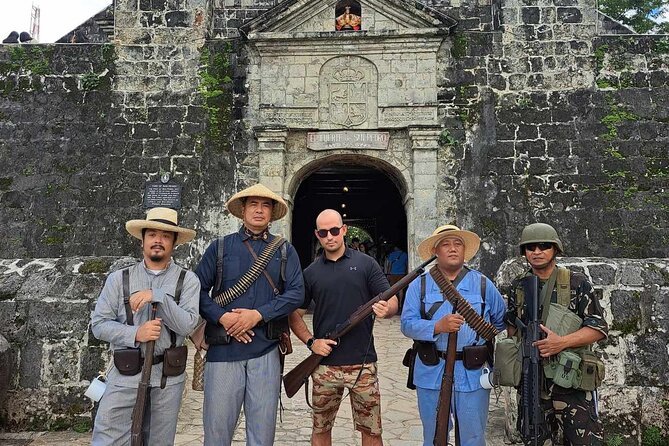
Fort San Pedro is a compact triangular defense structure built in 1738 during the Spanish colonial period. It is described as the oldest and smallest fort in the Philippines, so do not expect a huge fortress complex. Its appeal is scale: the stone walls and bastions are easy to understand in a short visit.
You get around 30 minutes, with admission included. This is enough for a quick walk around the fort and a few photographs. The fort works best when your guide explains its military role and how it fits into Cebu’s larger colonial story.
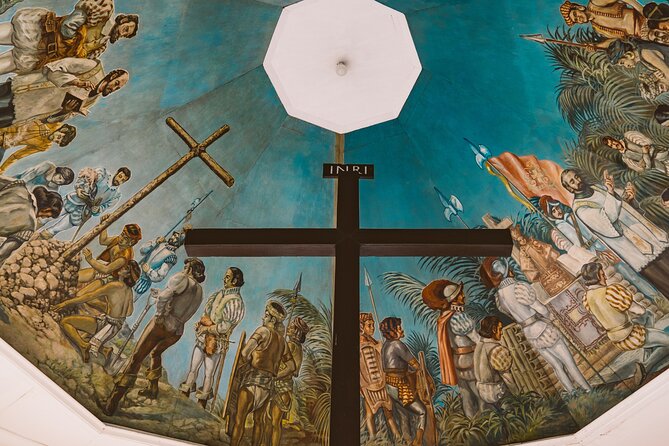
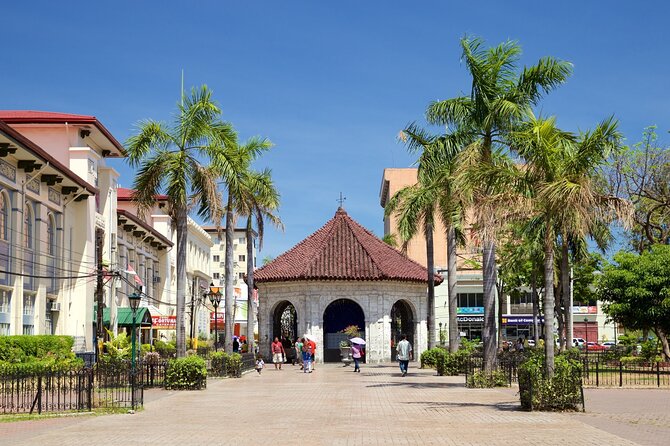
Magellan’s Cross is a much shorter stop, about 20 minutes. The cross is linked to Ferdinand Magellan’s arrival in 1521 and the introduction of Christianity to the Philippines. It is protected inside a small chapel, and the original cross is enclosed within the structure.
This is a place where your guide’s explanation matters. The site itself is small, so the value comes from understanding its religious and national importance. Keep your visit focused, since the schedule has several more stops ahead.
The Basilica Minore del Santo Niño is one of the most important religious sites in the city. Established in 1565, it is the oldest Roman Catholic church in the Philippines and houses the Santo Niño de Cebu statue.
You have about 30 minutes here, and admission is listed as free. Dress properly if you plan to enter. The tour information specifically warns that improper clothing can prevent entry to the church. This is an easy detail to overlook, so choose respectful clothing before pickup rather than trying to solve the problem at the door.
The basilica is not just another stop on a sightseeing checklist. It remains an active place of worship, so your behavior matters. Keep voices low, follow local instructions, and allow worshippers space. The tour can introduce the site, but a short visit will not replace a longer personal visit during a quieter period.
Fuente Osmeña and the Cebu Capitol area
Fuente Osmeña is a public park and city landmark centered on a historic fountain. It is named after President Sergio Osmeña and is used for community events and celebrations.
The schedule does not give a separate visit length for Fuente Osmeña, and the same is true of the Cebu Capitol Building. These may be viewed briefly from the vehicle or folded into the route depending on traffic and the guide’s timing.
The Cebu Capitol Building, inaugurated in 1938, has a neoclassical design with grand columns and a dome. It houses the provincial government. I would treat both locations as useful orientation points rather than major standalone attractions. They help you understand Cebu as a working city, not just a collection of monuments.
This part of the route also shows why the tour needs a flexible guide. Traffic, road repairs, and changing access can affect how much time is possible at each location. One well-timed photo and a short explanation may be all you receive here.
Same islands, a completely different day on the water:
- Cebu City: Whale Shark Swimming & Kawasan Falls Canyoneering
★ 4.7 · 665 reviews - Cebu City: Bohol Countryside Tour with Loboc Cruise Lunch
★ 4.5 · 488 reviews - Canyoneering Experience in Kawasan Falls with Lunch
★ 5.0 · 440 reviews - Cebu: Oslob Whale Sharks, Tumalog Falls & Sardine Snorkeling
★ 4.3 · 343 reviews
The Cebu Taoist Temple on the hillside
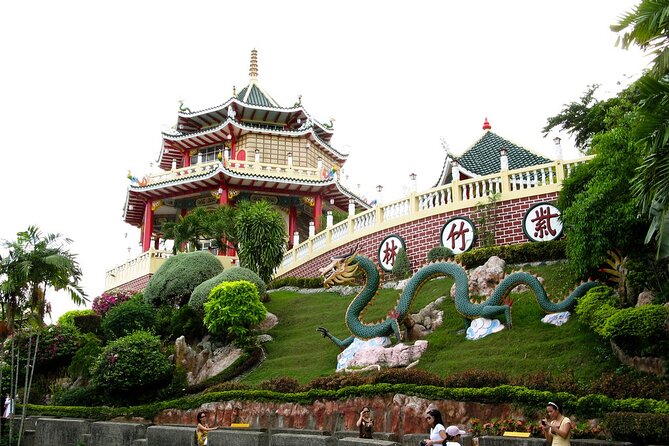
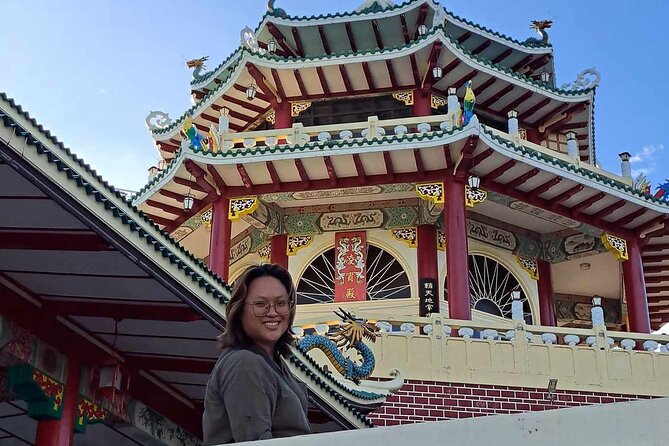
The Cebu Taoist Temple is one of the more distinctive stops. Built in 1972, it sits on a hillside above the city and uses traditional Chinese architectural elements, gardens, and a replica of the Great Wall.
The planned visit lasts about 45 minutes, making it one of the longer stops in the city portion. The elevated setting gives you a break from downtown streets, and the temple’s design offers a different cultural view of Cebu. The city outlook is a major part of the experience, so take a moment to look beyond the decorative details.
Conditions can change. On one tour, the Taoist Temple was closed to visitors, so you should regard access as possible rather than guaranteed. If the gates are closed, the guide may still explain the site or adjust the timing, but you should not book this experience solely for temple entry.
The climb and setting may require a little care, though the supplied information does not list mobility restrictions. Most people can participate, and the operator states that there are no restrictions. Even so, wear sensible shoes if you want to make the most of the uphill stops.
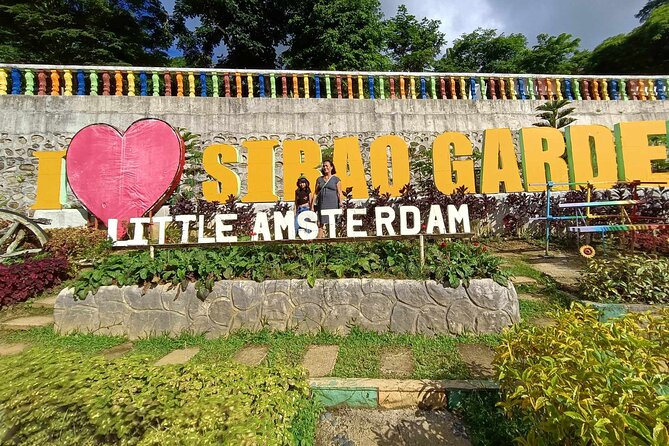
Sirao Flower Garden, the Little Amsterdam
Sirao Pictorial Garden is known for celosia and other flowers in the mountain area of Sirao. Its nickname, Little Amsterdam, comes from its colorful displays and Dutch-style windmill feature.
The scheduled visit is 30 minutes, and admission is included. This is enough for photos and a quick walk, but not a long garden visit. The setting is designed for pictures, with bright arrangements and constructed viewpoints.
I would set your expectations carefully. The garden can be fun and photogenic, especially if you enjoy taking pictures, but parts may feel touristy or dated. It is not a quiet botanical garden where you study plants for an hour. It is a colorful stop with a strong visual theme.
The uphill location is valuable even if the garden itself is not your favorite. You get a change of air and scenery after the city center, and the road journey gives you time to rest in the van. One positive feature of this route is that you do not have to arrange a separate ride up the hill or worry about finding your way back.
Temple of Leah and the final hill views
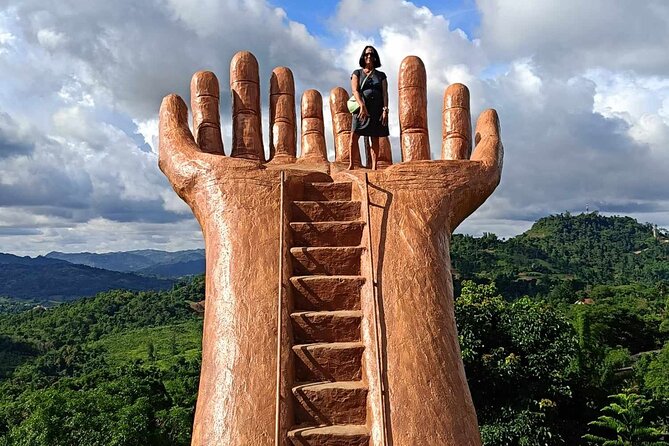
Temple of Leah is a large monument to love and devotion, built in 2012. Its design draws from ancient Roman architecture, with grand columns, sculptures, halls, and displays connected with Leah’s life.
You have about 30 minutes here. That is enough to admire the scale, take photographs, and hear the story behind the building. It is an impressive sight from a distance, and the elevated position offers broad views toward Cebu City and the surrounding mountains.
The style is intentionally grand. Some people will enjoy the oversized columns and theatrical setting; others may find it excessive or less authentic than the older sites. I would not visit Temple of Leah expecting an ancient ruin. It is a modern memorial built in a classical style.
The hilltop views are one of the strongest reasons to include it. After the compact city landmarks, the open outlook gives the tour a calmer finish. Still, traffic can limit the time available, and the stop may be shortened if the route runs late.
Guides, vehicles, and the pace of the day
The guide can make or break a fast city tour. Rix is described as friendly, funny, flexible, and strong at explaining Cebu’s past. Tyler is associated with a witty and informed style, while Olivier is described as talkative, cheerful, and even willing to sing.
Those details matter because the itinerary is dense. You need someone who can explain a site clearly in a few minutes, answer questions, and adjust the order when roads or opening conditions cause trouble. The guide and driver work as a team, and the driving itself is important on crowded city streets and uphill roads.
The vehicle is air-conditioned, which is a real benefit in Cebu’s heat. Bottled water is included, and you receive a Cebu souvenir. The maximum group size is 10 people, so this is not a private tour, but it is smaller than a large bus outing.
Allow extra patience for traffic. One half-day tour can look efficient on paper and still run late because city roads, construction, repairs, or weather-related work slow the route. The best mindset is to enjoy the explanations and scenery between stops rather than treating each scheduled minute as fixed.
Is $63.50 a fair price?
At $63.50 per person, this tour is not the cheapest way to see a few Cebu landmarks. Several locations have no admission charge, and you could visit one or two central sites at lower cost on your own.
The value improves when you consider the route as a whole. The package includes transportation, entry fees for the Yap-Sandiego House, Fort San Pedro, Sirao Garden, and Temple of Leah, bottled water, a guide, taxes, and a souvenir. You also get the uphill portion, which is the harder section to organize without private transport.
I see this as a convenience-focused purchase. You are paying to connect far-flung stops in a single morning or afternoon, avoid arranging several rides, and receive context at each location. The price is easier to justify if you have only one day in Cebu, are traveling solo, or want a broad first look at the city.
The value is weaker if you prefer long visits, quiet sites, or independent wandering. The schedule gives you snapshots, not extended exploration. You may also feel that Sirao Garden and Temple of Leah are too polished or tourist-oriented, especially if your priority is old Cebu.
Who should book this experience?
I would recommend it to a first-time Cebu visitor who wants to cover many major sights without spending hours planning transport. It also suits solo visitors, couples, families, and small groups who prefer a guide and an air-conditioned vehicle.
It is a good fit if you enjoy variety. In one outing, you can see a 17th-century ancestral home, a Spanish fort, a major basilica, a Chinese temple, a flower garden, and a modern hilltop memorial.
I would think twice if your main interest is sacred architecture, local food, or extended time at one museum. The tour does not include a food experience, and the rapid schedule leaves little room for lingering.
Wear respectful clothing for the basilica, carry a phone or camera for the many photo stops, and expect the schedule to flex. The free cancellation policy allows a full refund if you cancel at least 24 hours before the start time. Cancellations within 24 hours are not refunded, and changes inside that window are not accepted.
Should you book the Best of Cebu tour?
Book it if you want a practical first-day overview with both central Cebu and the uphill sights. The best parts are the variety, the included transport, the small group size, and guides such as Rix and Tyler, who bring useful stories and a relaxed tone.
Skip it if you dislike traffic, staged photo gardens, or short visits. You may also want another plan if the Temple of Leah sounds more appealing in photographs than in person.
For most first-time visitors, $63.50 is a reasonable price for a broad, guided introduction. Just treat it as an orientation tour, not a slow examination of every site. That expectation will make the day much more enjoyable.
FAQ
How long does the tour last?
The tour lasts approximately 4 to 5 hours.
How much does the experience cost?
The listed price is $63.50 per person.
How many people can join the tour?
The tour has a maximum of 10 travelers.
Is hotel pickup available?
Pickup is offered as part of the experience.
Is the tour conducted in an air-conditioned vehicle?
Yes. An air-conditioned vehicle is included.
Are entrance fees included?
All fees and taxes are included. The itinerary specifically lists included admission for the Yap-Sandiego Ancestral House, Fort San Pedro, Sirao Pictorial Garden, and Temple of Leah.
Is bottled water provided?
Yes. Bottled water is included.
Do I need a mobile ticket?
A mobile ticket is offered for the experience.
Is there a dress code?
Yes. Proper dress is required for entry to the Basilica Minore del Santo Niño. Improper clothing may prevent you from entering the church.
Can I cancel for a full refund?
Yes, if you cancel at least 24 hours before the experience start time. Cancellations made within 24 hours are not refunded, and changes within that period are not accepted.
Just added around Cebu
- Whale Shark Watching & Tumalog Falls & Kawasan Falls★ 5.0 · 16 reviews
- Whale Shark Watching and Sumilon Sandbar Private Tour Package★ 5.0 · 17 reviews
- Whale Shark Watching with Sumilon Sandbar and Kawasan Falls Tour★ 5.0 · 8 reviews
- Cebu Whale Shark Encounter, Moalboal Sardines & Tumalog Falls★ 4.0 · 18 reviews
- Discover Scuba Diving★ 5.0 · 18 reviews
- Full Day Shark Watching and Canyoneering in Cebu★ 5.0 · 15 reviews
- Group Tour of Moalboal Sardines Run & Kawasan Canyoneering★ 4.5 · 9 reviews
- Transfer Cebu City – Bantayan Island★ 3.5 · 4 reviews
Historical Tours, compared.

Intramuros, Manila: Historical Bamboo Bike Tour
Read our review →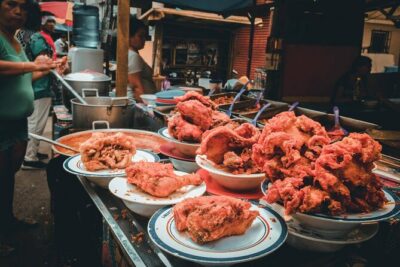
The Original Cebu City Historical and Food Walking Tour
Read our review →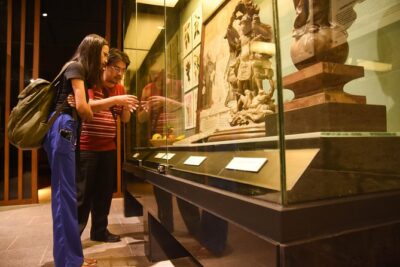
Explore Intramuros: Introduction to Philippine History
Read our review →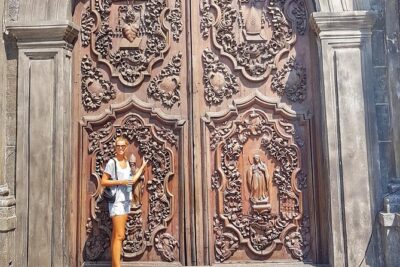
Experience Manila’s Heritage: Intramuros & More in Half a Day!
Read our review →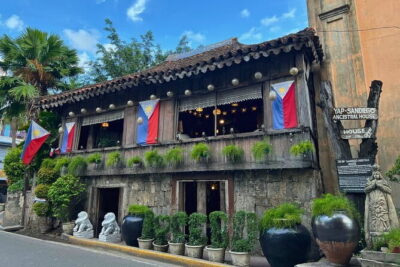
Exploring Cebu City’s rich history and Uphill Tour
Read our review →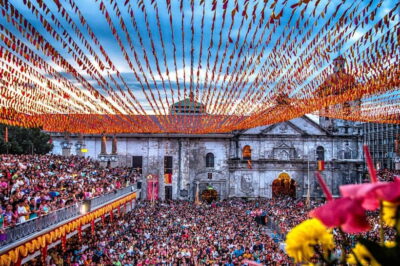
Browse the lists this tour appears in