
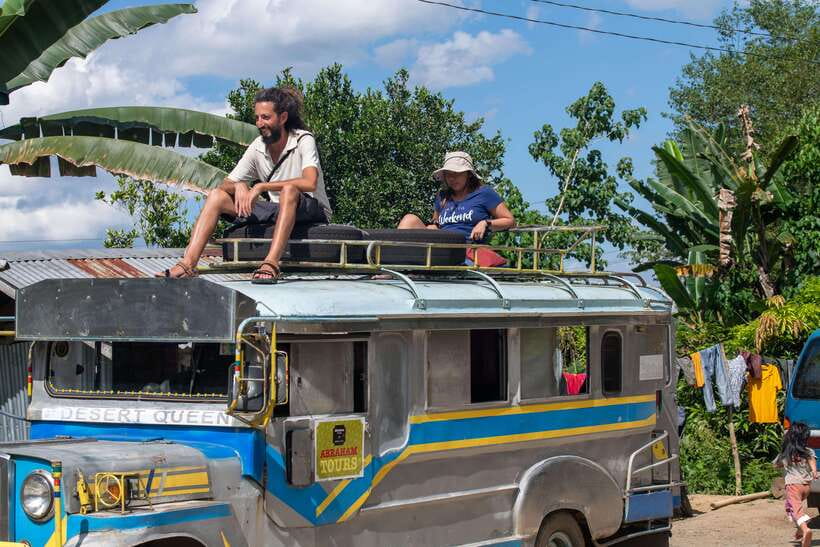
Reviewed · 4-DAY EXPERIENCES
From Manila: 4-Day Sagada and Banaue Rice Terraces Tour
The best part of this four-day trip is the way it links Sagada’s caves and hanging coffins with the great Ifugao rice terraces. You get far more than a quick photo stop: local guides explain burial customs, village life, weaving, farming, and the traditions behind the mountains.
I like the personal touch from guides such as Zohan, also called Mark, who can adjust the day to your pace and interests. I also like the value: transport between sites, entrance fees, breakfasts, a Batad guesthouse, and local guiding are built into the $306 price.
The main drawback is the long overnight bus from Manila, which can take about 13 hours. The walks are not extreme for a fit hiker, but steep terrace paths, slippery cave rocks, and uneven ground make this a poor choice if you need step-free access or want a soft adventure.
Key points at a glance
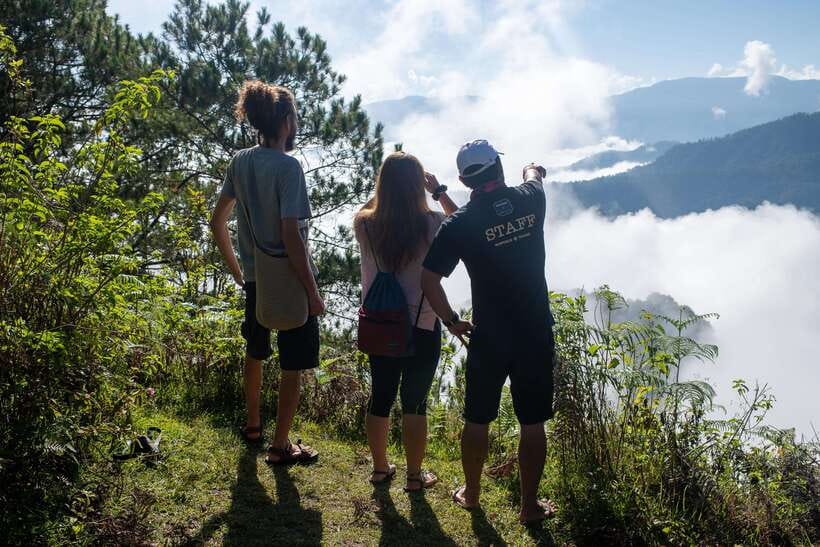
- An overnight bus starts the adventure: You leave Manila from Coda Lines Terminal and reach the mountain province by morning.
- Sagada mixes mystery with physical effort: Echo Valley’s hanging coffins and Sumaguing Cave are memorable, but both require walking on uneven terrain.
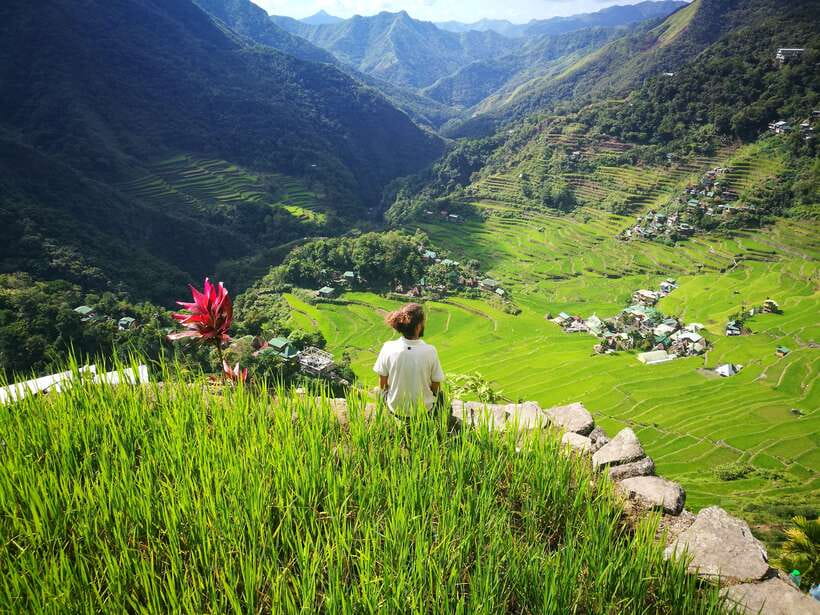
- Batad is the visual high point: Sleep near the terraces, then walk through one of the Philippines’ most famous mountain farming areas.
- Local guides add the meaning: Zohan, Mark, Frank, and other Cordillera guides explain Ifugao customs in a direct, personal way.
- Tappiya Falls rewards the hike: The route through Batad ends at a waterfall where you can cool off with a swim.
- The package covers the costly basics: Site transport, entrance fees, guiding, breakfasts, and two hostel nights are included, but not most dinners, two lunches, or drinks.
Why this four-day route is worth your time
If your Philippines plans focus only on beaches and islands, this trip gives you a very different view of the country. The Cordillera mountains are cooler, quieter, and shaped by centuries of terrace farming and indigenous traditions.
The tour works because the sights are varied. One hour you may be listening to stories about ancestral burial practices. Later, you are crawling over rock in a cave or walking down a narrow terrace path toward a waterfall. The days are active, but the cultural stops give your legs a break and help explain what you are seeing.
I especially value the chance to meet people from the Cordillera Region rather than simply photographing the rice terraces from a roadside viewpoint. Visits to traditional weavers and the Ifugao House Museum add context to the scenery. The terraces are not just pretty green steps. They are working places tied to food, family, belief, and village life.
At $306 per person, the price makes sense if you want an organized route through a difficult-to-reach part of Luzon. Getting from Manila to Sagada and then onward to Banaue takes time and planning. Here, transport to the listed sites, entrance fees, local guides, two hostel nights, daily breakfasts, and lunch on day three are included.
You still need to budget for drinks, dinners, and lunch on the first two days. The overnight bus is also part of the practical tradeoff. You save on a separate hotel night, but comfort is limited compared with a bed.
A few more Manila trips to weigh up
- 4 Day Banaue Ifugao Rice Villages Private tour Trekking
★ 4.5 · 3 reviews - Balabac Palawan Private Expedition 4 Days and 3 Nights
★ 3.5 · 103 reviews - Sagada and Banaue Rice Terraces 4-Day Tour
★ 5.0 · 4 reviews
The overnight ride from Manila to Sagada
Your starting point is Coda Lines Terminal, and you need to be there 15 minutes before departure. The first leg is an overnight bus ride into the mountains, often around 13 hours according to the experience details and past itineraries.
This is not a minor footnote. It shapes your first day. You should expect air conditioning and comfort breaks, but you are still spending most of the night on a bus. If you sleep poorly on buses, bring whatever helps you rest and keep your expectations realistic.
The payoff comes with Sagada’s cool mountain air. After the urban heat and traffic of Manila, the change feels dramatic. The bus journey is tiring, but it avoids the need to arrange several separate transfers through the highlands.
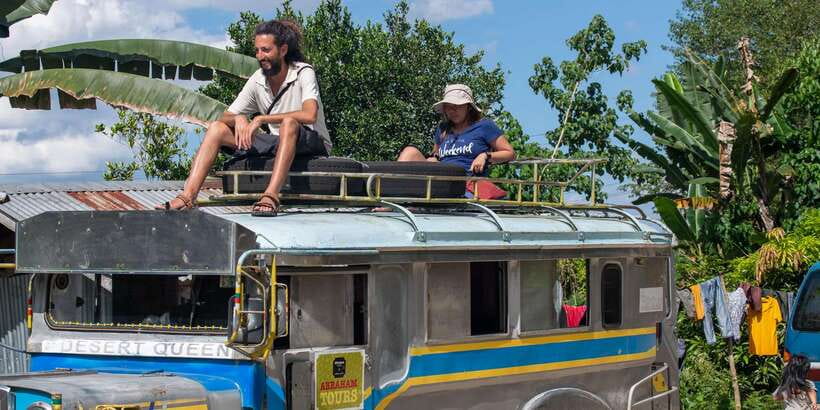
The included transport continues between the main stops. That matters here because the roads and mountain distances can make independent planning slow and awkward. A guide also helps you keep track of local site access and the walking routes.
Echo Valley and the hanging coffins of Sagada
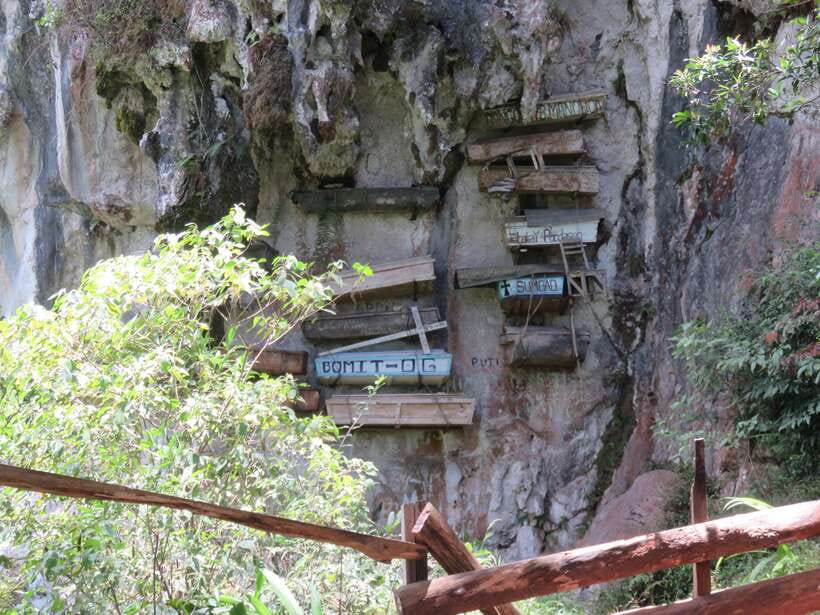
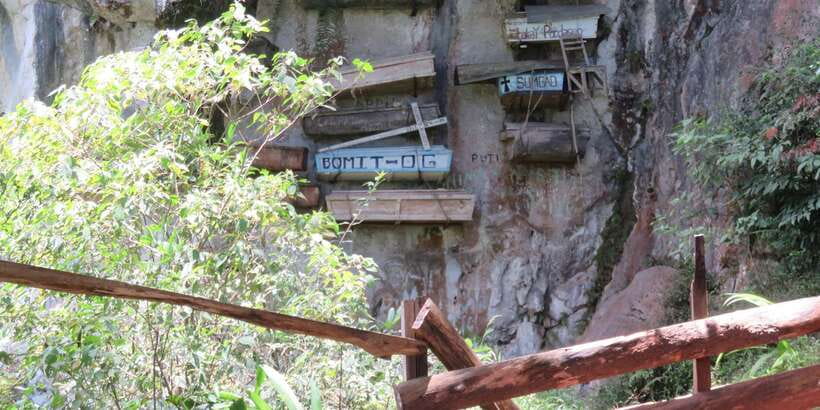
Sagada’s hanging coffins are one of the most unusual sights in the itinerary. Rather than treating them as a spooky photo opportunity, the guide explains the beliefs and burial practices connected with them.
At Echo Valley, you should expect walking rather than a simple roadside stop. The route includes uneven ground and some climbing, so sturdy footwear is sensible. The attraction is cultural as much as visual. Without explanation, you see coffins attached to rock. With a local guide, you begin to understand why the practice matters to Sagada communities.
Guide Zohan, also known as Mark, receives especially strong praise for his care and personal storytelling. His local connection helps turn a short visit into a conversation about ancestors, customs, and village life. One private experience even included a visit to a family burial hut, showing how the tour can become more personal when the group is small and the guide adapts the plan.
That flexibility is useful, but you should not assume every group receives the same extra visit. The core program is the Sagada cultural and cave experience, while added stops depend on time, conditions, and the group’s interests.
Sumaguing Cave is the rugged part of the trip
Sumaguing Cave is for people who enjoy a little discomfort in exchange for a memorable story. The route involves scrambling and moving over slippery rocks. One account describes barefoot cave spelunking, which gives you a clear idea of the hands-on nature of the activity.
This is not a polished walkway with neat railings. The terrain can be wet and awkward, and you need to pay attention to every step. It is one of the places where a local guide matters most, since the route and pace need to match the group.
The cave can be the most physically demanding part of the Sagada section. If you dislike tight spaces, slippery surfaces, or climbing over rock, you may prefer to skip it. The itinerary can be adjusted in some cases. One older solo participant chose not to complete the cave activity and had the day reshaped around other interests.
That is a real strength of a private or small-group option. You are not necessarily locked into every strenuous activity. Still, ask about the planned cave route before booking if you have concerns about mobility, balance, or enclosed spaces.
Same islands, a completely different day on the water:
- Intramuros, Manila: Historical Bamboo Bike Tour
★ 4.8 · 583 reviews - Experience Intramuros with Bamboo Bicycle – Ecotours
★ 5.0 · 508 reviews - Manila: Intramuros, Chinatown, and Old Manila Half-Day Tour
★ 4.8 · 475 reviews - Manila: Old & New 4-Hour City Tour
★ 4.5 · 458 reviews
Ifugao weaving and the House Museum
The route then shifts toward Banaue and Ifugao country. This section gives the trip its strongest cultural layer.
A visit to traditional weavers shows how local craft remains tied to identity and daily life. The Ifugao House Museum adds another piece, helping you understand how homes, tools, and customs fit together. These stops are especially useful before walking through the rice terraces, because they give you a clearer sense of the people who built and maintain them.
I prefer this approach to simply arriving at a viewpoint, taking a picture, and leaving. The museum and weaving visit slow the day down and make the later hikes more meaningful. You can ask questions, and guides such as Frank or Zohan are described as patient and eager to explain local customs.
The exact balance of visits can change with the group. The guide may spend more time on cultural discussion, add a village connection, or shorten an activity if someone is struggling. That flexibility suits curious visitors, families with different walking speeds, and private groups.
Batad Rice Terraces and Tappiya Falls
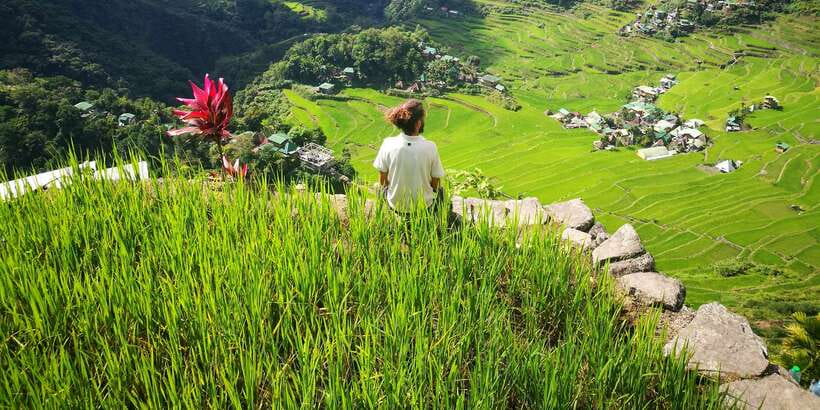
Batad is likely to be the visual peak of the trip. The rice terraces curve around steep mountain slopes in huge, layered steps. They are a UNESCO World Heritage site and one of the clearest examples of how farming has shaped the Cordilleras.
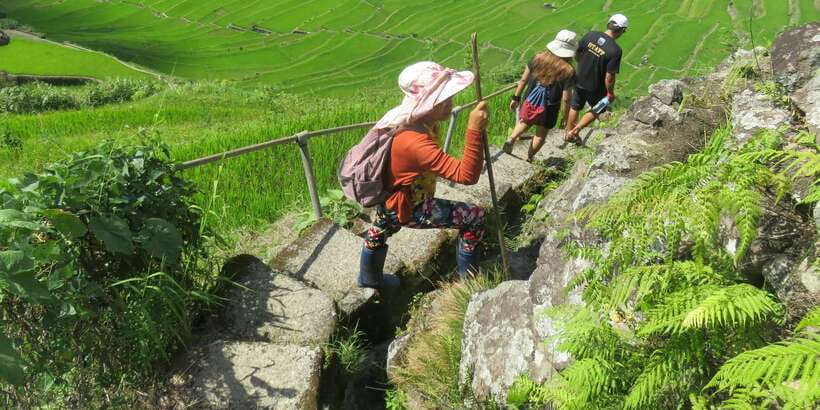
The walk is not just a viewpoint visit. You go into the terrace area, where paths can be steep, narrow, and uneven. You will climb and descend, often at a pace set by the group and local guide. The effort gives you a better sense of the scale of the terraces than a quick stop above the village.
The overnight guesthouse overlooking Batad is one of the most appealing parts of the package. Two hostel nights are included overall, with one in Sagada and one in Batad. Do not expect resort comfort. The value is the location and the chance to stay close to the terraces instead of returning to a distant city after the walk.
The path to Tappiya Falls adds a welcome change of mood. After hiking through the terraces, you can cool off in the waterfall area with a swim. The walk itself still involves challenging terrain, so sandals with poor grip are not ideal.
This day asks the most from your legs. Some people will call it the highlight; others may find the descent and return tiring. You should be comfortable walking on rough mountain paths and handling steps without a handrail.
Bangaan offers a quieter terrace walk
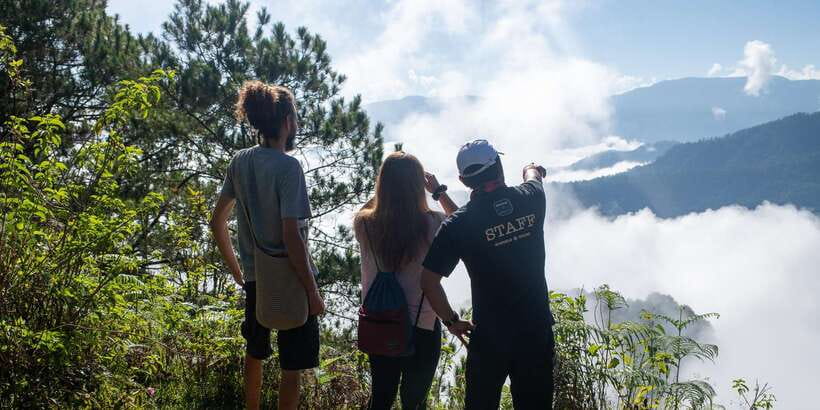
Bangaan is another important Ifugao terrace area, and the route is described as a roughly three-hour hike when conditions and timing allow. It offers broad views and a different feel from Batad.
You may find Bangaan less about one dramatic landmark and more about the pleasure of walking through a living farming area. The guide can explain how the terraces work and how village life connects to the slopes around you.
This stop also carries a scheduling warning. One planned Bangaan hike has been shortened or missed, so you should treat the full walk as condition-dependent rather than guaranteed in every detail. Weather, road timing, group fitness, and the long return to Manila can all affect the final program.
That is not a reason to reject the tour. It is a reason to enjoy the stops that happen and avoid building your entire decision around completing every single hour of hiking. The mountain route needs some flexibility.
What the $306 price really covers
The tour costs $306 per person. For four days in a remote mountain region, that is a fair package price if you value having the difficult transport and local arrangements handled.
Included costs are:
- Transportation to all listed sites
- Entrance fees
- Daily breakfast
- Lunch on day three
- Local guides in Sagada and Banaue
- Hostel accommodation for two nights, including Sagada and Batad
You pay separately for drinks, dinners, lunch on day one, and lunch on day two. Those exclusions are normal enough, but they mean the headline price is not your complete food budget.
The package is strongest for someone who would otherwise need to arrange bus connections, local transport, entrance payments, guides, and lodging in two mountain towns. A private or small group can also give you more say over the pace.
The budget-minded choice is to compare the $306 with the value of your time. Independent travel might cost less in some areas, but it would require more planning and may not provide the same access to local explanation. This tour is less about luxury and more about reducing friction.
Who should book this Cordillera adventure
I would recommend it to you if you want active days, local stories, and major scenery in one trip. It suits solo visitors, couples, and small groups who enjoy mixing cultural visits with serious walking.
It is also a good choice if you are not usually a fan of organized tours but want help with a complicated mountain route. The strongest guide feedback centers on care, humor, patience, and the ability to adjust activities for older walkers, reserved personalities, and people with different interests.
You should think twice if you need a predictable, comfortable schedule. The overnight bus is long, the caves are slippery, and the terraces involve steep paths. The activity is not suitable for pregnant women or wheelchair users.
English is the tour language. Private and small-group options are available, which may be worth choosing if fitness levels differ or you want more time for cultural discussion.
Booking details and practical advice
You can cancel up to 24 hours before departure for a full refund, and the reserve-now, pay-later option lets you hold a place without paying immediately. Starting times depend on availability, so check the schedule before making other transport plans.
Arrive at Coda Lines Terminal at least 15 minutes before departure. Keep your first-day lunch budget separate, since it is not included, and plan for dinners and drinks throughout the trip.
Wear shoes suited to steep paths and wet rock. The supplied information does not specify equipment, so ask the operator what is needed for the cave and waterfall portions before leaving Manila.
Most of all, leave room for changes. The guide may shorten a cave visit, skip a waterfall, or alter a hike to suit the group and current conditions. That is useful when done well, but it means this trip is not a rigid checklist.
Should you book it?
Book this tour if you want the Cordilleras to feel personal rather than packaged. The scenery is the headline, but the strongest reason to go is the local guiding, especially with people such as Zohan, Mark, or Frank explaining Ifugao customs and adjusting the days to suit the group.
Skip it if a 13-hour bus ride, steep terrace paths, and slippery caves sound miserable. For everyone else, the combination of Sagada’s burial traditions, Sumaguing Cave, Batad’s terraces, Tappiya Falls, and Bangaan makes $306 a sensible price for a demanding but memorable four days.
FAQ
Where does the tour meet in Manila?
The meeting point is Coda Lines Terminal. You should arrive 15 minutes before departure.
How long is the tour?
The experience lasts four days and begins with an overnight bus journey from Manila. Starting times depend on availability.
What accommodation is included?
Two hostel nights are included, one in Sagada and one in Batad. The Batad accommodation is a guesthouse overlooking the rice terraces.
Are meals included?
Daily breakfast is included, along with lunch on day three. Drinks, dinners, lunch on day one, and lunch on day two are not included.
Is the tour suitable for wheelchair users or pregnant women?
No. The tour is not suitable for pregnant women or wheelchair users because it includes challenging walks, steep terrace paths, and cave terrain.
What language does the guide speak?
The live tour guide language is English. Private and small-group options are available.
Just added around Manila
- Underground River with Lunch★ 3.6 · 5 reviews
- Private Tour: Tagaytay Midlands & Taal Volcano Boat Ride★ 4.5 · 15 reviews
- 3 Days Private Tour in Banaue Ifugao visiting Batad Rice Terraces★ 3.5 · 3 reviews
- Tagaytay Adventure: Volcano Views, Countryside, Market & Cruise!★ 4.5 · 14 reviews
- Tagaytay + Hidden Valley Springs: A Scenic Escape w/ Transfers★ 4.0 · 4 reviews
- Tagaytay Day Tour sightseeing with Panoramic Taal volcano view★ 5.0 · 6 reviews
- Unforgettable Manila Fishing Village Day Excursion 2024★ 5.0 · 4 reviews
- Cultural Dinner and Show in Manila★ 5.0 · 4 reviews
4-Day Experiences, compared.

Balabac Palawan Private Expedition 4 Days and 3 Nights
Read our review →
Puerto Princesa in 4 days: Tours package with optional hotel
Read our review →
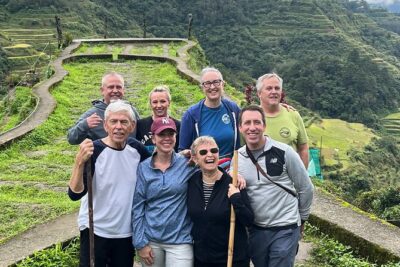
4 Day Banaue Ifugao Rice Villages Private tour Trekking
Read our review →
Browse the lists this tour appears in