
Reviewed · MANILA INTRAMUROS WALKING TOURS
Manila: Intramuros, Chinatown, and Old Manila Half-Day Tour
Manila’s story comes into focus when you move from Tondo Market and Binondo to the stone walls of Intramuros. In three hours, you see daily market life, Chinese-Filipino culture, local transport, and the Spanish colonial center without spending your whole day in a vehicle.
I like the mix of public transport and walking, since jeepneys, tricycles, and tuk-tuks make the city feel immediate rather than distant. I also like the guides’ human touch. Floyd is often praised for his stories and calm care, while Venus is known for her energy and skill at handling the city’s crowded streets.
The catch is simple: this is a lot for three hours. You walk in heat, cross crowded areas, and may reach Intramuros already tired. Wear good shoes, bring sun protection, and do not expect a slow museum tour.
Key points to know before booking
- Tondo Market comes first: See produce, seafood, local food, and ordinary neighborhood life before the historic sights.
- Binondo is the world’s oldest Chinatown: Ongpin Street, Binondo Church, the Friendship Arch, and Chinese Filipino food are central to the route.
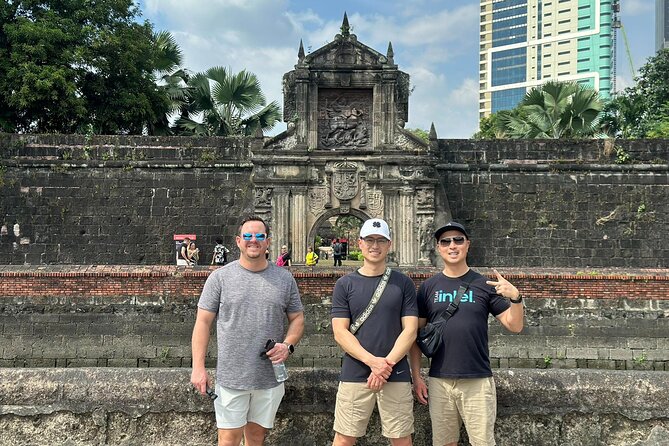
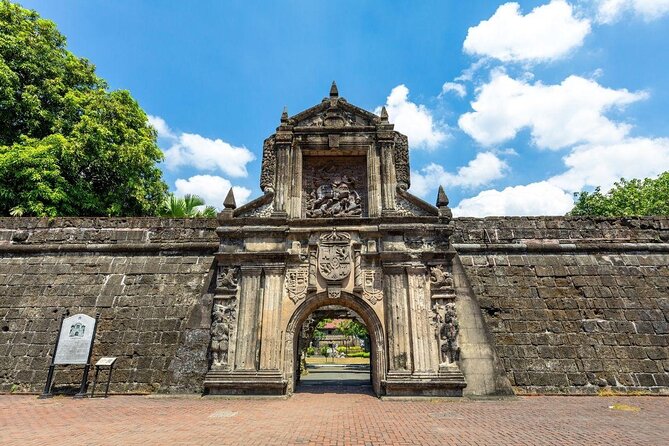
- Intramuros supplies the grand finale: Visit Fort Santiago, Manila Cathedral, Casa Manila, San Agustin Church, and old stone streets.
- Transport is part of the fun: Jeepney, tricycle, and tuk-tuk rides help cover ground and give you a closer view of city life.
- Three hours means a brisk pace: This suits a short stay or layover, but it leaves little time for lingering.
- The meeting point is specific: Find the guide at Tutuban Center Mall by the Bonifacio Monument near Lawson Convenience Store.
A fast route through Manila’s past and present
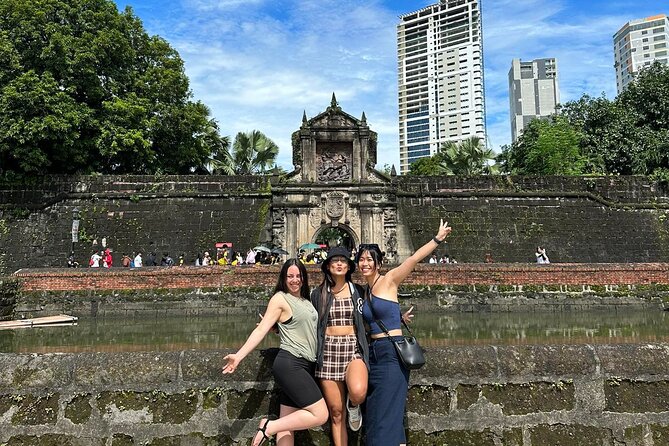
At $68 per person, this is not the cheapest way to walk around Manila. But the price includes a guide, refreshments, photography, and several local rides, so the value depends on what you want from a short visit.
If you want a quiet, polished city tour, choose something else. If you want help making sense of Manila’s contrasts, this route earns its price. You move from working markets and packed streets to churches, forts, and colonial walls. That change is the point.
The tour is especially useful if you have only a day in Manila, a short hotel stay, or a long layover. One guest used a nine-hour layover to fit in a look at classic Manila, while others joined during a 24-hour visit. I would treat it as an introduction, not a complete tour of the capital.
The advertised duration is three hours, though some participants describe the experience as closer to four hours. Allow extra time in case traffic, transfers, or the pace of the group stretches the schedule.
More Manila Intramuros Walking Tours in Manila
- Intramuros, Manila: Historical Bamboo Bike Tour
★ 4.8 · 583 reviews - Experience Intramuros with Bamboo Bicycle – Ecotours
★ 5.0 · 508 reviews - Manila: Guided Sunset Bamboo Bike Tour in Intramuros
★ 4.8 · 119 reviews
Starting at Tondo Market
Meet at Tutuban Center Mall, at the Bonifacio Monument near the Lawson Convenience Store. The instructions ask you to approach mall security if you need help finding the guide. That detail matters because this is a busy part of the city, and a clear meeting point saves precious time.
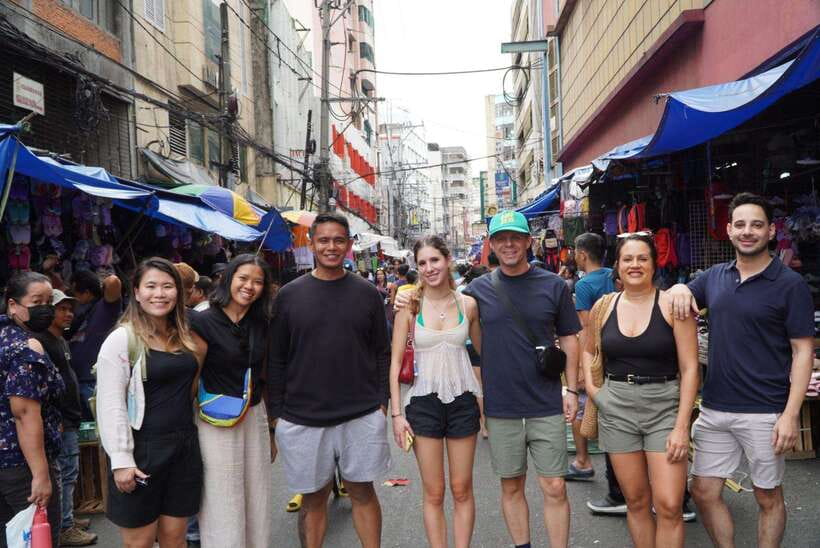
The first section takes you through Tondo Market. This is not a postcard version of Manila. Expect narrow lanes, colorful stalls, fresh produce, seafood, and local delicacies. You see people buying and selling the food that keeps the neighborhood moving.
I like starting here because it gives you a useful frame for everything that follows. Before you hear about governors, churches, and battles, you see how people shop, work, eat, and get around. The market also makes clear that Manila is not just the modern high-rise districts seen in parts of Makati or Bonifacio Global City.
The market can feel intense. It may be crowded, noisy, and hot, and you need to watch your footing. Keep your belongings secure and stay close enough to hear the guide. The route is designed to show local life, not to provide a sanitized shopping stop.
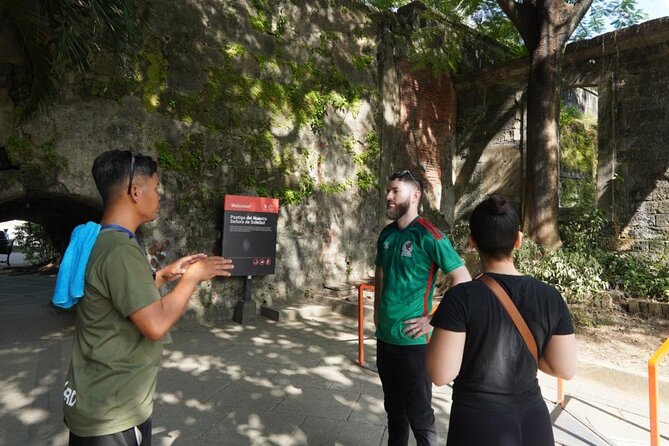
The guide helps turn the visual rush into something you can understand. Floyd and Venus are the names most often associated with the tour, with Jane and Jason also assisting on some departures. The best guides here do more than point at buildings. They explain what you are seeing and answer questions about Filipino life and culture.
Riding Manila’s everyday transport
Transport is one of the tour’s most memorable features. You may ride a jeepney, tricycle, and tuk-tuk as you travel between sections.
That sounds like a small detail, but it changes the feel of the outing. A private air-conditioned vehicle keeps you comfortable and separated. Local transport puts you in the same flow as the city. You see more street activity, feel the stop-and-go rhythm, and get a better sense of how people cover short distances.
The rides also help make the walking manageable. The route covers several distinct areas, so using local vehicles keeps the schedule moving. It is a practical part of the design, not just a novelty added for photographs.
Still, comfort is limited. A jeepney is not a sightseeing bus, and a tricycle or tuk-tuk offers little room to stretch. If you have difficulty with steps, close seating, or long periods on your feet, ask the provider about your needs before booking. The activity is not intended for people over 95, and the general warning about walking should be taken seriously.
Binondo and Ongpin Street
The next major stop is Binondo, Manila’s Chinatown, founded in 1594. That date gives the district its claim as the world’s oldest Chinatown, but the important thing for you is how much of the area still works as a living commercial neighborhood.
Ongpin Street brings together food shops, small businesses, signs, deliveries, pedestrians, and vehicles in close quarters. It is a place to look around slowly if the group has room, though the schedule will keep you moving.
You visit Binondo Church and the Filipino-Chinese Friendship Arch. These stops help explain the long connection between Chinese and Filipino communities. The church provides a historic religious landmark, while the arch expresses the cultural link between the two communities.
Food is part of the Binondo experience. Refreshments are included, and the guides may offer samples of local or Chinese Filipino treats along the way. Several people especially enjoyed trying food in Chinatown, so arrive ready to eat rather than having a large meal immediately before the tour.
The food tasting is informal, not a dedicated food tour. The exact snacks may vary, and the supplied details do not promise a set menu. If you have allergies or strict dietary needs, ask before sampling anything.
Binondo is also where the tour can feel most crowded. Around Lunar New Year, the streets may be especially packed. That makes the area exciting, but it can slow the group and make conversations harder. Keep your phone and wallet secure, and do not wander away while stopping for pictures.
More Manila Street Food Tours in Manila
- Manila Food Tour: Introduction to Philippine Street Food
★ 5.0 · 417 reviews - Manila Food Tour: Explore World’s Oldest Chinatown
★ 5.0 · 158 reviews - Manila: Street Food and Drinks Walking Tour with Tastings
★ 4.8 · 114 reviews - Manila: Guided Food Tour of Binondo with Tastings
★ 4.8 · 38 reviews
Into Intramuros, the walled Spanish city
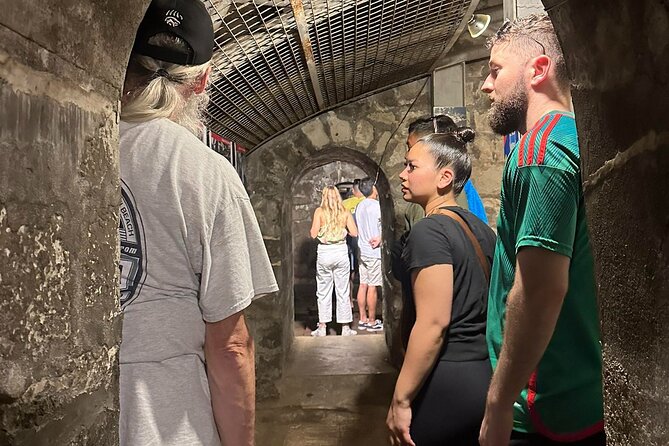
The shift into Intramuros is dramatic. After the open-ended movement of markets and Chinatown, you enter Manila’s old walled city, with cobblestone streets, colonial-era buildings, churches, and military defenses.
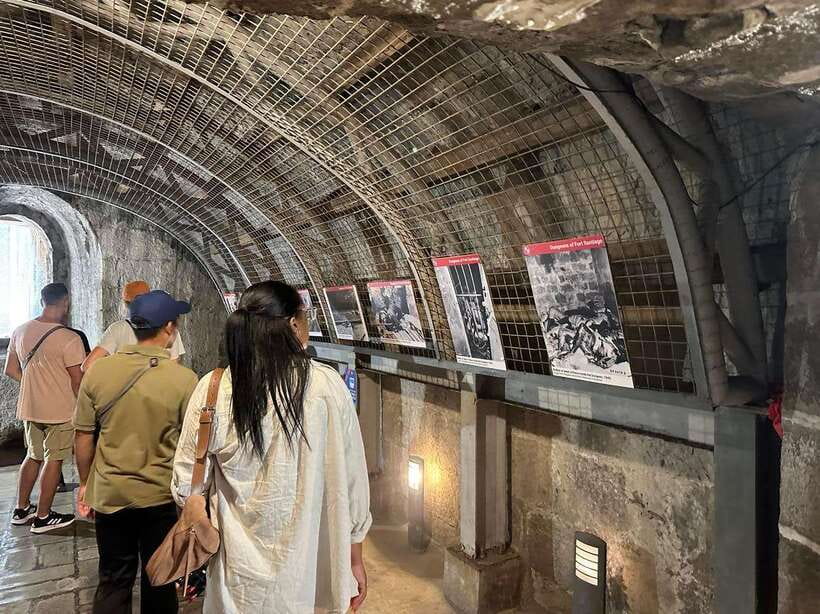
Intramuros is the historical centerpiece of the tour. The guide explains how the Spanish city shaped Manila and points out the places that mattered during the city’s colonial past. This part is more structured than Tondo or Binondo, with recognizable landmarks and a clear architectural character.
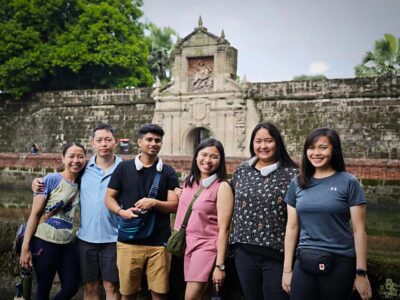
Fort Santiago is one of the main stops. Its walls and defensive role give you a direct connection to Manila’s military past. The fort is also a place where the guide’s storytelling matters most. Without context, old stone walls can blur together. With a good explanation, you begin to see how power, religion, war, and national memory overlap in this small area.
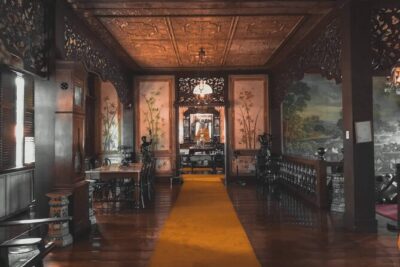
You also visit Manila Cathedral, a major church within the walled city. Casa Manila and San Agustin Church are included among the highlighted Intramuros sights, along with the oldest churches in the district. The exact time spent at each location can depend on traffic, group pace, and the day’s schedule.
San Agustin Church is particularly important because it represents the long religious presence inside Intramuros. The older churches are not just pretty backdrops. They show how strongly Spanish rule organized the city around faith, administration, and defense.
The drawback is timing. By the time you reach Intramuros, you may have already walked through Tondo and Binondo, sampled food, and ridden several vehicles. One participant specifically warned that tiredness can arrive by this stage. I would see that as a fair trade for the broad route, but plan your day so you are not rushing straight into another demanding activity afterward.
What the guides add to the route
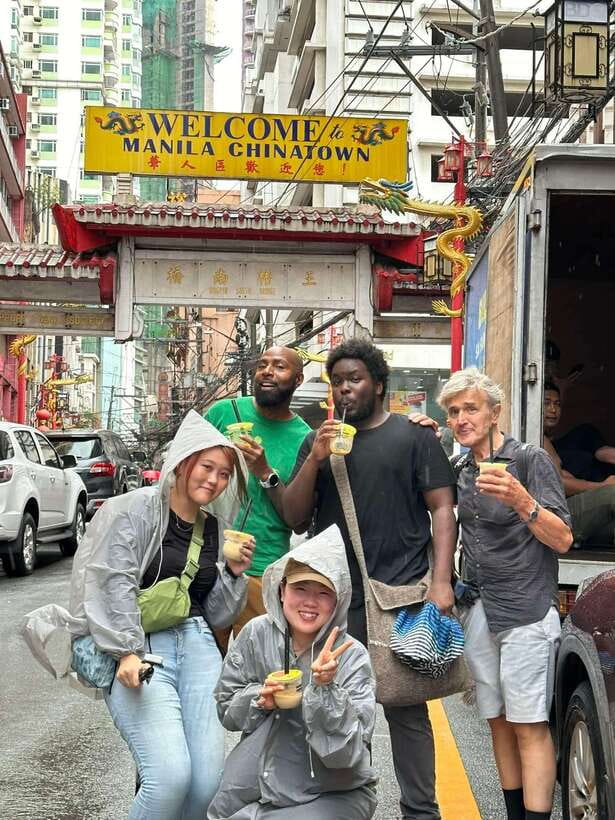
A city route like this depends heavily on the person leading it. The repeated praise for Floyd centers on his history, humor, patience, and ability to answer questions. He is also described as helping people feel safe and comfortable in areas they might not visit alone.
Venus brings a different strength. She is described as lively, warm, and good at handling obstacles, timing, and crowded conditions. For solo visitors, her effort to bring the group together can make the experience less awkward.
Jane has also led the Intramuros section, and some departures include two guides. The result may vary by date, but the provider uses English-speaking guides throughout.
I value the local perspective here. The route does not pretend that Manila is only churches and old walls. It also shows poverty, crowded housing, hard work, community, and the gap between wealthy districts and lower-income neighborhoods. That can be uncomfortable, and it should not be treated as a spectacle.
Your attitude matters. Look, listen, and let the guide explain what you are seeing. Avoid photographing people up close without permission. The best part of this tour is the chance to understand more of Manila’s daily life, not simply to collect dramatic pictures.
Walking, heat, and the right preparation
The tour description warns that you will do a lot of walking. Comfortable shoes are essential. Sun glasses, sunscreen, and a hat or cap are also recommended, and I would follow all four suggestions.
The mix of market lanes, streets, church grounds, and cobblestones means this is not a smooth, easy stroll. You may be standing while listening, moving around crowds, and boarding or leaving local vehicles.
Bring water, even though a refreshment is included. The tour includes photography too, which is useful if you want some record of the day without stopping constantly to take your own pictures. Keep your phone ready, but make comfort and awareness more important than getting every shot.
Morning or afternoon conditions can differ, and starting times depend on availability. Check the schedule carefully and arrive at the Tutuban meeting point early enough to find the guide without stress.
Who gets the best value from $68
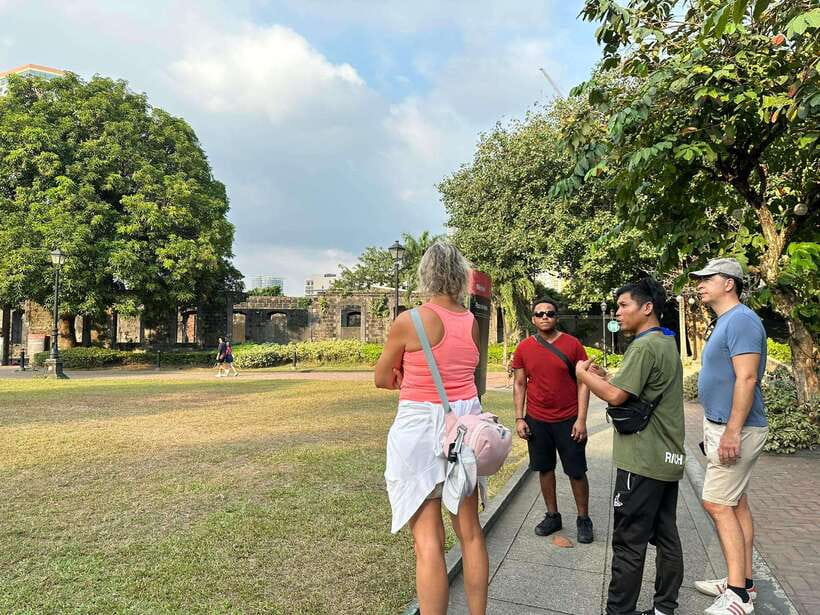
At $68, this tour makes the most sense for a first visit when time is tight. You pay for local orientation, transport connections, food or refreshments, photographs, and a guide who can explain areas that are not always easy to navigate alone.
I would particularly recommend it for:
- First-time Manila visitors who want more than modern business districts
- People on a short stay or long layover
- Solo visitors who prefer a guided route through unfamiliar neighborhoods
- Families with older children or teenagers who can manage the walking
- Anyone interested in the contrast between present-day Manila and Intramuros
I would hesitate if you want to spend an hour inside each church or fort. The schedule is too tight for detailed historical study. It is also not ideal if you dislike heat, crowds, local transport, or seeing difficult economic conditions firsthand.
The tour is described as top-rated, with a 4.8 score from 475 reviews. That rating points to a consistent experience, but it does not remove the physical demands. The strongest praise focuses on the guides, the variety of transport, the food stops, and the chance to see parts of Manila that are easy to miss on your own.
Free cancellation is available up to 24 hours before the tour, and you can reserve now and pay later. Those terms are useful if your Manila schedule is still shifting.
My call: book it for a first look at Manila
Book this tour if you want Manila in motion: market lanes, Chinatown food, local rides, old churches, and the stone defenses of Intramuros. It gives you a strong first orientation in a short window, and guides such as Floyd or Venus can add the context that turns a hectic route into a meaningful one.
Skip it if you want a relaxed, slow-paced visit focused only on monuments. You will walk a lot, deal with crowds, and reach the colonial sights after a full first half.
For most first-time visitors with limited time, I think the range is the real value. You do not just see Manila’s famous old city. You also see the neighborhoods and transport systems that make the capital what it is today.
FAQ
Where does the tour meet?
Meet at Tutuban Center Mall at the Bonifacio Monument near the Lawson Convenience Store. You can ask mall security to help you find the guide.
How long does the tour last?
The stated duration is three hours. Some descriptions from participants refer to an experience lasting closer to four hours, so allow some flexibility.
What language is the tour conducted in?
The live guide speaks English.
What places are included?
The route includes Tondo Market, Binondo Chinatown, Ongpin Street, Binondo Church, the Filipino-Chinese Friendship Arch, Intramuros, Fort Santiago, Manila Cathedral, Casa Manila, and San Agustin Church.
Is food included?
Refreshments are included. The route also includes opportunities to taste local food in Chinatown, though a fixed menu is not specified.
What types of transport are included?
The experience includes tuk-tuk, tricycle, and jeepney rides, along with walking between stops.
Is photography included?
Yes. Photography is listed among the inclusions.
What should I wear?
Wear comfortable shoes. Sun glasses, sunscreen, and a hat or cap are also recommended.
Is cancellation available?
You can cancel up to 24 hours in advance for a full refund.
Can I reserve without paying immediately?
Yes. The reserve-now, pay-later option allows you to hold a place without paying at the time of booking.
Who may not be suited to this activity?
The activity is listed as not suitable for people over 95 years old. The amount of walking also makes comfortable footwear and reasonable mobility important.
More Half-Day in Manila
- Discover Tagaytay’s Countryside: Half-Day Sightseeing Tour
★ 4.5 · 207 reviews - From Manila: Tagaytay Countryside Wonders: A Half-Day Tour
★ 4.4 · 187 reviews - MANILA HALF-DAY TOUR (4HRS)
★ 4.7 · 43 reviews - Half-Day Manila City Tour
★ 5.0 · 29 reviews
Just added around Manila
- Underground River with Lunch★ 3.6 · 5 reviews
- Private Tour: Tagaytay Midlands & Taal Volcano Boat Ride★ 4.5 · 15 reviews
- 3 Days Private Tour in Banaue Ifugao visiting Batad Rice Terraces★ 3.5 · 3 reviews
- Tagaytay Adventure: Volcano Views, Countryside, Market & Cruise!★ 4.5 · 14 reviews
- Unforgettable Manila Fishing Village Day Excursion 2024★ 5.0 · 4 reviews
- Tagaytay + Hidden Valley Springs: A Scenic Escape w/ Transfers★ 4.0 · 4 reviews
- Tagaytay Day Tour sightseeing with Panoramic Taal volcano view★ 5.0 · 6 reviews
- Cultural Dinner and Show in Manila★ 5.0 · 4 reviews
Manila Intramuros Walking Tours, compared.

Intramuros, Manila: Historical Bamboo Bike Tour
Read our review →
Experience Intramuros with Bamboo Bicycle – Ecotours
Read our review →
Manila Old and New: Sightseeing Tour Including Intramuros and Fort Santiago
Read our review →
Explore Intramuros: Introduction to Philippine History
Read our review →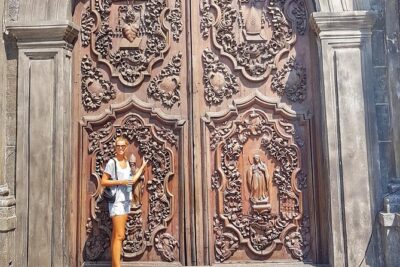
Experience Manila’s Heritage: Intramuros & More in Half a Day!
Read our review →Browse the lists this tour appears in