
Reviewed · MANILA TOURS
2 Days Private Bataan Tour with Corregidor
The most powerful part of this two-day trip is its focus: you follow the path of Filipino and American prisoners from the Bataan surrender to Camp O’Donnell, then spend a full day examining Corregidor’s wartime sites. This is a serious history tour, not a quick photo stop with a few dates attached.
I like the private format, which lets you ask questions, adjust the day, and request sites that matter most to you. I also like the range of places, from the Zero Kilometer marker and small museums to Mount Samat and Corregidor. The main drawback is the price, $1,150 per person, which demands careful thought if you are not deeply interested in World War II history.
Key points at a glance
- A full two-day study of the Philippine campaign: You visit Bataan Death March memorials on day one and Corregidor on day two.
- Private car and guide: Your group travels privately, with room to discuss particular family or military interests.
- Four important Bataan stops: Camp O’Donnell, Bamban Museum, the Bataan World War II Museum, and the Zero Kilometer marker form the first day’s core.
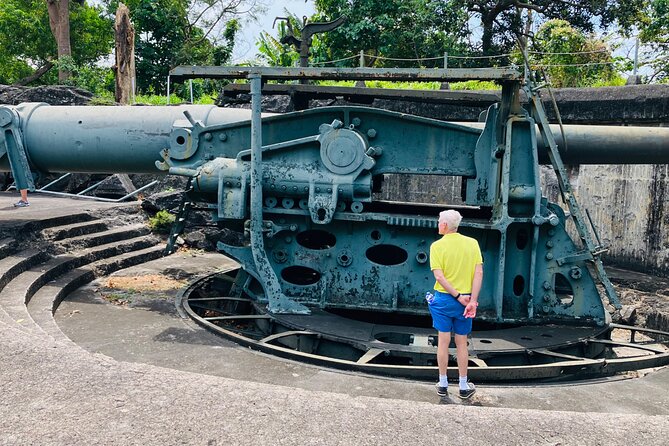
- A long Corregidor visit: The island portion lasts about seven hours, including the 20-minute boat ride and island bus tour.
- JB Quemado leads the overall trip: The experience is provided by Jb Quemado, and JB is specifically praised for tailoring the route and explaining battlefield details.
- Best for history-focused visitors: The schedule and cost make the most sense if memorials, military history, and personal stories are central to your trip.
Why this two-day route matters
The Philippine campaign of World War II is often reduced to a few names: Bataan, Corregidor, and the Death March. This tour gives those names a physical setting. You move from a former prisoner camp to a surrender site, then to the road marker that identifies where the march began.
That progression gives the tour emotional weight. At Capas National Shrine, you are dealing with the aftermath of defeat and imprisonment. At Bataan, you are looking at surrender and endurance. On Corregidor, you spend time with the wider military story through battlefield discussions and a bus ride around the island.
I would choose this experience only if you are ready for a dense two days. The stops are not built around shopping, beaches, or casual sightseeing. You will spend much of your time listening, looking at memorials, and connecting locations to the events that took place there.
The private setup is important. You are not simply following a fixed group from one sign to the next. The guide and driver can respond to your interests, and JB Quemado has been praised for making room for requested sites. That matters if you have a family connection to the Death March or want more time with one part of the story.
A few more Manila trips to weigh up
- From Manila: 2-Day Buscalan Tour with Apo Whang-od
★ 3.6 · 29 reviews - Cebu: 2-Day Private Tour Moalboal and Oslob
★ 4.7 · 4 reviews - 2 Days SSI Advanced Open Water Course in Boracay
★ 5.0 · 3 reviews
Day one: from Camp O’Donnell to the Death March marker
The first day begins at 7:00 a.m. with pickup and travel in a private car. The early start is useful because the day covers several locations and includes substantial driving. Exact pickup arrangements should be confirmed when you book, since the published information gives a start time but does not specify every pickup point.
Capas National Shrine and Camp O’Donnell
Your first stop is Capas National Shrine, also known as Camp O’Donnell. The former camp held Filipino and American prisoners of war after the Battle of Bataan, so this visit gives you an early understanding of what followed the surrender.
Plan on about one hour here. Admission is included. The site is best approached with patience. It is a memorial to suffering, not an entertainment stop, and the value comes from hearing how the place fits into the larger sequence of the campaign.
I like beginning here because it places the human cost before the military detail. After hearing about battles and surrender, you see where prisoners were held. If your interest is personal, tell JB or your guide at the start of the day. One person who took this tour had a grandfather who walked the Death March, and that kind of family link can shape what you need from the visit.
Bamban Museum of History
Next comes the Bamban Museum of History, a private World War II museum assembled by a war historian. The collection includes World War II artifacts, and the visit lasts about an hour. There is no admission charge, though donations are appreciated.
This stop adds objects to the memorials and markers you have already seen. A museum collection can make the period more tangible, especially when your guide explains what you are looking at and why it matters. Since it is privately maintained, the tone may feel more personal than a large state museum.
You should allow some flexibility here. The information provided does not list the museum’s exact opening arrangements or donation amount, so your guide is the best source for the practical details on the day. Do not treat the free entry as a sign that the stop is minor. Its value lies in the artifacts and the historian’s connection to the subject.
Same islands, a completely different day on the water:
- Intramuros, Manila: Historical Bamboo Bike Tour
★ 4.8 · 583 reviews - Experience Intramuros with Bamboo Bicycle – Ecotours
★ 5.0 · 508 reviews - Manila: Intramuros, Chinatown, and Old Manila Half-Day Tour
★ 4.8 · 475 reviews - Manila: Old & New 4-Hour City Tour
★ 4.5 · 458 reviews
Bataan World War II Museum
The Bataan World War II Museum is scheduled for another hour. It marks the surrender site of American General Edward King to Japanese forces in April 1945, according to the supplied tour details, and admission is included.
This is one of the key points in the tour because it puts a named commander and a specific surrender into the story. Your guide’s battlefield explanations should help connect the museum to the surrounding places, rather than leaving it as a stand-alone exhibit.
The experience works best if you ask questions. Private touring gives you that freedom, and this is the sort of stop where a short question about command decisions, the prisoners, or the route can lead to a far better understanding than simply reading a plaque.
Zero Kilometer Death March Marker
The final listed stop on day one is the Zero Kilometer Death March Marker. You have about 30 minutes here, and admission is free. The marker identifies the starting point of the Death March.
It may be a short visit, but it carries unusual force because it turns the route into a clear physical starting line. After Capas and the museums, this marker helps you understand the movement of prisoners through the region.
Do not expect a long museum visit here. The point is the location itself and the guide’s explanation. I would keep your attention on the setting and use the time to ask how this point connects with San Fernando and Camp O’Donnell, both of which appear elsewhere in the tour.
Day two: the boat to Corregidor
Day two begins at the pier at 7:00 a.m. You take a boat to Corregidor, with the crossing listed at about 20 minutes, then use a tour bus to travel around the island. The Corregidor portion lasts about seven hours.
That is a substantial island visit, not a brief add-on. You have time for battlefield discussions and a broad look at the island rather than a single viewpoint. The tour description specifically promises extensive battlefield discussion once you are on Corregidor, making the guide’s role central.
One especially appealing feature is the private feel. A group on the tour had Corregidor nearly to itself and received highly personal attention, including what was described as a VIP-style visit. You should not assume the island will always be empty, but the private arrangement does give you a better chance to focus on your own questions and pace.
The boat schedule makes punctuality important. You need to be at the pier by the stated 7:00 a.m. start, and the provided details do not identify the pier, boat operator, or separate boat cost. Confirm those points before departure. The listing describes Corregidor admission as free, but you should still ask exactly which transport and island fees are covered by the $1,150 price.
Mount Samat and the final Bataan connections
After Corregidor, the schedule includes Mount Samat National Shrine, also called Dambana ng Kagitingan. You spend about two hours at the mountain where the final battle of Bataan took place before the American surrender. Admission is included.
Mount Samat gives you a different kind of experience from the Death March memorials. Here the focus is the battle and the sacrifice of those who fought. The setting also helps explain why this location matters, since the mountain itself is part of the story rather than merely a backdrop.
The final scheduled stop is San Fernando, where prisoners were loaded onto a train before being taken to the concentration camp. The visit lasts about 30 minutes and has no admission fee.
This short stop is valuable because it links the route’s major stages. The Zero Kilometer marker identifies the beginning of the march, San Fernando shows the next stage of prisoner transport, and Capas shows where many prisoners ultimately ended up. In half an hour, you may not get a long site visit, but the guide can help join those points into one clear sequence.
The order shown for day two deserves a practical check. Corregidor, Mount Samat, and San Fernando involve different transport legs, and the published schedule does not explain the exact road and boat arrangements. Ask JB to confirm the final order, departure points, and how transfers between the island and Bataan are handled before you commit to the dates.
What the private format adds
A private tour costs more than a shared excursion, but the extra money buys something specific here: attention. You travel with your own group in a private car and have a guide available for extended battlefield discussion.
That is useful at a place like Corregidor, where a standard route can blur together if you do not know what you are seeing. You can ask for more explanation at a fortification, memorial, or battlefield site instead of moving on because the rest of a large group is ready.
The private format also helps if you have a personal reason for coming. A family member who walked the Death March may want more time at one memorial. A military history enthusiast may prefer command decisions and troop movements. Someone with a general interest in the war may need the story explained in simpler chronological steps. JB has been praised for accommodating requested places, which is exactly the sort of flexibility you want in a private booking.
Still, private does not mean effortless. The days start early, the subject is heavy, and the route covers several locations. You will get more from the experience if you read a little about the Philippine campaign before arriving and bring specific questions.
Is $1,150 per person a fair price?
At $1,150 per person, this is a high-priced tour. For two people, the tour cost would be $2,300 before any extras not included in the stated price. That figure is far above a basic day trip, so you need to judge it as a private, specialist experience rather than ordinary sightseeing.
The value is strongest when you are traveling with a small group that would otherwise need to arrange a private car, driver, guide, island transport, and two full days of site visits. The tour combines several memorials, two museums, Mount Samat, San Fernando, and a full Corregidor day. Admission is included at Capas, the Bataan World War II Museum, and Mount Samat, while the Bamban Museum accepts donations.
The price is harder to justify if you have only a casual interest in World War II or would be satisfied with one or two memorials. You are paying for depth, privacy, planning, and guide time. You are not paying for a broad Philippines vacation experience with many different kinds of attractions.
I would also confirm what the price includes in writing. The information states that pickup is offered, a private car and guide are used, and a mobile ticket is provided. It does not spell out every boat, meal, parking, or incidental cost. That is a reasonable question to ask before payment.
Who will get the most from this experience?
I would recommend this tour most strongly to:
- World War II history enthusiasts who want to connect named sites and events.
- People with a family link to the Bataan Death March, the prisoner camps, or the Philippine campaign.
- Visitors who want Corregidor but also want the mainland Bataan story around it.
- Small groups willing to pay for a private car and personal guide time.
- Visitors who prefer questions and discussion over a quick set of photo stops.
I would be more cautious if you dislike early starts, long road days, memorial sites, or emotionally difficult history. The schedule is packed, and the experience does not appear designed for children who need frequent entertainment or for visitors seeking relaxed sightseeing.
Most travelers can participate, according to the practical information provided, but no detailed accessibility information is given. If you have mobility concerns, ask about the tour bus, memorial grounds, museum access, and walking required at each stop before booking.
Booking, weather, and cancellation details
Confirmation is provided at the time of booking, and the activity is private, so only your group takes part. Pickup is offered, with a 7:00 a.m. start time.
The tour requires good weather. If poor weather forces cancellation, you will be offered another date or a full refund. For your own cancellation, you receive a full refund if you cancel at least six full days before the start time. Cancelling two to six full days ahead brings a 50 percent refund, while cancelling less than two full days ahead brings no refund.
Because this is a two-day trip with boat travel, I would avoid placing it at the very end of your Manila stay. A weather change or transport problem could affect your plans, even though the policy provides a new date or refund when the operator cancels for bad weather.
Should you book the Bataan and Corregidor tour?
Book it if you want the Philippine World War II story told through places, not just read from a timeline. The route moves from Camp O’Donnell to the Death March marker, then to Bataan’s surrender and battle sites, San Fernando, and Corregidor. The private car and guide are real advantages, especially if you have a family story or particular military questions.
Skip it if $1,150 per person feels uncomfortable or if your interest is only moderate. This is a specialist trip with early starts and a solemn subject. Before booking, confirm the Corregidor pier, the exact day two sequence, and which transport costs are included. For the right history-focused visitor, those details are worth sorting out because the tour offers something rare: two concentrated days connecting the major Bataan and Corregidor sites with a guide who can shape the experience around your group.
FAQ
Where does this tour take place?
The tour is based in Manila, Philippines, and visits sites in Bataan, Capas, San Fernando, Mount Samat, and Corregidor Island.
How long does the tour last?
The experience lasts about two days.
What time does the tour start?
The stated start time is 7:00 a.m. on both days.
Is pickup available?
Yes. Pickup is offered, though the exact pickup point should be confirmed when booking.
Is this a private tour?
Yes. Only your group participates, and transportation is provided by private car with a guide and driver.
How long is the boat ride to Corregidor?
The boat ride to Corregidor is listed as approximately 20 minutes.
How much time is spent on Corregidor Island?
The Corregidor portion lasts about seven hours and includes a tour bus around the island.
Is admission included at every stop?
Admission is included at Capas National Shrine, the Bataan World War II Museum, and Mount Samat National Shrine. The Bamban Museum and Zero Kilometer marker have no admission charge listed. Confirm any separate transport or incidental fees before booking.
Is the tour suitable for most people?
The provided information says most people can participate. Detailed accessibility information is not supplied, so ask about walking and access requirements if needed.
What happens if bad weather cancels the tour?
If poor weather causes the operator to cancel, you can choose a different date or receive a full refund.
Just added around Manila
- Underground River with Lunch★ 3.6 · 5 reviews
- Private Tour: Tagaytay Midlands & Taal Volcano Boat Ride★ 4.5 · 15 reviews
- 3 Days Private Tour in Banaue Ifugao visiting Batad Rice Terraces★ 3.5 · 3 reviews
- Tagaytay Adventure: Volcano Views, Countryside, Market & Cruise!★ 4.5 · 14 reviews
- Tagaytay + Hidden Valley Springs: A Scenic Escape w/ Transfers★ 4.0 · 4 reviews
- Tagaytay Day Tour sightseeing with Panoramic Taal volcano view★ 5.0 · 6 reviews
- Unforgettable Manila Fishing Village Day Excursion 2024★ 5.0 · 4 reviews
- Cultural Dinner and Show in Manila★ 5.0 · 4 reviews
Manila Tours, compared.

Intramuros, Manila: Historical Bamboo Bike Tour
Read our review →
Experience Intramuros with Bamboo Bicycle – Ecotours
Read our review →
Intramuros, Chinatown, and Old Manila Half-Day Tour
Read our review →
Manila Food Tour: Introduction to Philippine Street Food
Read our review →
Spectacular Manila to Tagaytay: Full-Day Sightseeing Tour
Read our review →
Discover Tagaytay’s Countryside: Half-Day Sightseeing Tour
Read our review →

Manila Food Tour: Explore World’s Oldest Chinatown
Read our review →Browse the lists this tour appears in