
Reviewed · MANILA STREET FOOD TOURS
Manila Food Tour: Explore World’s Oldest Chinatown
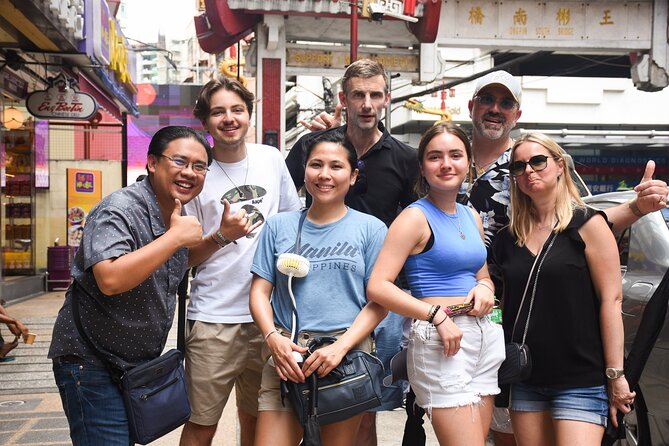
Binondo is best understood one bite at a time. This three-hour walk takes you through the world’s oldest Chinatown, starting at Binondo Church and moving into food stalls, small restaurants, dumpling shops, noodle counters, dim sum houses, and a historic bakery. You are not just handed a plate and sent on your way. The food provides a way into Manila’s Chinese-Filipino past.
I like the eight food tastings, which cover sweet, savory, light, and filling dishes. I also like the short format: you get a serious meal and a useful introduction to Binondo, then still have most of the day for Intramuros, the National Museum, or a nap. The main caution is simple: come hungry. Morning participants say breakfast is a mistake, and even those who split portions often finish full.
Key points to know before booking
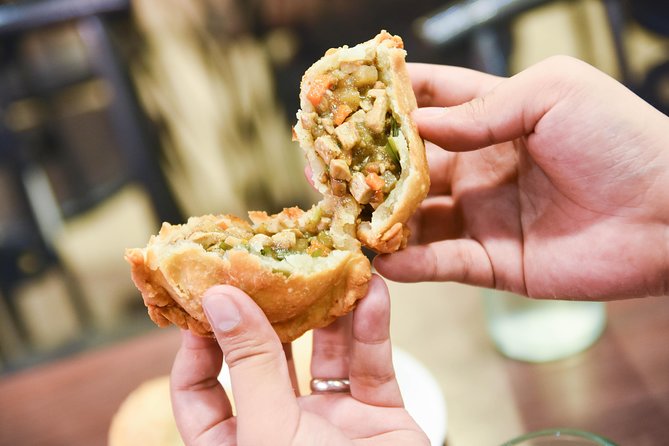
- Eight tastings in about three hours: Expect a full progression from fresh lumpia and empanadas to dumplings, noodles, dim sum, and hopia.
- Binondo Church is an easy landmark: The tour begins and ends at the Minor Basilica and National Shrine of Saint Lorenzo Ruiz.
- Small-group format: The tour is marketed for groups of up to 10, while the additional booking information lists a maximum of 15.
- Guides shape the experience: Nel, Jian, Chloe, Rian, and other guides are praised for food explanations, local stories, and easygoing group management.
- A walking tour with no private vehicle: You move between stops on foot, so comfortable shoes and tolerance for city crowds matter.
- Not suitable for vegans: The food selection centers on Chinese-Filipino dishes that may include meat, seafood, eggs, or dairy.
Why Binondo is the right place for a food tour
Binondo is not a polished food district built for sightseeing. It is a working part of Manila, where Chinese and Filipino traditions have mixed over generations. That makes the setting more interesting than a tour confined to one restaurant.
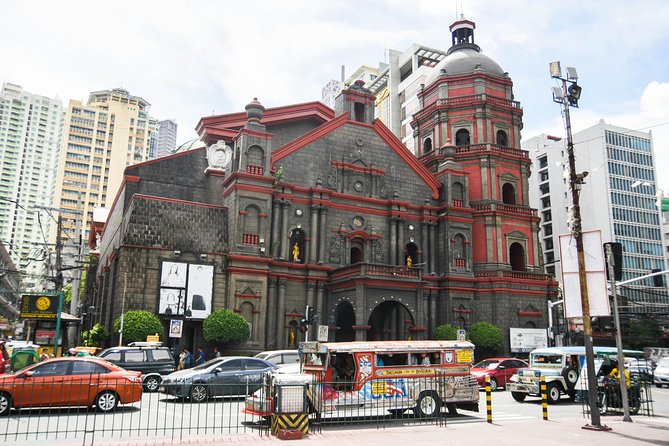
You begin at Binondo Church, a practical meeting point and a useful marker in a district where streets can feel confusing at first. From there, the route heads toward Carvajal Street and continues through local food stops. The walk gives you a better sense of how food fits into daily life here: snacks sold from small counters, family-run shops, busy noodle places, and bakeries with long-running specialties.
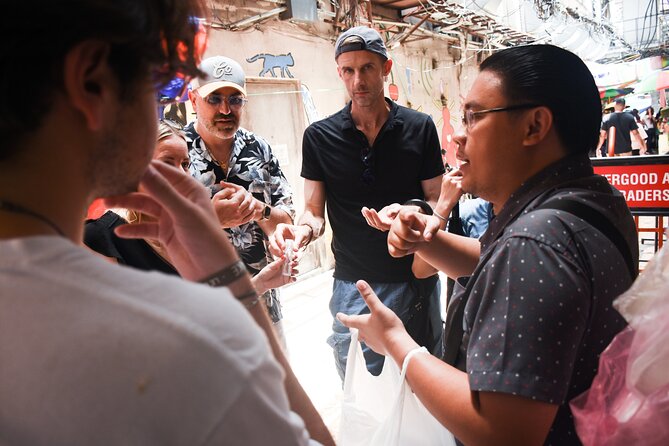
I value this kind of introduction because Binondo can be hard to read on your own. A guide helps you find places you might otherwise pass without noticing, explains what to order, and handles the practical matter of getting food onto the table. At crowded stops, that local familiarity can save time.
The tour also gives you a useful cultural angle. Chinese cooking methods and Filipino tastes meet in dishes that are familiar in outline but distinctly local in flavor and style. The point is not to compare every bite with food from China or another Chinatown. It is to see how a community shaped its own food culture in Manila.
More Manila Street Food Tours in Manila
- Manila: Intramuros, Chinatown, and Old Manila Half-Day Tour
★ 4.8 · 475 reviews - Manila Food Tour: Introduction to Philippine Street Food
★ 5.0 · 417 reviews - Manila: Street Food and Drinks Walking Tour with Tastings
★ 4.8 · 114 reviews
Starting at Binondo Church and Carvajal Street
The first stop is Binondo Church, also known as the Minor Basilica and National Shrine of Saint Lorenzo Ruiz. You meet your guide at 1006 Plaza Lorenzo Ruiz, then set out on foot.
The opening section is likely to feel more like orientation than a formal history lesson. The guides who receive the strongest praise, including Nel, Jian, Chloe, and Rian, are good at connecting the neighborhood’s past with the food in front of you. That makes the information easier to remember than a string of dates.
Carvajal Street brings the first real tastes. Fresh lumpia and Kuchay Ah Pie introduce two different sides of the food scene. Lumpia gives you a soft, fresh wrapper with a savory filling, while Kuchay Ah Pie offers a pastry-style snack built around chives and a seasoned filling.
You may also encounter Chinese empanadas during the early part of the walk. These are the kind of foods that make a food tour worthwhile: portable, inexpensive-looking snacks with a lot of local character. The exact order and serving size can vary, but the plan includes sweet and savory items rather than eight versions of the same dish.
This is also where the tour’s walking format becomes clear. You are not moving between attractions in a private vehicle. You are crossing streets and entering small businesses, so the pace may feel active even though the walk is spread over roughly three hours.
Handmade dumplings and the best part of the route
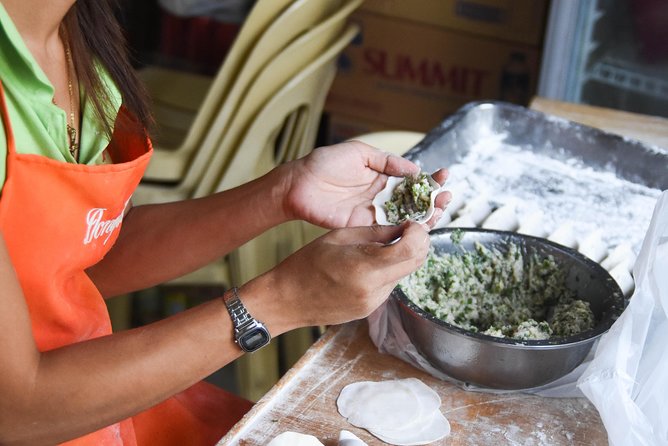
The dumpling stop is one of the strongest reasons to book this experience. The route takes you to a place where dumplings are made by hand, and the food is served as part of the tour rather than left for you to discover by chance.
The appeal is not only the taste. Handmade dumplings show the work behind the dish: shaped wrappers, carefully prepared fillings, and quick cooking once an order is placed. One guide has a relationship with the shop that can help the group receive its food quickly, even when there is a long queue.
If you love dumplings, this may be the stop you remember most. One visitor compared the dumplings favorably with those found in the San Francisco Bay Area, which is high praise from someone familiar with Chinese food outside the Philippines. That does not mean every person will rank them the same way, but it tells you where to direct your appetite.
Portions are another practical matter. The tour includes many tastings, not necessarily eight full restaurant meals. At some stops, the group may share food or take smaller portions. Still, the total is substantial. One group split dishes among seven people and remained well fed, while another group had leftovers carefully wrapped for later.
That arrangement is useful if you want variety instead of a single large plate. It can be less satisfying if you prefer to sit down and finish a full serving of every dish. The tour is built around sampling, comparison, and movement.
Mami, Manila’s comfort-food pause
The route continues to mami, a noodle soup tied to Filipino comfort food. After pastries, lumpia, and dumplings, a bowl of warm noodles changes the rhythm of the meal.
Mami is important here because it shows how Chinese food entered everyday Filipino eating habits. It is not presented as an exotic novelty. It is a familiar, comforting dish with a place in local food culture.
This stop may be especially helpful for visitors who want more than snack foods. Mami gives the tour a filling center and offers a chance to slow down. The route is planned so the tastings are spaced out, and that pacing matters. You need time to walk, listen, and let each dish settle before the next one arrives.
Do not expect a quiet, formal tasting room. The experience takes place in real neighborhood businesses, and the surroundings can be active. That is part of its appeal, though it may not suit you if you want a highly controlled setting.
Same islands, a completely different day on the water:
- Intramuros, Manila: Historical Bamboo Bike Tour
★ 4.8 · 583 reviews - Experience Intramuros with Bamboo Bicycle – Ecotours
★ 5.0 · 508 reviews - Manila: Old & New 4-Hour City Tour
★ 4.5 · 458 reviews - Spectacular Manila to Tagaytay: Full-Day Sightseeing Tour
★ 5.0 · 349 reviews
Classic dim sum in a local restaurant
Later, the group reaches a destination known for classic dim sum. This stop brings more variety to the table and adds a restaurant setting to the street snacks and small counters earlier in the route.
Dim sum is a natural fit for a group tour because several dishes can be shared. You get to try more than one item without ordering a full meal for yourself. The guide also explains what you are eating and how it fits into the wider Chinese-Filipino food tradition.
The food is prepared fresh at the stops, according to the information provided for the tour. That matters more here than a long menu. You are sampling a planned selection chosen to show different textures and flavors, not simply ticking off famous dishes.
At this point, you may be full enough to slow down. Do it. You do not need to rush through every bite to keep up, and guides have helped people wrap leftovers when portions were too large. If you have food restrictions, tell the guide before or at the start. One guide made a point of accommodating several restrictions, but the tour is not suitable for vegans.
The experience also has room for a little culinary adventure. One group was offered pigeon and shared one portion among seven people. That does not mean pigeon is guaranteed on every departure, but it shows that the route can include foods beyond the usual tourist checklist when available.
Finishing with hopia at a historic bakery
The final food stop is a bakery known for hopia. This flaky pastry comes in several flavors and provides a sweet ending after the heavier savory dishes.
Hopia is more than a dessert picked for convenience. It reflects the Chinese-Filipino connection that runs through the whole route. The pastry is familiar to many Filipinos, yet it may be new to visitors who know Chinese food mainly through dim sum and noodle dishes.
The bakery also gives the tour a natural finish. You can compare flavors, choose a favorite, and perhaps save one for later. By then, you will likely have enough food for a midnight snack, especially if the group has shared larger portions.
The tour returns to Binondo Church, so you finish where you began. That makes the outing easy to combine with the rest of a Manila day. The advertised duration is about three hours, although the food pace and group size can affect the exact finish.
What the guides add to the experience
The guide can make or break a food walk, and this tour has several named guides with strong praise attached to their hosting style.
Nel is described as cheerful, attentive, and good at making a mixed group feel comfortable. She has also been praised for explaining the neighborhood and its food, not simply pointing to the next dish. Jian, who started the tour, is noted for practical organization, food knowledge, and flexibility when bad weather disrupted a planned route.
Chloe is praised for lively commentary about food, local residents, and the area’s past. She has also helped people with practical matters after the tour, including waiting while a taxi was boarded. Rian is described as personable and clear in English, with useful background on both Manila and Chinatown.
You should not assume you will receive a particular guide, but these examples help set expectations. The best version of this tour is conversational. You can ask about ingredients, Filipino life, or why a certain shop matters. If your guide focuses more on food than history, you may still have a good meal, but the cultural side may feel thinner.
That is the main point to weigh. Most of the available feedback gives high marks to the guides and the food, but one person found the historical explanation limited and considered the food merely fine. I would book this for the combination of eating and neighborhood access, not as a formal history tour.
Price, group size, and practical value
The price is $60 per person. That is not the cost of simply buying eight snacks in Binondo, and you should not judge it that way.
You are paying for a planned route, a guide, explanations, group coordination, and the chance to enter several places with someone who knows what to order. The included food is substantial, along with soft drinks, tea, and bottled water. For a first visit to Binondo, that can be a fair price if you value ease and context.
The tour is promoted as a small group of no more than 10 people, while the additional details give a maximum of 15. Ask about the expected group size if that point matters to you. A smaller group usually makes it easier to hear the guide and share food, while a larger group may mean slower service at tiny shops.
Private transportation is not included. You meet at Binondo Church and walk from stop to stop. The area is near public transportation, but you are responsible for reaching the meeting point.
The three-hour length is a strength. You get a substantial food experience without surrendering an entire day. It also leaves room to visit another Manila sight afterward, though you may want a break before attempting another meal.
Best timing, clothing, and appetite
I would choose a morning departure if possible. The heat can be easier to manage earlier, and a morning food tour gives you the rest of the day for sightseeing. Most important, skip breakfast or eat very lightly.
Wear comfortable walking shoes. The route includes city streets, restaurant entrances, and food stops rather than a single seated venue. Bring a curious mind and some patience for the pace of real neighborhood businesses.
The experience requires good weather. If rain or other poor conditions force a cancellation, you are offered another date or a full refund. You can cancel for a full refund up to 24 hours before the start time, but late cancellations and changes are not accepted.
People with ordinary mobility can participate, according to the supplied details. Still, this is a walking tour, so you should be comfortable moving between stops for about three hours.
Who should book this Manila food walk
This tour fits first-time visitors who want a guided introduction to Binondo without spending a full day on it. It also suits repeat visitors who have seen Manila’s major sights and want a more local food angle.
Food lovers will appreciate the range: fresh lumpia, Kuchay Ah Pie, empanadas, handmade dumplings, mami, dim sum, and hopia. The selection moves from quick snacks to a noodle soup and shared restaurant dishes, so you can sample broadly.
It can work for Manila residents and Filipinos from other parts of the country, too. Familiar dishes may taste different from versions found elsewhere, and the guide adds context about where to find the better examples.
I would not choose it if you need a vegan menu, dislike shared tastings, or want a private car between stops. I would also avoid booking it right before another major meal. The amount of food is a feature, but it can become a challenge if you treat every stop like a separate lunch.
Should you book the Binondo food tour?
Book it if you want to taste your way through Chinatown while someone else handles the route, ordering, and local explanation. The dumplings, fresh lumpia, mami, dim sum, and hopia create a well-rounded introduction, and the guides add warmth that a self-guided food crawl may lack.
Skip it if your main goal is a detailed architectural or historical tour, since the depth of commentary can depend on the guide. For most visitors, though, $60 buys a useful three-hour entry into Binondo, with enough food to count as a meal and enough free time left for the rest of Manila.
FAQ
Where does the Manila food tour begin?
The tour begins at the Minor Basilica and National Shrine of Saint Lorenzo Ruiz, commonly called Binondo Church, at 1006 Plaza Lorenzo Ruiz, Binondo, Metro Manila.
Where does the tour end?
The activity ends back at the meeting point at Binondo Church.
How long does the experience last?
The tour lasts approximately three hours.
How many foods are included?
Eight different food items are included, ranging from sweet to savory.
What kinds of food will I try?
The route includes foods such as fresh lumpia, Kuchay Ah Pie, Chinese empanadas, handmade dumplings, mami, classic dim sum, and hopia.
Are drinks included?
Yes. Soft drinks, tea, and water are included, along with bottled water.
Is private transportation included?
No. Private transportation is not included, and the experience takes place as a walking tour between food stops.
How large is the group?
The tour is promoted as a small group with a maximum of 10 people, while the additional booking information lists a maximum of 15 travelers.
Is the tour suitable for vegans?
No. The experience is specifically listed as not suitable for vegans.
What happens if bad weather cancels the tour?
If poor weather causes the experience to be canceled, you can choose a different date or receive a full refund.
More Food in Manila
- Makati Street Food Tour Experience
★ 5.0 · 20 reviews - ⭐ Manila Street Food Tour in the Downtown, Eat and Drink⭐
★ 4.6 · 19 reviews - Makati: Street Food Experience with a Local Guide
★ 4.6 · 14 reviews - Skip the Line: Hike Eat Swim at Mount Purro Nature Reserve Ticket
★ 5.0 · 13 reviews
More Food & Drink in Manila
- Manila: Sightseeing and Food Walking Tour with Tastings
★ 4.7 · 68 reviews - Manila’s Culinary Expedition: The Ultimate Food and Market Tour
★ 5.0 · 42 reviews - Manila: Guided Food Tour of Binondo with Tastings
★ 4.8 · 38 reviews - Manila Street food and Night Market Tour
★ 4.7 · 21 reviews
Just added around Manila
- Underground River with Lunch★ 3.6 · 5 reviews
- Private Tour: Tagaytay Midlands & Taal Volcano Boat Ride★ 4.5 · 15 reviews
- 3 Days Private Tour in Banaue Ifugao visiting Batad Rice Terraces★ 3.5 · 3 reviews
- Tagaytay Adventure: Volcano Views, Countryside, Market & Cruise!★ 4.5 · 14 reviews
- Tagaytay + Hidden Valley Springs: A Scenic Escape w/ Transfers★ 4.0 · 4 reviews
- Tagaytay Day Tour sightseeing with Panoramic Taal volcano view★ 5.0 · 6 reviews
- Unforgettable Manila Fishing Village Day Excursion 2024★ 5.0 · 4 reviews
- Cultural Dinner and Show in Manila★ 5.0 · 4 reviews
Manila Street Food Tours, compared.

Intramuros, Chinatown, and Old Manila Half-Day Tour
Read our review →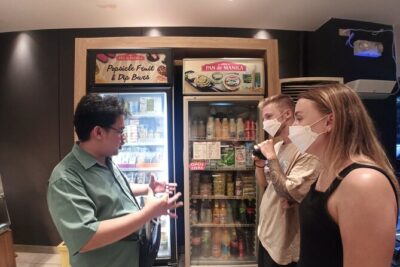
Manila Food Tour: Introduction to Philippine Street Food
Read our review →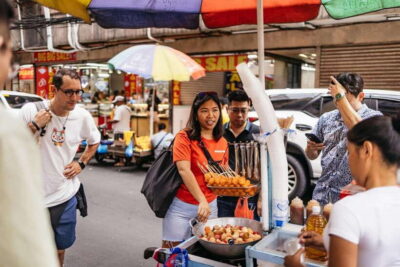
Street Food and Drinks Walking Tour with Tastings
Read our review →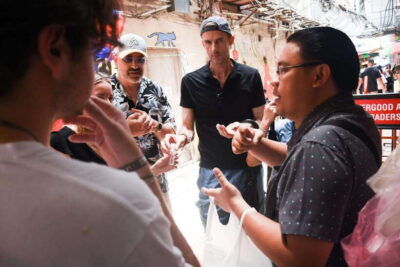
Intramuros, Chinatown, and Old Manila Half-Day Tour
Read our review →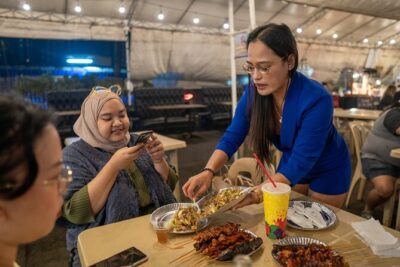
Makati Street Food Experience end with a Rooftop Bar
Read our review →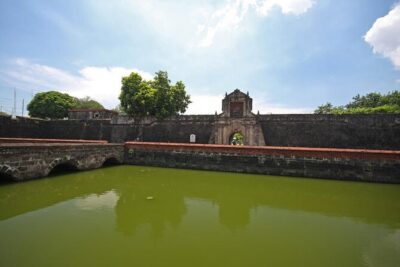
Intramuros & Chinatown Manila Tour – Walking, Food & Culture
Read our review →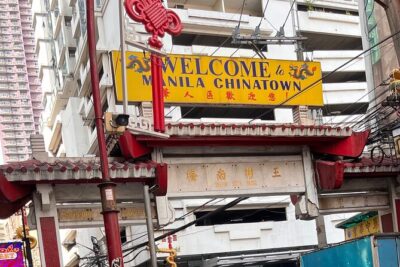
Browse the lists this tour appears in