

Reviewed · MANILA INTRAMUROS WALKING TOURS
Manila Intramuros Walking tour with Local Tour Guide
Intramuros is not just an old walled district. It is where Manila’s Spanish past, wartime destruction, religious power, and Filipino identity meet in a few walkable blocks. This tour brings those layers together, with Fort Santiago’s World War II stories and the elegant rooms of Casa Manila providing the strongest contrast.
I like the small group, capped at 10, because it gives you room to ask questions and keep pace with the guide. I also like the practical touches: bottled water, a welcome drink, and umbrellas when rain rolls in. The main consideration is the heat and weather, plus the fact that San Agustin Church and Casa Manila close on Mondays.
Key points at a glance
- A compact history lesson: Your guide places Intramuros within roughly 700 years of Philippine history before walking through the sights.
- Four major stops: The route includes Manila Cathedral, San Agustin Church, Fort Santiago, and Casa Manila.
- The strongest contrast: Fort Santiago deals with war, imprisonment, and the Battle of Manila, while Casa Manila shows the lifestyle of the Spanish-era Filipino elite.
- Small-group format: A maximum of 10 people makes it easier to hear the guide and ask questions.
- Useful extras: Bottled water, a welcome drink, admission fees, and occasional rain protection are included.
- Plan around Monday closures: San Agustin Church and Casa Manila are closed every Monday.
Why Intramuros works best with a guide
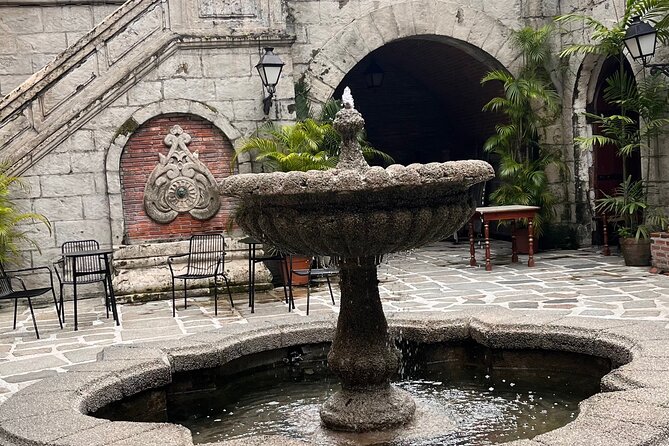
Intramuros can look simple at first: stone walls, old churches, plazas, and broad streets. But the meaning of each place is easy to miss without someone explaining how Spanish rule shaped Manila, how Catholic institutions gained influence, and how the district suffered during the Battle of Manila.
A local guide gives you a clear thread through the area instead of leaving you with a collection of attractive buildings. Mari is especially good at setting the scene early, offering a short introduction to Philippine history before the walk begins. Victor is another named guide associated with the experience, described as attentive and clear when explaining the cultural background of Intramuros.
The history is not presented as a string of dates alone. The focus includes the district’s greatest and darkest periods, including what happened inside the walls during World War II and the Battle of Manila. That makes the tour useful for first-time visitors who want to understand what Manila has become and how the Philippines arrived at the present.
The group size matters here. With no more than 10 people, you should be able to hear explanations in the streets and inside the historic sites without feeling lost in a crowd. This is still a walking tour, though, so you will get more from it if you are comfortable spending two to three hours on your feet.
More Manila Intramuros Walking Tours in Luzon:
- Manila Old and New: Sightseeing Tour Including Intramuros and Fort Santiago
★ 4.5 · 377 reviews - Manila’s Walled City: Intramuros Walking Tour
★ 5.0 · 82 reviews - Express Bamboo Bike Tour inside Intramuros
★ 4.5 · 66 reviews
Manila Cathedral and Plaza de Roma
The walk includes Manila Cathedral, one of the most recognizable landmarks inside Intramuros. The church provides an immediate introduction to the religious and political importance of the walled city during the Spanish period.
The nearby Plaza de Roma helps you understand the district as a planned center of authority rather than just a cluster of monuments. You can expect the guide to connect the cathedral and plaza to the wider role of the church and colonial government in Manila.
The cathedral stop is listed at about 35 minutes. That is enough time for an explanation and a look inside, but not so long that the tour gets stuck at its first landmark. Admission is listed as included, and the itinerary also identifies the stop as having no separate admission charge.
Dress matters inside the church. Wear comfortable clothing for the walk, but choose something modest enough for a religious site. That small bit of preparation saves you from feeling out of place once you enter.
San Agustin Church and the oldest stonework
San Agustin Church is one of the most important stops on the route. It is known as one of the oldest stone churches in the Philippines, and its architecture gives you a strong sense of how Spanish Catholic traditions took root in Manila.
The planned visit lasts about 35 minutes. That is a useful amount of time for noticing the building’s design and hearing why it matters, without turning the tour into a long church study.
I would give this stop extra attention if you care about architecture, religion, or colonial history. The church also helps balance the darker material at Fort Santiago, showing the cultural and spiritual side of Intramuros alongside its military past.
There is one firm planning point: San Agustin Church is closed every Monday. If your tour falls on that day, the church portion cannot operate as described, so check the date before booking.
Fort Santiago and the Battle of Manila
Fort Santiago is the emotional center of the experience. The fort gives the guide a place to explain military power, imprisonment, the final years of José Rizal, and the destruction that reached Intramuros during World War II.
The itinerary allows about 45 minutes here, the longest scheduled stop. That makes sense. Fort Santiago covers more ground than a quick church visit, and its stories need time to connect the physical site with the events that took place there.
The Dr. Jose Rizal Shrine, the White Cross, and the dungeon are also part of the stated focus. These details make the fort more than a photo stop. You are asked to think about the people held there, the lives affected by war, and the way national memory is preserved in a place that once served a very practical military purpose.
The guide’s approach is important here. A good explanation can help you see the difference between the surviving walls and the human cost of the Battle of Manila. The tour is designed to cover both the past and the present, so you should expect serious material rather than a purely light sightseeing walk.
If you prefer only cheerful attractions, Fort Santiago may feel heavy. That is also why it is valuable. Intramuros is not an old movie set, and the tour does not treat it as one.
A few more Luzon trips to weigh up
- Intramuros & Chinatown Manila Tour – Walking, Food & Culture
★ 4.5 · 32 reviews - Manila: Binondo Walking Tour ( Oldest Chinatown )
★ 5.0 · 30 reviews - Manila Old & New City Walking Tour With A Guide
★ 4.0 · 9 reviews - Manila Private Walking Tour With A Local Guide (Private Tour)
★ 4.5 · 7 reviews
Casa Manila and colonial-era home life
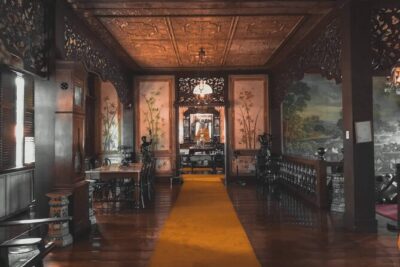
Casa Manila offers a sharp change of mood. The building is a replica of a Spanish colonial mansion, arranged to show how the Filipino elite lived during the Spanish period.
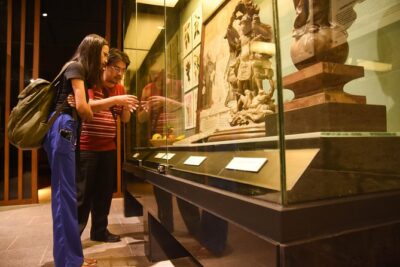
The visit lasts about 35 minutes. Here, the details are inside the rooms: furniture, decoration, layout, and the careful display of domestic life. The intricate decor makes this one of the most visually appealing parts of the walk.
Casa Manila is useful because it moves the story away from forts and churches. You get a look at status, comfort, and social life, which helps explain that colonial Manila was not experienced in the same way by everyone.
At the same time, keep the context in mind. This is a replica, not an untouched private home, and it presents the lifestyle of the elite rather than ordinary Filipino families. That limitation does not make it unhelpful, but it does shape what you are learning.
Casa Manila is closed every Monday, along with San Agustin Church. On other days, it is included in the planned route and admission is listed as covered by the tour.
The brief paddle-bike extra
The tour description mentions a short experience on what is called a Lamborghini bike. In plain English, this is a three-wheeled paddle bike.
You do not need to pedal yourself because someone can do it for you. Treat this as a small novelty between the main historical stops, not as a major part of the tour. It may appeal to families or anyone who enjoys an amusing local touch, but the churches, fort, and museum are the real reasons to book.
The unusual name may create inflated expectations, so it is worth keeping the scale clear. This is a brief add-on, not a long ride through Manila.
What the two to three hours feel like
The tour is compact but full. Four major sites are scheduled, with roughly 35 minutes at Manila Cathedral, 35 minutes at San Agustin Church, 45 minutes at Fort Santiago, and 35 minutes at Casa Manila.
Those times add up to about two and a half hours before allowing for walking between stops. That fits the advertised two to three hour duration, though the exact pace can depend on weather, questions, and how the group moves.
The route begins and ends at Figaro Coffee in the FEMII Building on Soriano Avenue, inside Intramuros. Returning to the same meeting point is convenient if you have another plan nearby, and the area is close to public transportation.
Wear comfortable attire and sensible walking shoes. The tour is outdoors for much of its length, and Manila weather can be hot or rainy. Bottled water is included, and one guide provided umbrellas when rain began, but I would still dress for changing conditions.
The activity is described as suitable for most people. No special ability requirements are stated, but it remains a walking tour through a historic district, so you should be comfortable moving between sites for several hours.
Is $55 a fair price?
At $55 per person, this is not the cheapest way to see Intramuros. You are paying for interpretation, organization, admission coverage, a small group, and the convenience of seeing the main sites in one short visit.
The price makes more sense if you want historical context rather than a self-guided walk. Without a guide, you can see the cathedral, fort, and old streets, but you may not understand why a dungeon, plaza, shrine, or surviving wall matters. The guide turns separate sights into one story.
The maximum group size of 10 is another part of the value. A very large group can make a historic district feel like a march from one stop to the next. A smaller party gives you a better chance to ask about Filipino history, the Battle of Manila, or details inside Casa Manila.
The tour also includes a welcome drink, bottled water, and admission fees. Those extras do not transform the price into a bargain, but they reduce the small costs and planning work that can add up during a short Manila visit.
I would consider it good value for a first visit, especially if you have only one afternoon for Intramuros. If you already know the district well and prefer exploring at your own pace, the price may be harder to justify.
How the guides shape the experience
Mari is the guide most often singled out by name in the supplied material. Her approach combines a short history lesson with an easygoing manner, and she is described as both engaging and funny. That mix matters because several centuries of history can become a blur if the explanation is too formal.
One useful feature is the introduction before the walking route. Mari condenses a broad history of the Philippines into about 15 minutes, giving you the basic framework before you reach the landmarks. That helps you place the Spanish period, wartime destruction, and modern Manila in the right order.
Victor is also named as a guide for the experience. His strengths are attentiveness and clear cultural explanation, especially for people visiting the Philippines for the first time.
Guide quality can vary from one departure to another, but the structure gives the leader plenty to work with. The tour has a clear route, strong historical subjects, and a manageable group limit.
Who should book this Intramuros walk?
I would recommend it to first-time visitors to Manila who want a short, organized introduction to Philippine history. It suits anyone who likes churches, military sites, architecture, museums, and stories about how a city changed through war and colonial rule.
It also works well for visitors who might otherwise walk past important places without knowing what they are. The cathedral, plaza, shrine, dungeon, and old homes carry more meaning when someone points out the connection.
Families may enjoy the compact length and the paddle-bike extra, though the darker stories at Fort Santiago may not suit very young children. History fans should appreciate the balance between grand buildings and personal stories.
I would think twice if you want a slow photographic stroll, a food-focused tour, or a route with lots of free time. The schedule is built around the main sites, so it gives you a strong overview rather than hours to wander every lane.
Booking, weather, and Monday planning
Confirmation arrives when you book, and free cancellation is available up to 24 hours before the start time. Cancellations or changes made less than 24 hours before departure are not refunded, and the cut-off uses local time.
The experience requires good weather. If poor weather forces cancellation, you are offered another date or a full refund. Since much of the route is outdoors, that policy is practical rather than surprising.
The most important date check is Monday. Both Casa Manila and San Agustin Church are closed that day, so book another date if those stops are priorities.
Should you book it?
Book this tour if you want the main Intramuros sights explained in a focused two to three hours, especially if you are new to Manila. The best reasons are the small group, the strong coverage of Fort Santiago, and the contrast between wartime history and Casa Manila’s colonial interiors.
Skip it if you already have a solid understanding of Intramuros or prefer to explore independently. For everyone else, $55 buys a useful framework for the walled city, with enough practical support to make the walk comfortable and enough serious history to make it memorable.
FAQ
How long does the Intramuros walking tour last?
The tour lasts approximately two to three hours.
Where does the tour begin?
It begins at Figaro Coffee in Intramuros, at the FEMII Building, 1002 Soriano Avenue, Manila.
Where does the tour end?
The activity ends back at the meeting point at Figaro Coffee.
What sites are included?
The route includes Manila Cathedral, San Agustin Church, Fort Santiago, the Dr. Jose Rizal Shrine, the White Cross, the dungeon, and Casa Manila.
Are San Agustin Church and Casa Manila open every day?
No. Both San Agustin Church and Casa Manila are closed every Monday.
What is included in the tour price?
The price includes a local tour guide, a welcome drink, bottled water, and admission fees.
How many people can join the tour?
The activity has a maximum group size of 10 people.
Just added around Luzon
- Villa Escudero Tour with Lunch From Manila (SHARED)★ 5.0 · 5 reviews
- Private Filipino Cooking Class in the Heart of Manila,Makati City★ 5.0 · 5 reviews
- Villa Escudero Coconut Plantation Day Trip from Manila★ 3.5 · 9 reviews
- VILLA ESCUDERO DAY TOUR with Carabao Cart Ride and Bamboo from Manila★ 4.0 · 6 reviews
- Angeles City / Clark Airport to La Union (Bauang, San Fernando, San Juan)★ 3.5 · 4 reviews
- The Jeepney & Tuk Tuk Adventure ride with Local Guide★ 4.5 · 4 reviews
- Sagada and Banaue Rice Terraces 4-Day Tour★ 5.0 · 4 reviews
- Pagsanjan Falls Adventure with Lunch and Rapids Experience★ 4.5 · 3 reviews
Manila Intramuros Walking Tours, compared.

Intramuros, Manila: Historical Bamboo Bike Tour
Read our review →
Experience Intramuros with Bamboo Bicycle – Ecotours
Read our review →
Intramuros, Chinatown, and Old Manila Half-Day Tour
Read our review →
Manila Old and New: Sightseeing Tour Including Intramuros and Fort Santiago
Read our review →
Explore Intramuros: Introduction to Philippine History
Read our review →Browse the lists this tour appears in