
Reviewed · MANILA INTRAMUROS WALKING TOURS
Manila: Intramuros, Chinatown, and Old Manila Half-Day Tour
Manila’s past and present meet in a single three-hour route, from the crowded produce stalls of Tondo to the old stone walls of Intramuros. I like the sharp contrast between the three stops, and I like that guides such as Felix and Floyd bring humor, clear English, and plenty of local context. The main drawback is the brisk pace: one hour per area gives you a useful first look, not a slow, detailed tour.
I also appreciate the small maximum of 15 people, which should make it easier to hear the guide and ask questions. You should be ready for heat, city traffic, uneven walking, and a market setting that can feel intense. This is not a polished sightseeing loop, and that is part of its appeal.
Key points at a glance
- Tondo comes first: Start among produce, seafood, stalls, and local food in one of Manila’s busiest working districts.
- Binondo adds food and culture: Walk along Ongpin Street and see landmarks tied to Manila’s Chinese Filipino community.
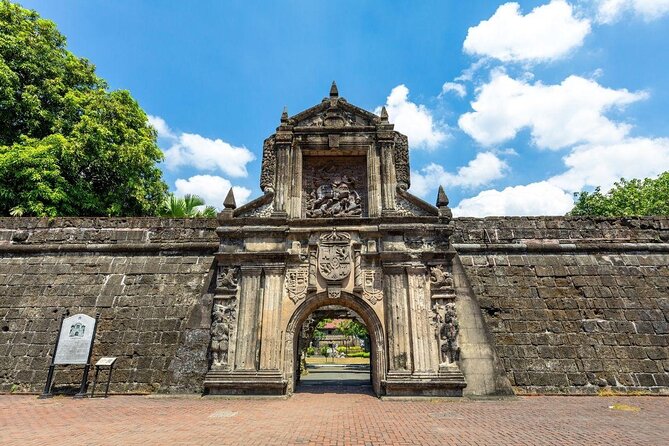
- Intramuros closes the tour: Finish at Fort Santiago and the Manila Cathedral inside the old walled city.
- The guides are a major strength: Felix and Floyd are specifically praised for clear English, warmth, humor, and personal attention.
- You get variety in three hours: Expect walking, tuk-tuks, and jeepneys, depending on the route and conditions.
- The group stays manageable: A maximum of 15 people offers a more personal feel than a large coach tour.
Why this short Manila route works
A half-day tour can be a smart choice in Manila. The city is spread out, traffic can eat up time, and the most useful first visit often comes from seeing several districts rather than spending the whole morning in one museum.
This route gives you three different versions of Manila. Tondo shows ordinary commercial life and the daily push of buying and selling. Binondo brings Chinese Filipino culture, food, religious sites, and street activity into the picture. Intramuros then shifts the mood to stone churches, military defenses, and Spanish colonial rule.
I like that the route does not present Manila as one neat historical story. You move from a working market to a long-established Chinatown, then into a walled district built during the Spanish period. That mix helps you understand why the city can feel crowded, old, young, local, and colonial all at once.
The tour lasts about three hours, with roughly an hour at each stop. That timing is efficient, but it requires realistic expectations. You will not inspect every church, market lane, or fort room in detail. Instead, you get an informed introduction and a better sense of where to return later.
More Manila Intramuros Walking Tours in Luzon:
- Manila Old and New: Sightseeing Tour Including Intramuros and Fort Santiago
★ 4.5 · 377 reviews - Manila’s Walled City: Intramuros Walking Tour
★ 5.0 · 82 reviews - Express Bamboo Bike Tour inside Intramuros
★ 4.5 · 66 reviews
Starting among the stalls of Tondo
The tour begins in Tondo, at Divisoria Market. This is the most direct look at Manila’s working side, with alleys lined by stalls selling fresh produce, seafood, and local delicacies.
For many people, this will be the most memorable part of the route. You are not simply looking at old buildings from the outside. You are watching commerce happen around you, with goods, food, and people moving through a tight urban space.
The guide matters here. Without context, a market can become a blur of noise, color, and unfamiliar products. With someone explaining what you are seeing, the stop becomes a lesson in local shopping habits and everyday food culture. You can ask questions instead of trying to decode every stall on your own.
There is no admission charge for this stop, but that does not mean it is effortless. Tondo is a market district, not a quiet attraction arranged for sightseeing. Wear comfortable shoes, keep your belongings secure, and stay close enough to hear the guide. A moderate level of physical fitness is recommended for good reason.
The one-hour schedule is enough to get a strong impression, though it may feel quick if you enjoy food photography or want to stop often. The tour is best for people who can accept a little sensory overload in exchange for a more direct look at Manila life.
Following Ongpin Street into Binondo
The second hour takes you to Binondo, established in 1594 and widely recognized as the oldest Chinatown in the world. The area adds another layer to Manila’s story, linking Chinese Filipino identity, commerce, religion, and food.
Ongpin Street is the main focus. You can expect a busy street scene, shops, food stops, and the feel of a district that has served as a center of Chinese Filipino life for centuries. The route also includes Binondo Church and the Filipino Chinese Friendship Arch, giving the walking portion a few clear landmarks to anchor the story.
This is the section most likely to appeal to anyone who plans trips around food and city neighborhoods. The description points to authentic culinary finds, but the tour does not promise a formal tasting menu or include admission fees. Treat the stop as a guided introduction to the area, and be prepared for any food purchases or ticket costs to be separate.
I like the way Binondo follows Tondo. The first stop shows a broad local market environment. Binondo narrows the focus to a distinct community with its own traditions and visual identity. That contrast makes the route feel purposeful rather than like a random list of Manila sights.
You should also know that one hour goes fast here. If you want to eat a full meal, shop, and study every landmark, you will need more time on another visit. For a first orientation, the short stop works well, especially because the guide can point out what deserves a return visit.
Entering the old walls of Intramuros
The final hour takes you to Intramuros, Manila’s ancient walled city. The mood changes as the route moves away from market lanes and Chinatown streets toward Spanish-era architecture and major colonial landmarks.
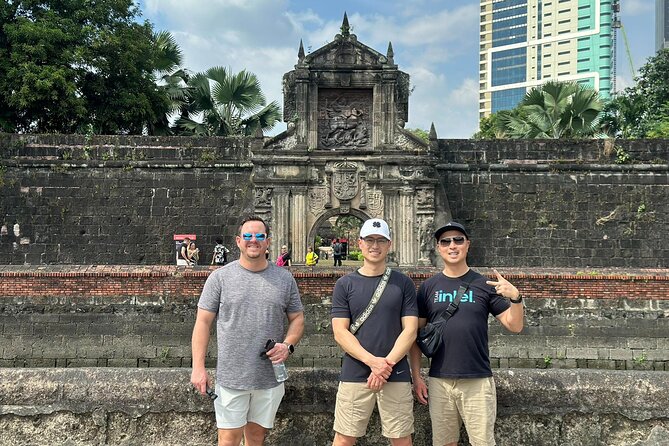
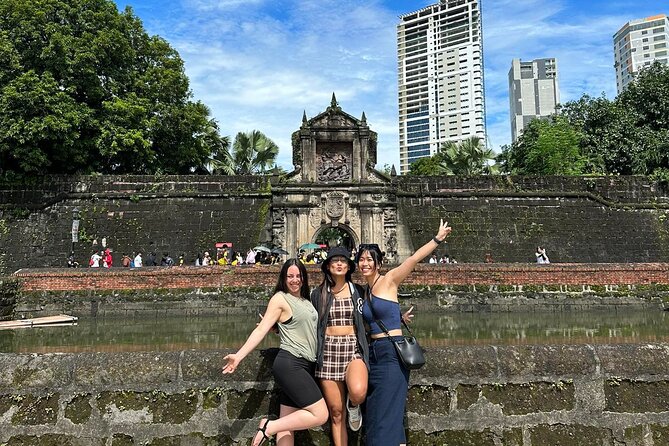
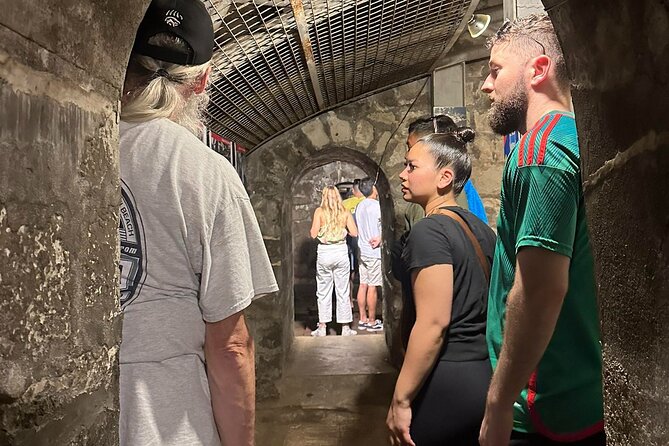
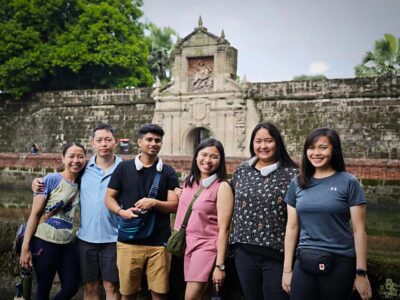
Fort Santiago is the key stop and the tour ends there. The fort gives you a clear sense of Intramuros as a defensive center, while the Manila Cathedral adds an important religious and architectural marker. You will see old walls, historic buildings, and the remains of a district shaped by centuries of colonial rule.
The appeal of Intramuros is not just its age. It is the way the area lets you read Manila’s past through its layout and buildings. After seeing present-day trade in Tondo and Binondo, you can place those modern districts against the colonial city that once controlled much of Manila.
The itinerary lists free admission for Intramuros, while Binondo is marked as having admission not included. Since the exact inclusions can depend on the day’s route and stop, check the booking details before setting out if entry fees matter to your budget.
You may also use local transport during the tour. One especially useful detail from the experience is the mix of walking, tuk-tuks, and jeepneys. That makes the route more than a series of long walks, and it gives you a quick introduction to familiar Manila transport. The exact vehicle mix may vary, so do not treat every ride as guaranteed.
More Manila Street Food Tours in Luzon:
- Makati Street Food Experience end with a Rooftop Bar
★ 5.0 · 33 reviews - Intramuros & Chinatown Manila Tour – Walking, Food & Culture
★ 4.5 · 32 reviews - Manila: Binondo Walking Tour ( Oldest Chinatown )
★ 5.0 · 30 reviews - Makati Street Food tour Experience
★ 5.0 · 16 reviews
The guides make the difference
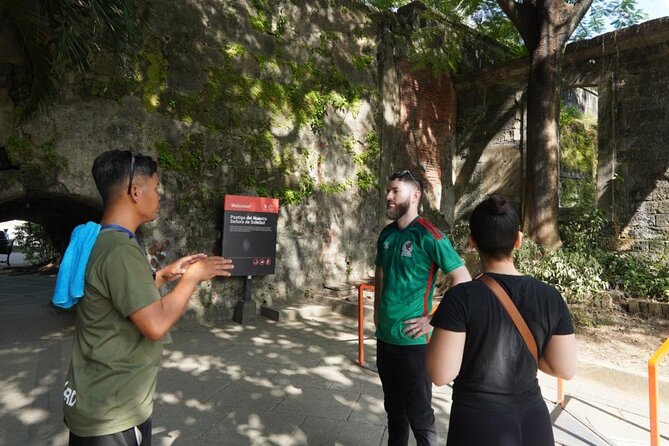
The strongest part of this experience is the guiding. Felix is described as easygoing, personable, informative, and fun, with the ability to make a one-on-one tour feel relaxed. Floyd is also repeatedly praised for keeping the route engaging and for explaining Manila’s history and culture in clear English.
The names are worth noting because a guide can make or break a short city tour. Three hours leaves little room for dull commentary. You need someone who can connect a market stall, a church, a street, and a fort without turning the trip into a list of dates.
The guide also provides practical value. Tondo and Binondo can be hard to interpret if you are seeing them for the first time. Intramuros is easier to visit independently, but a good explanation helps you understand why the walls and landmarks matter.
The experience may occasionally operate with only one person booked. That can turn the tour into a private-style outing, as happened for one booking with Felix. You should not assume that arrangement is guaranteed, but the maximum group size of 15 still keeps the standard version relatively small.
What the pace feels like
Three hours sounds generous until you divide it among three substantial areas. Each stop receives about an hour, and the route includes transport between districts. You will get snapshots rather than long visits.
I see the pace as the tour’s main tradeoff. It is excellent for a first day in Manila, a short stay, or anyone who wants a quick overview before choosing where to spend more time. It is less suitable if you prefer slow photography, extended food stops, or detailed museum-style interpretation.
Plan for walking and movement. Comfortable footwear is sensible, and a moderate fitness level is expected. The route is near public transportation, but that does not mean every surface will be smooth or every section will feel calm.
Weather is another practical issue. The experience requires good weather, so poor conditions can lead to a different date or a full refund. Manila’s heat and rain can affect how enjoyable an outdoor route feels, even when the tour operates as planned.
Is $75 a fair price?
At $75 per person, this is not the cheapest way to look around Manila. The value comes from the combination of a local guide, transport elements, neighborhood interpretation, and a route that would be difficult to organize efficiently on your own in only three hours.
If you simply want to enter Intramuros and walk around, you can spend less independently. You would then need to work out how to reach Tondo and Binondo, decide what to see, and make sense of the neighborhoods without a guide. The tour price pays for direction and context as much as for movement.
The value is strongest for a first visit. You can quickly compare three very different districts and leave with a clearer idea of where to return. It is also useful if you are traveling alone and prefer not to handle an unfamiliar market route by yourself.
The price is harder to justify if you already know Manila well or mainly want a long food crawl. The schedule does not promise extensive tastings, and the tour is built around variety rather than deep time in one place.
Who should book this experience?
I would choose this tour for a first-time Manila visit, a short stop in the city, or a traveler who wants history and daily life in the same morning. It suits people who enjoy walking, local markets, city transport, and a guide who can explain what is happening around them.
It is also a good match for solo visitors and small groups. The limited group size and the possibility of a very personal guiding style can make the experience feel more conversational than a large sightseeing bus.
You may want a different plan if you dislike crowded markets, need a slow pace, or want a dedicated Intramuros tour. Families and older visitors should consider their comfort with heat, uneven walking, and crowded streets before booking.
The tour is conducted in English, based on the guide feedback provided, so it should suit English-speaking visitors who want clear explanations. Confirmation arrives at booking, and the experience is offered with a mobile ticket.
Cancellation and planning notes
You can cancel up to 24 hours before the start time for a full refund. Changes or cancellations inside that 24-hour window are not accepted and are not refunded.
The meeting point is in Tondo, Manila, and the tour ends at Fort Santiago in Intramuros. That one-way layout is useful because you finish in a major historic area rather than returning to the starting point, but you should plan your onward route from Intramuros.
The experience has been booked four times today and is recommended by 97 percent of participants, with a 4.9 rating from 37 reviews. Those figures suggest strong demand and unusually consistent satisfaction, though the short format still requires you to accept the quick pace.
Should you book the Manila half-day tour?
Book it if you want a compact, guided introduction to Manila that moves beyond the usual postcard sights. The sequence from Tondo to Binondo to Intramuros gives you real variety, and guides such as Felix and Floyd add the personal touch that makes a short route worthwhile.
Skip it if you want a relaxed meal, a full museum visit, or several hours inside Intramuros alone. For everyone else, $75 buys a useful first orientation, especially when you value local explanation, small-group attention, and a look at Manila as people actually use it.
FAQ
How long is the Manila, Chinatown, and Old Manila tour?
The experience lasts approximately three hours, with about one hour at each of the three main stops.
Where does the tour start?
The tour starts in Tondo, Manila, in Metro Manila, Philippines.
Where does the tour end?
The tour ends at Fort Santiago in Intramuros, Manila.
Which places does the tour visit?
The route includes Divisoria Market in Tondo, Binondo Chinatown, and Intramuros, including Fort Santiago and the Manila Cathedral.
Is admission included?
Admission is listed as free for Divisoria Market and Intramuros. Binondo is marked as having admission not included.
Is the tour suitable for someone with limited mobility?
A moderate level of physical fitness is recommended. The tour includes walking through market and city areas, so you should consider your comfort with that pace and setting.
How many people can join the tour?
The maximum group size is 15 people.
Can I cancel for a full refund?
Yes. You can cancel at least 24 hours before the experience starts for a full refund. Cancellations or changes made within 24 hours are not refunded or accepted.
More Half-Day in Luzon
- Manila: Intramuros, Chinatown, and Old Manila Half-Day Tour
★ 4.8 · 475 reviews - Discover Tagaytay’s Countryside: Half-Day Sightseeing Tour
★ 4.5 · 207 reviews - From Manila: Tagaytay Countryside Wonders: A Half-Day Tour
★ 4.4 · 187 reviews - Chocolate hills tour with Tarsier & Loboc river Buffet Lunch (half-day tour)
★ 5.0 · 152 reviews
Just added around Luzon
- Villa Escudero Tour with Lunch From Manila (SHARED)★ 5.0 · 5 reviews
- Private Filipino Cooking Class in the Heart of Manila,Makati City★ 5.0 · 5 reviews
- Villa Escudero Coconut Plantation Day Trip from Manila★ 3.5 · 9 reviews
- VILLA ESCUDERO DAY TOUR with Carabao Cart Ride and Bamboo from Manila★ 4.0 · 6 reviews
- Angeles City / Clark Airport to La Union (Bauang, San Fernando, San Juan)★ 3.5 · 4 reviews
- The Jeepney & Tuk Tuk Adventure ride with Local Guide★ 4.5 · 4 reviews
- Sagada and Banaue Rice Terraces 4-Day Tour★ 5.0 · 4 reviews
- Pagsanjan Falls Adventure with Lunch and Rapids Experience★ 4.5 · 3 reviews
Manila Intramuros Walking Tours, compared.

Intramuros, Manila: Historical Bamboo Bike Tour
Read our review →
Experience Intramuros with Bamboo Bicycle – Ecotours
Read our review →
Intramuros, Chinatown, and Old Manila Half-Day Tour
Read our review →
Manila Old and New: Sightseeing Tour Including Intramuros and Fort Santiago
Read our review →
Explore Intramuros: Introduction to Philippine History
Read our review →Browse the lists this tour appears in