
Reviewed · MANILA INTRAMUROS WALKING TOURS
Manila: Intramuros Myths and Nights Tour
The most interesting thing about this two-hour walk is its refusal to treat Intramuros as just a Spanish fort district. Jerome connects Philippine myths with colonial power, showing how stories about aswangs, kapres, white ladies, and dwendes could shape the way people understood conquest and resistance.
I like the route’s strong sense of place, especially the storytelling beneath the acacia and balete trees. I also like that it reaches beyond spooky tales to Jose Rizal, the dungeons, Catholic churches, and the old gates of Intramuros. The main consideration is pace: two hours covers many important stops, so you will hear themes and stories rather than receive a full architectural tour of every site.
Key points to know
- Myths meet colonial history: Explore how local folklore was used, changed, or recast during Spanish rule.
- Jerome leads the walk: He guides in English or German and brings humor, questions, and strong knowledge of Philippine history to the route.
- Night adds atmosphere: Stories under the trees and around Fort Santiago carry more mood after dark, though a day option is also available.
- The route has serious weight: The Rizal chapel-cell and dungeons shift the tour from legends to memory, imprisonment, and loss.
- The price covers the basics: The $49 fee includes entrance, guide service, and a snack.
- Plan for insects: Biodegradable insect repellent is specifically recommended.
Why this Intramuros walk feels different
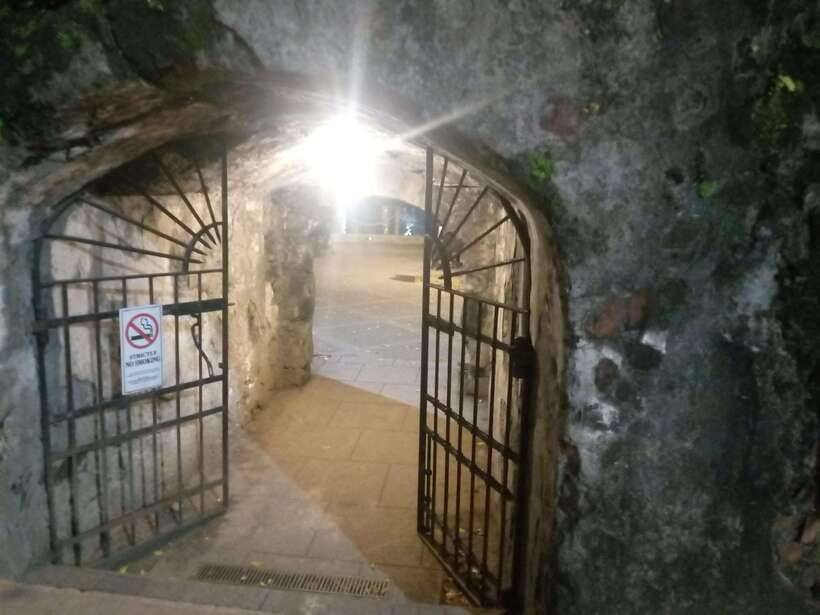
Most visits to Intramuros focus on walls, churches, cannons, and Spanish buildings. This tour asks you to pay attention to the stories living around those places. It treats mythology not as a collection of scary bedtime tales, but as part of the way Filipinos made sense of authority, danger, faith, and freedom.
That approach gives the walk a clear purpose. You are not simply hearing that a place is haunted. You are asked to consider who told the story, what the story taught, and how colonial rule could use fear to make conquest seem natural or even beneficial.
Jerome is central to the experience. He leads in English or German, and the strongest praise for the tour centers on his energy, humor, and command of Philippine history. He also welcomes questions, which matters here because the subject can move quickly from folklore to politics, religion, and national identity.
I would choose the night departure if you enjoy atmosphere and oral storytelling. The dark setting suits tales of aswangs, kapres, tikbalangs, white ladies, and dwendes. Choose the day option if you prefer to see more of the streets and buildings clearly, or if the night mood is not your thing.
More Manila Intramuros Walking Tours in Manila
- Intramuros, Manila: Historical Bamboo Bike Tour
★ 4.8 · 583 reviews - Experience Intramuros with Bamboo Bicycle – Ecotours
★ 5.0 · 508 reviews - Manila: Intramuros, Chinatown, and Old Manila Half-Day Tour
★ 4.8 · 475 reviews
Plaza Moriones and the first Filipino stories
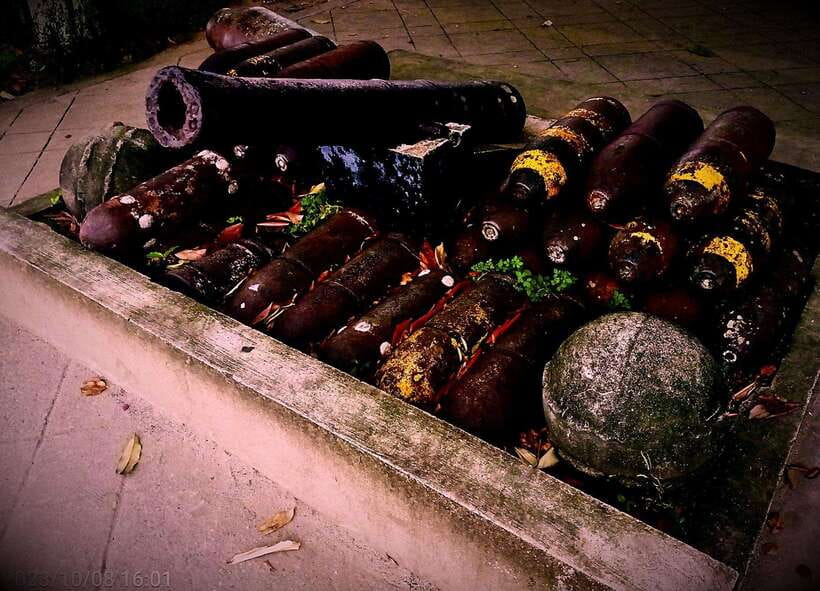
The meeting point is Plaza Moriones, where the tour begins with the history and mythology of the Philippines. Under an acacia tree, Jerome introduces creatures that have shaped Filipino childhoods and popular culture.
The aswang is often described in English as a Filipino vampire, but the wider family of aswang stories is more varied than that short label suggests. Kapres, usually linked with large trees, and other beings enter the discussion as examples of how supernatural stories attach themselves to ordinary places.
This opening works because it starts with familiar cultural material before moving into more difficult questions. You will hear how Spanish colonial authorities fabricated or promoted tales of horror to suppress local nationalism. The point is not that every folk belief was invented by the colonizers. The point is that colonial power could manipulate existing fears and reshape local beliefs to make the conquered people seem primitive, dangerous, or in need of outside control.
The setting helps. An acacia tree in an old walled district is more evocative than a lecture room. Still, remember that this is a story-led stop, not a formal academic seminar. If you want dates, architectural details, or a complete account of Intramuros construction, you may need a separate city tour.
Fort Santiago beneath the balete tree
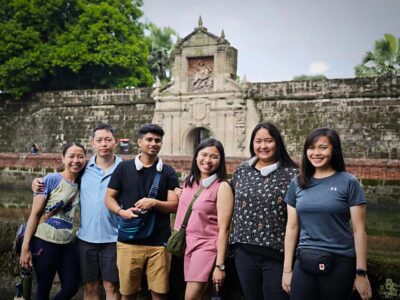
The route continues to Fort Santiago, one of the most important places in Intramuros. Here, the storytelling moves under a balete tree and turns to white ladies, dwendes, and similar figures.
The balete tree matters in Filipino folklore because it is often linked with spirits and supernatural encounters. That makes it a fitting setting for a conversation about how people interpret places marked by violence, authority, and death. You will hear how colonial rule influenced the mindset of local people, including the idea that the conquerors were superior to the communities they ruled.
This is where the tour’s larger argument becomes clearest. Folklore can preserve local ideas, but it can also be altered by people in power. A ghost story may frighten you, but it can also reveal who was allowed to define reality.
Fort Santiago is a busy historical subject in its own right, and two hours cannot cover everything. The tour uses the fort as a stage for questions about belief and power instead of trying to explain every wall and military detail. I see that as a strength if you have already visited Intramuros or want something more interpretive. It may feel incomplete if this is your first and only introduction to the district.
Rizal’s chapel-cell and the role of the agimat
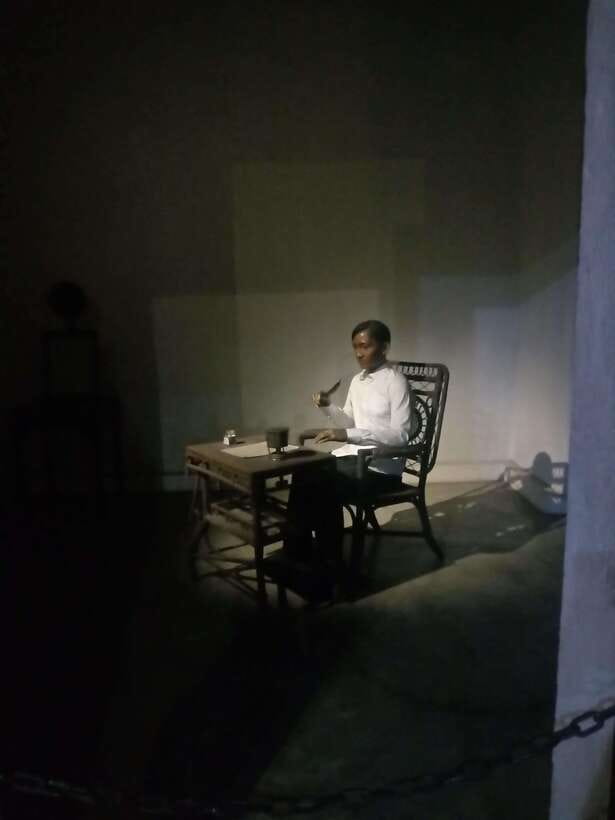
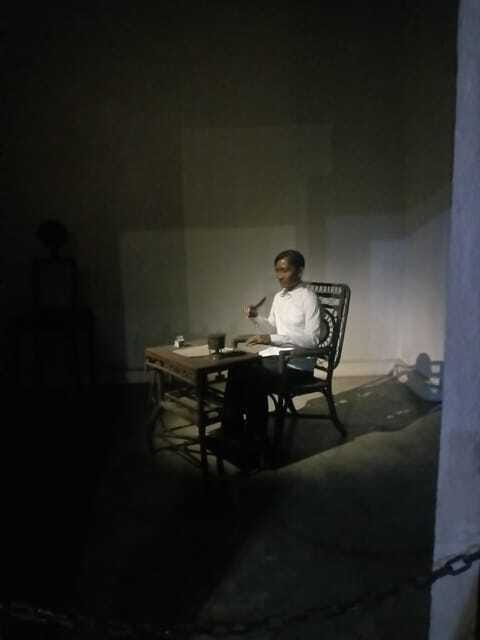
The walk then reaches the chapel-cell of Jose Rizal. This is one of the route’s most important changes in tone. The earlier stories deal with spirits, childhood fears, and folklore. Here, the subject becomes a real person whose writing and execution helped define the Philippine struggle for independence.
The discussion also brings in the agimat, a charm or object associated with protection and spiritual power, along with monasticism. The tour looks at how these ideas took part in the wider fight against colonial control.
This section is valuable because it avoids presenting independence as a simple clash between good and bad characters. Belief systems mattered. Religious institutions mattered. Local spiritual traditions mattered. The struggle was fought through ideas as well as weapons and politics.
The chapel-cell is also a reminder that Rizal’s story belongs to a place, not only to a textbook. You will hear about the setting connected with his final hours, then consider how symbols of faith and protection could support people living under foreign rule.
I would pay close attention here and save questions for Jerome. His willingness to discuss details makes this a good part of the tour for Filipino visitors who know the basic national story but want to examine it from a less familiar angle.
Same islands, a completely different day on the water:
- Manila: Old & New 4-Hour City Tour
★ 4.5 · 458 reviews - Manila Food Tour: Introduction to Philippine Street Food
★ 5.0 · 417 reviews - Spectacular Manila to Tagaytay: Full-Day Sightseeing Tour
★ 5.0 · 349 reviews - Makati Nightlife: VIP Access to Clubs, Rooftops & Go-Go Bars
★ 4.9 · 278 reviews
The dungeons and the danger of forgetting
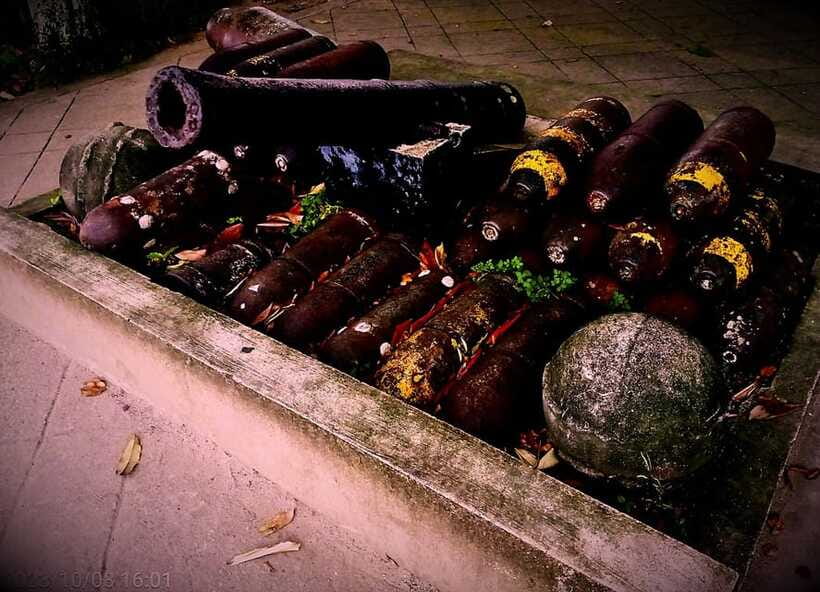
The next stop is the dungeons. The tour does not ask you to fear the ghosts of the roughly 600 civilians who died there. Instead, it asks you to fear forgetting them.
That distinction gives the stop real force. The supernatural theme could easily turn the dungeons into a simple haunted attraction. This tour uses the legends to point back toward human suffering and historical memory.
You should expect the mood to become heavier. The route has been playful at times, especially when Jerome brings mythological beings to life with humor, but the dungeons demand respect. The question is not simply if spirits remain. The question is what happens when a place of death is reduced to a spooky photo opportunity.
The stop also shows why the tour is best for people who enjoy ideas along with atmosphere. You will not only collect names of creatures. You will consider how memory survives, how stories protect the past, and how national history can be lost when nobody tells it.
Fort Santiago and its dungeons can be physically uneven or dim, so wear comfortable shoes and take care with your footing. The activity is listed as wheelchair accessible, but the route includes historic spaces, trees, streets, and dungeons. If you use a wheelchair, confirm the precise path and access arrangements before booking.
Manila Cathedral and San Agustin Church
From Fort Santiago, the route continues to Manila Cathedral and San Agustin Church. These buildings shift the focus toward Catholicism and the way Spanish religious ideas met existing local beliefs.
The tour examines how supreme beings and spiritual figures important to native communities could be recast as demons by the conquerors. That is a powerful subject because conversion was not only about replacing one set of ceremonies with another. It could also involve changing the moral status of older beliefs.
At these churches, you will hear how local religion and Catholicism interacted rather than existing in two completely separate worlds. The tour’s purpose is not to reject Catholic faith or simplify local traditions. It is to show how religion can be used in both sincere spiritual practice and political control.
The churches also give the itinerary a useful visual pause after the darker Fort Santiago section. You move from trees and dungeons to major religious landmarks, then look at them through the same question: who controls the story of a place?
Do not expect a full guided visit of every interior feature. The activity is built around interpretation and storytelling. If you want detailed art, architecture, or church history, set aside extra time to explore the churches independently, subject to opening conditions.
Puerta del Parian and the final call to resistance
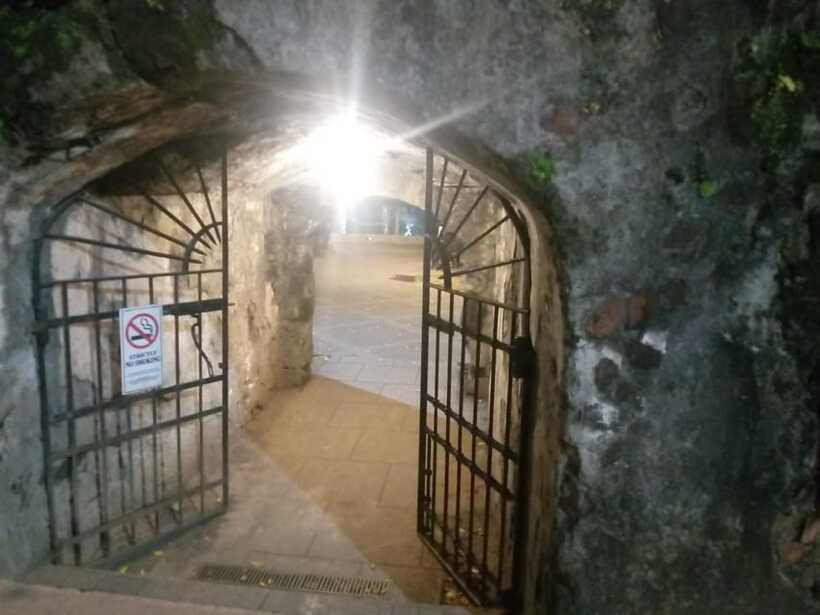
The tour ends at Puerta del Parian, where it revives the spirit of the uprisings. Ending here gives the walk a forward motion. You begin with myths that helped explain fear, pass through colonial power and religious change, confront imprisonment and death, and finish with resistance.
That structure is one of the tour’s best features. The stories are not scattered spooky anecdotes. They form a chain. Folklore reflects identity. Colonial authorities manipulate belief. Faith becomes part of social change. Places of suffering hold memory. Resistance keeps that memory active.
Puerta del Parian also makes a good final stop because gates are symbols. They divide inside from outside, rulers from ruled, and confinement from freedom. The tour closes by bringing those ideas back to Philippine independence.
You may leave with more questions than answers, which is appropriate. A good history walk should not flatten a country’s past into a neat package. This one encourages you to look again at the difference between folklore, propaganda, faith, and historical record.
What the $49 price covers
At $49 per person, this is not the cheapest way to walk around Intramuros. The price includes the entrance fee, guide’s fee, and a snack, so you are paying for more than a free stroll through public streets.
The value depends on how much you want from your guide. If you only want to photograph the walls and churches, you can explore Intramuros at less cost. If you want a connected interpretation of myths, colonial rule, Rizal, the dungeons, religion, and resistance, the guided format gives the price a stronger case.
The tour lasts two hours, which keeps the commitment manageable. You get a focused evening or daytime activity without giving up a full day. The tradeoff is coverage. The route includes many major ideas and several historic locations, but each stop receives a selected story rather than a complete tour.
The included snack is a small but useful touch. It will not transform the value calculation, but it means you do not finish the walk with quite as much concern about finding food immediately.
Jerome’s style and the right audience
Jerome’s greatest strength is his ability to shift between education and entertainment. He can make the legends of the aswang, dwende, tikbalang, and kapre lively, then turn serious when the route reaches Rizal and the dungeons.
That balance suits people who find standard historical tours too dry. It also works for Filipinos who already know the basic national story and want a new angle. One particularly useful feature is the open discussion. Jerome answers questions rather than treating the walk as a speech you simply receive.
Solo visitors may appreciate the personal care Jerome has shown during the tour experience, including making sure a solo participant got home safely. I would not treat that as a guaranteed service, but it suggests a considerate guide who pays attention to the people in his group.
Families with older children may enjoy the legends, though the dungeons and stories of civilian deaths can be serious. The activity is not suitable for people over 95 according to the stated conditions, and young children may find some of the material unsettling even though the tour can also be funny.
The tour is especially suitable for:
- People who like folklore tied to real places
- First-time visitors who want more than building names and dates
- Filipinos interested in seeing national history from another angle
- Solo participants who value an engaged guide
- Anyone choosing between a daytime walk and a more atmospheric night outing
Practical details before you go
The tour begins at Plaza Moriones and lasts two hours. Starting times vary, so check availability when you choose a date. You can select a day or night departure.
English and German are available. The activity is listed as wheelchair accessible and includes skip-the-line access through a separate entrance. Because the route enters historic areas and includes the dungeons, I would still confirm the exact accessible route before paying if mobility is a concern.
Bring biodegradable insect repellent. That advice is especially relevant for a walk that pauses beneath trees, including the acacia at Plaza Moriones and the balete at Fort Santiago.
Wear shoes suited to walking. The tour is short, but you move through several parts of Intramuros and stop in places where old surfaces may not be perfectly even. A night walk can also make small details harder to see, so choose the daytime option if visual access matters more to you than atmosphere.
The activity offers free cancellation up to 24 hours before the start for a full refund. You can also reserve now and pay later, which helps if your Manila schedule is still changing.
One practical point needs checking before booking: the activity information gives Nueva Vizcaya as the location, while the meeting point and entire route are clearly described as Intramuros in Manila. Confirm the exact location shown for your selected date so you do not plan around the wrong place.
Should you book the Myths and Nights Tour?
Book it if you want Intramuros to feel like a place where people argued over belief, power, and freedom, not just a preserved Spanish district. Jerome’s storytelling, the links between folklore and colonial control, and the serious treatment of Rizal and the dungeons make this more thoughtful than a standard ghost walk.
Skip it if you want a detailed architectural tour, a long museum visit, or a complete military history of Fort Santiago. You will get selected sites and strong themes in two hours, not every fact about the Walled City.
For the best match, choose the night option if you enjoy eerie settings and storytelling beneath old trees. Choose the day tour if you want clearer views and a calmer look at the buildings. At $49, the tour earns its value through its guide and interpretation, so it is best for you if the way history is told matters as much as the places you see.
FAQ
Where does the tour begin?
The tour begins at Plaza Moriones in Intramuros.
How long does the tour last?
The tour lasts two hours.
Is the tour available during the day?
Yes. You can choose between a day tour and a night tour.
What places does the route visit?
The route includes Plaza Moriones, Fort Santiago, the chapel-cell of Jose Rizal, the dungeons, Manila Cathedral, San Agustin Church, and Puerta del Parian.
What myths are discussed?
The tour discusses aswangs, kapres, dwendes, white ladies, tikbalangs, and other figures from Philippine mythology.
What languages are offered?
The live guide is available in English or German.
Is the entrance fee included?
Yes. The entrance fee is included in the $49 per person price.
Is a snack included?
Yes. A snack is included.
What should I bring?
Bring biodegradable insect repellent.
Can I cancel for a full refund?
Yes. You can cancel up to 24 hours in advance for a full refund. You can also reserve now and pay later.
Just added around Manila
- Underground River with Lunch★ 3.6 · 5 reviews
- Private Tour: Tagaytay Midlands & Taal Volcano Boat Ride★ 4.5 · 15 reviews
- 3 Days Private Tour in Banaue Ifugao visiting Batad Rice Terraces★ 3.5 · 3 reviews
- Tagaytay Adventure: Volcano Views, Countryside, Market & Cruise!★ 4.5 · 14 reviews
- Tagaytay + Hidden Valley Springs: A Scenic Escape w/ Transfers★ 4.0 · 4 reviews
- Tagaytay Day Tour sightseeing with Panoramic Taal volcano view★ 5.0 · 6 reviews
- Unforgettable Manila Fishing Village Day Excursion 2024★ 5.0 · 4 reviews
- Cultural Dinner and Show in Manila★ 5.0 · 4 reviews
Manila Intramuros Walking Tours, compared.

Intramuros, Manila: Historical Bamboo Bike Tour
Read our review →
Experience Intramuros with Bamboo Bicycle – Ecotours
Read our review →
Intramuros, Chinatown, and Old Manila Half-Day Tour
Read our review →
Manila Old and New: Sightseeing Tour Including Intramuros and Fort Santiago
Read our review →
Explore Intramuros: Introduction to Philippine History
Read our review →Browse the lists this tour appears in