Reviewed · GUIDED
Manila Hidden Gems with local guide
Manila’s everyday life takes center stage on this two-hour walking tour through Binondo and Tondo. You’ll pass Chinatown alleys, old buildings dating to 1595, low-cost market stalls, and residential lanes that most sightseeing routes skip. Local guide Mari has led visitors through the area where she grew up, adding a personal touch to streets that can feel far removed from the usual Manila stops.
I like two things right away: you ride an iconic jeepney or tricycle, and you see how people shop, eat, travel, and live in this part of the city. The main drawback is that this is not a polished attraction. Expect narrow back streets, an open wet market, modest homes, and possible open-air bathing and dining. This tour suits curious visitors who want real city life, not comfort at every turn.
Key points at a glance
- A local view of Tondo: Walk through one of Manila’s oldest districts with a guide who grew up in the area.
- Jeepney or tricycle ride: Use familiar local transport instead of seeing Manila only from a tour vehicle.
- Chinatown alley walk: See the connection between Binondo’s commercial streets and quieter side lanes.
- Market stop: Browse housewares, clothes, fruit, and a traditional wet market at everyday prices.
- Old structures: See buildings and remains linked to the area’s 1595 beginnings.
- Small group setting: The tour accepts no more than 10 people, which gives you a better chance to ask questions.
Starting in Binondo at 1919 Grand Cafe
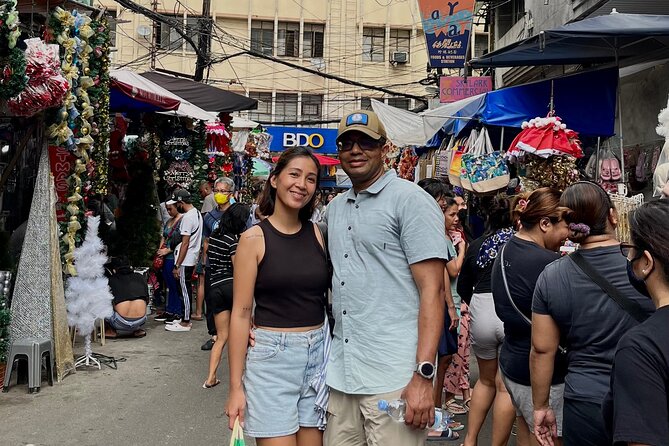
The tour begins at 1919 Grand Cafe, 117 Juan Luna Street in Binondo, Manila. This gives you a clear meeting point near public transportation and places you at the edge of Manila’s Chinatown district before the walk moves toward less familiar streets.
Binondo is useful as a starting point because it helps you see two sides of the city close together. You begin among established commercial streets, then move into alleys and residential areas where daily routines matter more than sightseeing signs. I like that contrast. It gives the walk a natural shape instead of treating each stop as an isolated photo opportunity.
The activity lasts about two hours and returns to the same meeting point. That short length makes it easy to fit into a Manila day, especially if you are staying nearby or have limited time before another activity. It also means the guide has to keep things moving. You should expect a focused introduction to the area, not a slow, all-day exploration.
The group limit is 10 people. That is small enough for a guide to manage on crowded streets and for you to ask about food, transport, buildings, or local customs without shouting across a large crowd.
A few more Luzon trips to weigh up
- Batad Guided Tour
★ 5.0 · 78 reviews - The Hidden Gems of Manila Guided Tour
★ 5.0 · 42 reviews - Manila Intramuros Walking tour with Local Tour Guide
★ 5.0 · 33 reviews
Through Chinatown’s side streets
One part of the walk takes you into Chinatown alleys. This is not simply a stop at a famous facade or a quick pass along a shopping street. The focus is on the lanes and connections between commercial Binondo and the neighborhoods behind it.
I find this kind of route more useful than a string of famous photo stops. You can see how shops, homes, food stalls, and pedestrian traffic share tight spaces. The guide can also explain what you are seeing as you move, which matters in an area where a visitor might otherwise notice only noise, crowds, and signs.
The streets may feel rough around the edges. That is part of the point, but it is also something to consider. You will not get the quiet, tidy paths of a formal heritage site. Watch where you step, stay close to the group, and keep your belongings secure in crowded areas.
The tour is designed as a cultural walk rather than a standard attraction circuit. That means the value comes from context and access to ordinary places. If you want a checklist of major Manila landmarks, this may feel incomplete. If you want a closer look at how a district works, the route offers much more.
Street food, coffee, and the cost of tasting
The walk includes chances to explore Filipino street food and local cuisine. Food tasting is not included in the $55 price, so you should bring extra money if you want to sample something along the way. Bottled water and a welcome drink are included.
This arrangement gives you some control. You can choose to buy food that appeals to you, skip a dish if you have dietary concerns, or simply watch the local routine without adding several purchases to the tour cost. At the same time, the advertised price is not the final cost if you plan to eat.
You may also get a chance to try local coffee. The importance is less about a formal coffee presentation and more about sharing a familiar part of Filipino daily life. Ask the guide what is popular and how much to buy before ordering. Since no fixed tasting menu is promised, your food experience will depend on what is available and what you choose.
Street food is best approached with practical judgment. Look at the preparation area, ask what an item contains, and tell the guide about allergies or foods you avoid. The tour promises the opportunity to explore food, not a dedicated culinary class or a guaranteed list of dishes.
Seeing old Manila structures from 1595
The route includes old buildings and structures connected with 1595. This gives the walk a historical layer, but you should not expect a museum visit or a fully restored heritage complex.
The useful part is seeing history in place. Older structures share space with shops, apartments, roads, and newer construction. That lets you understand that Manila’s past is not separated neatly from present-day life. The city’s old fabric remains part of the neighborhood rather than being presented only behind a ticket gate.
The guide’s role is especially important here. A building can look ordinary if you do not know its age or purpose. With explanation, a wall, apartment, or street corner can help you picture how the district developed over time.
Conditions may be basic. Some old buildings may show wear, and the walk does not promise access inside every structure. Treat this as an outdoor history lesson with local explanation, not a formal architectural tour.
Same islands, a completely different day on the water:
- Manila Old and New: Sightseeing Tour Including Intramuros and Fort Santiago
★ 4.5 · 377 reviews - Manila’s Walled City: Intramuros Walking Tour
★ 5.0 · 82 reviews - Manila Filipino Cooking Class: Meryenda Favorites
★ 5.0 · 80 reviews - Manila Super Saver: Manila Sightseeing plus Tagaytay Tour with Taal Volcano
★ 4.0 · 75 reviews
Riding a jeepney or tricycle
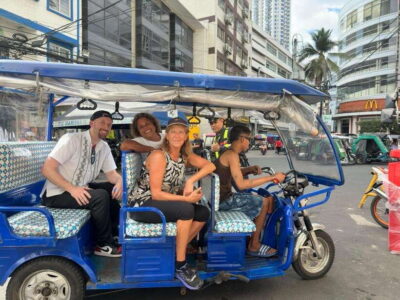
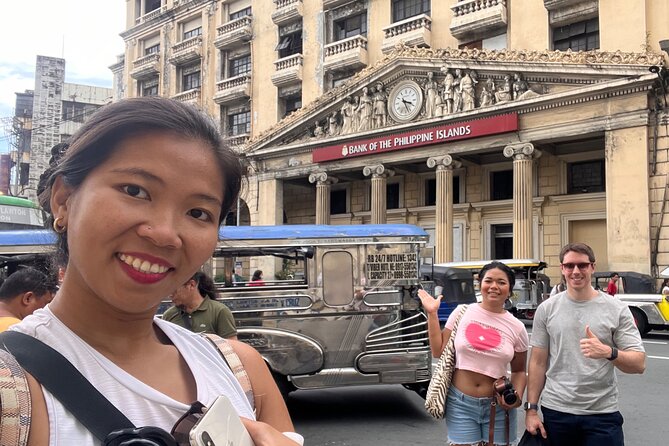
A short ride on a jeepney or tricycle is included. This is one of the tour’s most memorable practical features because it puts you into a form of transport used in ordinary Manila life.
For you, the ride offers more than a photo. It shows how short trips work in a dense urban district and how locals share limited road space with other vehicles and pedestrians. The ride may be brief, but it changes the pace of the tour. You stop observing transport from the sidewalk and take part in it.
The exact vehicle may vary. The included details list a jeepney or tricycle, so do not book expecting a particular route, vehicle model, or length of ride. Traffic and local conditions can affect the experience.
If you prefer a controlled, air-conditioned vehicle, this part may feel less comfortable. If you want a small taste of local transport, it adds real value to a short walking experience. I would also keep your phone and camera secure during the ride, especially if you are taking photos from an open vehicle.
Tondo’s back alleys and residential life
The route heads into Tondo, one of Manila’s oldest districts. Tondo contains residential, commercial, and industrial areas, so the walk is not limited to a single type of street. You may move from market activity to quiet lanes, then past homes and work spaces close together.
This is where the experience becomes most personal. The route includes places where residents live away from major roads, including older apartments and back alleys. The tour description points to open-air bathing and dining, details that may surprise visitors who know Manila mainly through shopping centers and historic churches.
You need to approach this part with respect. These are people’s homes, not a stage set. Ask before taking close-up photos, follow the guide’s instructions, and avoid treating private routines as entertainment. A good local tour should help you understand the setting without turning residents into a spectacle.
The area may feel confronting. Poverty and crowded living conditions are part of the reality in some parts of Manila, and this route does not cover them up. The appeal is its honesty, but it is not right for everyone. Families with young children or visitors seeking a gentle first-day introduction may prefer a more conventional city walk.
The strongest personal detail available about the guiding is Mari’s connection to the area. She grew up there, which can make the difference between a detached explanation and a more grounded account of the streets. A local guide can point out details that are easy to miss, while also helping you behave appropriately in residential spaces.
Shopping at an everyday market
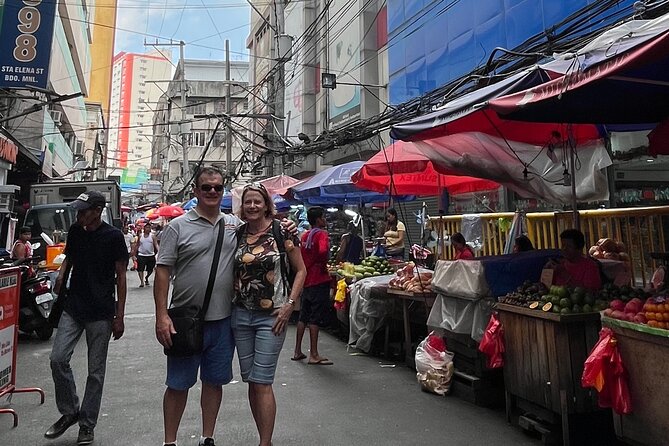
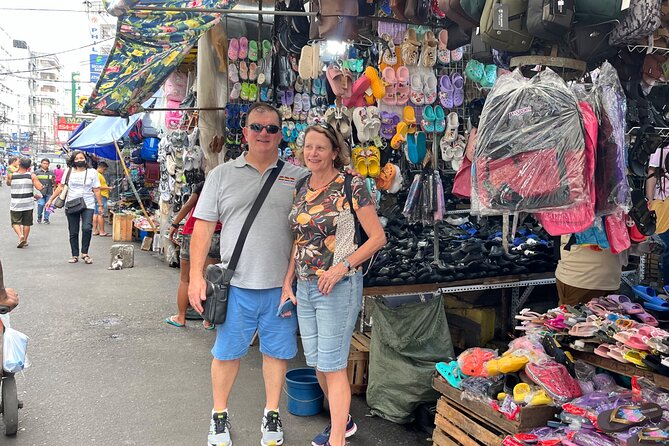
The market section includes housewares, clothes, fruit, and a wet market. This is not a souvenir market built around visitors. It is a place to see ordinary buying and selling, with goods priced for local shoppers.
I like this stop because it gives you a practical look at Manila’s economy. You can compare the market with the more visitor-focused shops around central sightseeing areas. You might find useful household items, inexpensive clothing, or fresh fruit, but the point is not simply to buy something. It is to see how people shop for daily needs.
A wet market can be wet, crowded, noisy, and strongly scented. Wear shoes you can walk in and avoid bringing luggage. You may find that the floor is uneven or damp, so the tour is best for people who are comfortable with basic street conditions.
The market is also a chance to ask questions. Your guide can help explain what you are seeing, how prices work, and which foods are common. Since no shopping allowance or purchases are included, any items you buy are your responsibility.
What $55 means for the value
The price is $55 per person for about two hours. At first glance, that is more than you would pay for an unescorted walk through a market or neighborhood. The value depends on what you want from the experience.
You are paying for a local guide, a small group capped at 10 people, a local transport ride, bottled water, a welcome drink, and a guided route through places you might not understand on your own. You also receive a photo shoot, according to the inclusions.
The price becomes harder to justify if you mainly want food. Food tastings are extra, and the tour is short. You are also not buying entry to a major attraction or a long list of included meals. I would choose this experience for its access and interpretation, not for the amount of physical activity or the number of included items.
For someone interested in Manila’s daily life, the personal guidance can make $55 reasonable. You get a route that moves beyond the usual visitor circuit and a local perspective that would be difficult to reproduce confidently on your own. If your main goal is cheap transport, market shopping, or street food, you can spend less independently, but you will give up the structure and local guidance.
Who will enjoy this walk most
I would recommend this tour to independent-minded visitors who want to see a less polished side of Manila. It is especially suitable for people who enjoy walking, local food, markets, public transport, and conversations about how a city really functions.
It also works well for visitors who have already seen the main historic and commercial sights and want a different angle. The two-hour format lets you add it to a larger Manila plan without giving up a full morning or afternoon.
You should think twice if you dislike uneven streets, wet markets, crowded lanes, or visible poverty. This is not a luxury outing, and the route may challenge your expectations about privacy and comfort. The guide can help you navigate the area, but the surroundings remain real and sometimes stark.
Most people can participate, and the experience is near public transportation. The information provided does not specify wheelchair access, so you should ask the operator before booking if you have mobility needs.
Planning your visit with fewer surprises
Wear comfortable walking shoes and light clothing suited to Manila’s heat. Carry only what you need, keep valuables close, and bring small amounts of cash for food or market purchases since those costs are separate.
The experience requires good weather. If poor weather forces a cancellation, you can take a different date or receive a full refund. For your own plans, avoid scheduling an important connection immediately after the tour because the walking route and local traffic may not run to an exact minute.
You receive confirmation when booking, and the activity returns to the starting point. Free cancellation is available if you cancel at least 24 hours before the start time. Inside that window, changes are not accepted and the payment is not refunded.
Should you book the Tondo and Binondo walk?
Book it if you want daily Manila life, a local guide’s perspective, and a short route that includes Chinatown lanes, a market, old structures, and public transport. The strongest feature is the chance to see a side of the city that a standard sightseeing tour usually leaves out.
Skip it if you want a polished historical tour, guaranteed food tastings, or a comfortable vehicle throughout. The $55 cost is fair for a small-group guided experience with local transport, but food and shopping add-ons raise the total.
For curious visitors who can handle basic conditions and show respect in residential areas, this is a worthwhile way to spend two hours. It offers a more honest picture of Manila, with all the warmth, noise, hardship, and ordinary charm that brings.
FAQ
Where does the tour start?
The tour starts at 1919 Grand Cafe, 117 Juan Luna Street, Binondo, Manila, 1006 Metro Manila, Philippines.
Where does the tour end?
The activity ends back at the starting meeting point.
How long does the experience last?
The tour lasts approximately two hours.
Is food included in the price?
No. Food tasting is not included. Bottled water and a welcome drink are included, while any food you choose to buy costs extra.
Is transportation included?
Yes. The experience includes local transport by jeepney or tricycle.
How large is the group?
The tour has a maximum of 10 participants.
What happens if the weather is poor?
The experience requires good weather. If it is canceled because of poor weather, you will be offered a different date or a full refund.
Just added around Luzon
- Villa Escudero Tour with Lunch From Manila (SHARED)★ 5.0 · 5 reviews
- Private Filipino Cooking Class in the Heart of Manila,Makati City★ 5.0 · 5 reviews
- Villa Escudero Coconut Plantation Day Trip from Manila★ 3.5 · 9 reviews
- Angeles City / Clark Airport to La Union (Bauang, San Fernando, San Juan)★ 3.5 · 4 reviews
- The Jeepney & Tuk Tuk Adventure ride with Local Guide★ 4.5 · 4 reviews
- VILLA ESCUDERO DAY TOUR with Carabao Cart Ride and Bamboo from Manila★ 4.0 · 6 reviews
- Manila ATV Mountain Trail Adventure(with Transfers***)★ 4.5 · 19 reviews
- Sagada and Banaue Rice Terraces 4-Day Tour★ 5.0 · 4 reviews
Guided, compared.

Waterfall Hopping & Secret Jungle Trails Guided Tour
Read our review →