Reviewed · GUIDED
The Hidden Gems of Manila Guided Tour
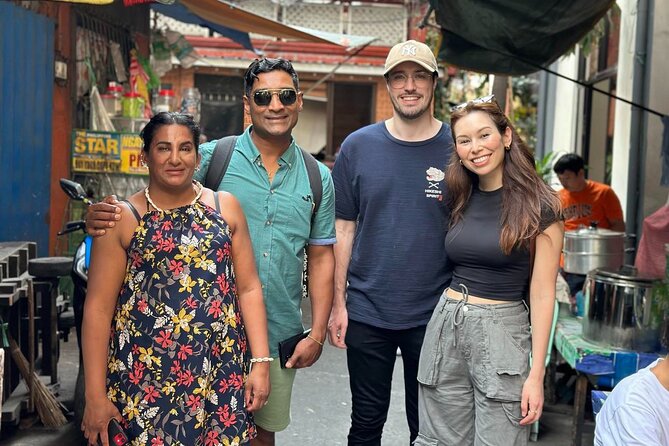
Manila reveals itself quickly on this small-group tour of Tondo and Binondo. You ride a jeepney, browse a Filipino wet market, pass through side streets, and see how daily life unfolds away from polished shopping centers. Guide Floyd is known for clear explanations, warm energy, and even the occasional mini karaoke session.
I like the maximum group size of 10, which should make a crowded market easier to handle, and I like that the guide helps you find a safe way back to your hotel afterward. The main consideration is the short two-hour schedule: you will see several places, but this is a brisk introduction rather than a slow, detailed neighborhood study.
Key points to know before booking
- Jeepney ride included: You get to use Manila’s most distinctive local transport instead of viewing the city only from a tour vehicle.
- Divisoria Market is the main event: Expect a working market atmosphere, local shopping, and open-air scenes rather than a polished retail district.
- Binondo adds another side of Manila: The route connects market streets with one of the city’s best-known older commercial areas.
- Real daily life is part of the focus: You may see open-air bathing and eating areas, older apartments, and narrow back streets.
- Floyd may be your guide: His praised style includes detailed explanations, personality, and playful mini karaoke moments.
- The tour returns to Tutuban Center: The meeting point is also the ending point, at JX4F+Q7X in Tondo.
What this Manila tour is really about
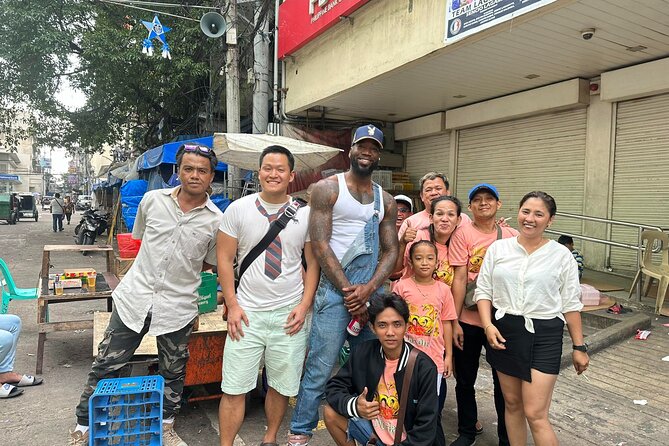
This is not a grand-sights tour. You will not spend two hours moving from one famous monument to another. Instead, the experience takes you into parts of Manila where shopping, transport, worship, housing, and food all overlap in a tight urban setting.
That focus makes the tour useful if you have only a day or two in the city, or if Manila is a stop during a longer trip through Luzon. It also suits you if you want an introduction to local routines and neighborhoods that are easy to miss when you stick to major roads.
The tone is direct and local. You may see people bathing and eating in open areas, old apartments, and homes set along back alleys. That can be eye-opening, but it also calls for respect. This is not a staged cultural show. You are being taken through places where people live, so keep your camera discreet, listen to your guide, and avoid treating poverty as a photo prop.
The tour includes photography, an English-speaking guide, local coffee, and food as eaten by Filipinos. The details of the food and drink are not specified, so think of this as a chance to sample something local rather than a full meal or formal tasting.
A few more Luzon trips to weigh up
- Batad Guided Tour
★ 5.0 · 78 reviews - Manila Intramuros Walking tour with Local Tour Guide
★ 5.0 · 33 reviews - Manila Hidden Gems with local guide
★ 5.0 · 27 reviews
Starting at Tutuban Center in Tondo
The meeting point is Tutuban Center in Tondo, Manila. The activity ends at the same place, which gives the outing a clear start and finish. That is useful if you are arranging your own transport before or after the tour.
Tutuban also links naturally with the route. The area is close to Divisoria Market and the older commercial streets of Tondo, so you begin near the kind of everyday Manila that this experience aims to show you.
The tour lasts about two hours. That sounds short, and it is. Since the route includes Divisoria, Binondo, Sto. Niño de Tondo Church, Tutuban Mall, and other parts of Metro Manila, expect movement and quick orientation rather than long stops at each place.
I would arrive ready to walk, wait in crowded areas, and adjust to city traffic. A moderate level of physical fitness is recommended. The experience is near public transportation, but you should still wear practical shoes and carry only what you need.
Riding a jeepney through Manila
The jeepney is one of the most recognizable forms of transport in the Philippines. These colorful public vehicles are part of ordinary city life, not just a sightseeing trick. Riding one gives you a better sense of how people move through Manila’s busy streets.
The value here is practical as well as cultural. A guide can explain how this transport fits into local routines while you experience the noise, pace, and close quarters for yourself. You will not get the same feeling from looking at a jeepney in a museum or passing one from a private car.
The ride may be less comfortable than a dedicated tour vehicle. Space can be limited, traffic can slow the route, and the experience is shaped by the city’s conditions. That is exactly why it appeals to visitors who want a more grounded look at Manila, but it may not suit you if you prefer a quiet, air-conditioned trip.
Since the tour is only two hours, the jeepney portion is likely meant to connect parts of the route as well as provide an experience. The precise length of the ride is not given, so do not book this expecting a long transport-focused excursion.
Divisoria Market and the working side of Manila
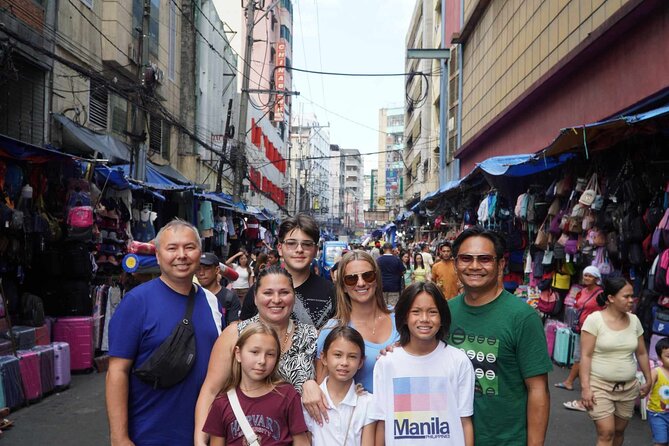
Divisoria Market is the first listed stop, and it is likely to set the tone for the entire outing. This is a typical Filipino open wet market, where shopping is tied closely to everyday needs rather than sightseeing.
You can expect a crowded, practical setting with stalls and local buying habits. The point is not simply to look at products. Your guide can help explain what people shop for, how the market works, and why this part of Manila matters to local life.
Markets can be hard work for a first-time visitor. Streets may be crowded, surfaces uneven, and movement slower than expected. Keep your belongings close and stay with the group, especially when the route passes through busy lanes.
I like this stop because it gives you useful context. Manila is not just office towers, malls, and historic churches. A market shows how people buy food and household goods, how vendors earn a living, and how commerce fills the streets.
You should also keep your expectations in check. Two hours does not allow for an exhaustive market visit. The guide will give you a snapshot, not a full shopping tour or a detailed food-market lesson.
Same islands, a completely different day on the water:
- Manila Old and New: Sightseeing Tour Including Intramuros and Fort Santiago
★ 4.5 · 377 reviews - Manila’s Walled City: Intramuros Walking Tour
★ 5.0 · 82 reviews - Manila Filipino Cooking Class: Meryenda Favorites
★ 5.0 · 80 reviews - Manila Super Saver: Manila Sightseeing plus Tagaytay Tour with Taal Volcano
★ 4.0 · 75 reviews
Binondo, where commerce and neighborhood life meet
The route continues to Binondo, another major Manila district with strong commercial character. The tour description places Binondo alongside Divisoria and older residential areas, so you will see how shopping districts connect with ordinary streets and homes.
Binondo is valuable here because it broadens the picture. Rather than treating one market as the whole story, the tour links several parts of the city. You can compare the feel of the market streets with the side roads, older buildings, and local businesses around them.
The stop is not presented as a long historical lecture, and no exact sights within Binondo are specified. That means you should book it for street-level orientation rather than a formal heritage tour.
A good guide matters a lot in a place like this. Floyd received especially strong praise for detailed explanations and an engaging personality. His mini karaoke sessions may add a playful edge to the walk, though guide assignments can vary, so I would treat Floyd as a possible guide rather than a guarantee.
Sto. Niño de Tondo Church and a different pace
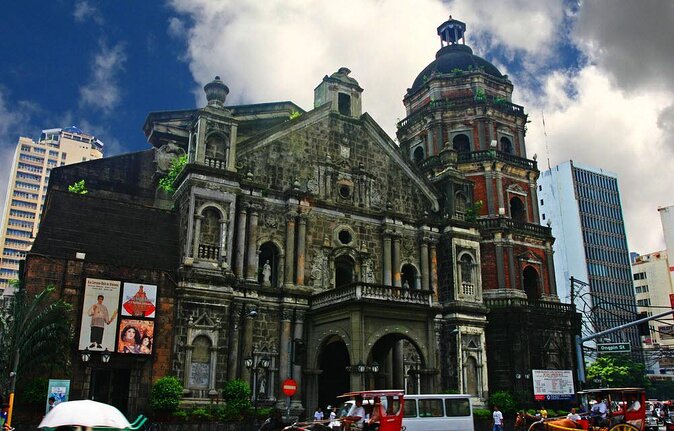
Sto. Niño de Tondo Church gives the route a religious and community focus. After the market streets and transport, a church stop offers a change of pace and shows another part of neighborhood life.
The supplied details do not specify the length of the visit, interior access, or a formal service schedule. You should therefore expect a brief stop and explanation rather than a full church program.
Dress and behavior should be respectful in any place of worship. Follow the guide’s instructions about photography and where you can stand. The church is included as part of a wider neighborhood route, so the emphasis is on seeing how it fits into the area rather than studying every architectural feature.
I like the contrast this stop provides. The experience is not only about crowded streets and low-cost shopping. It also points to the institutions that shape local communities.
Tutuban Mall and the route back
Tutuban Mall is another listed stop, and its presence adds a useful contrast to the open market. Here you may see a more organized retail setting alongside the informal stalls and side streets nearby.
The mall is also practical as a landmark because the tour begins and ends at Tutuban Center. That reduces uncertainty at the finish. After the walk, jeepney ride, and market visit, you are not dropped at an unfamiliar part of the city.
The exact activities at the mall are not stated. Do not assume a dedicated shopping session or a long break there. It appears to function as one part of a route through Tondo and nearby districts.
Seeing Manila beyond the main roads
The experience places real weight on back alleys, side streets, and older apartments. This is where the tour becomes more personal and, for some people, more difficult.
You may see living conditions that include bathing and eating in open areas. That can help you understand how different Manila’s neighborhoods can be from the hotel districts and major commercial centers. It can also feel intrusive if approached carelessly.
I would use the guide’s interpretation as your main reference. Listen before photographing, do not block doorways, and remember that the people you see are going about their day. The strongest part of this tour is not collecting dramatic images. It is learning to notice how people use space when housing, shops, transport, and public life are packed together.
Because the tour description uses direct language about conditions, you should be comfortable with an unvarnished view of city life. If you want a polished, comfort-first sightseeing trip, this is probably not the right choice.
Local coffee, Filipino food, and the value of a small group
The tour gives you the chance to try local coffee and food as Filipinos eat them. No specific dishes are named, so the experience is best understood as a simple taste of local routine rather than a set culinary itinerary.
That small detail matters. Food and coffee can turn a neighborhood visit into something more personal, especially when the guide explains how and where people enjoy them. Still, do not treat the tasting as a substitute for lunch. The duration is about two hours, and the amount of food is not specified.
The group limit is 10 people. That is a helpful size in Divisoria and the narrow streets around Tondo. You can stay closer to the guide, ask questions, and hear explanations more easily than you might in a large coach group.
The price is $60 per person. That is not the cheapest way to wander through Manila, especially since the tour lasts only two hours. Its value depends on what you want: the fee covers a guide, a planned route, photography, a jeepney experience, local coffee and food, and help finding a safe way back to your hotel.
For you, the price makes more sense if this is your first Manila visit, your time is limited, or you want a guide to handle the route through unfamiliar districts. If you are comfortable using public transport and exploring markets alone, you may find the cost harder to justify.
The tour is booked an average of 17 days ahead, so it is sensible to reserve early if your Manila schedule is fixed. Confirmation is received at booking.
Who will enjoy this experience most
I would recommend this outing to you if you:
- Have a short Manila stay or a layover
- Want to ride a jeepney with local guidance
- Prefer markets and residential streets to polished attractions
- Are comfortable with crowds and a moderate amount of walking
- Want a small group capped at 10 people
- Appreciate direct explanations and a lively guide
- Need help finding the safest way back after the activity
It is less suitable if you need step-free access, dislike crowded public transport, or want a slow tour with long visits at each stop. The physical fitness note is worth taking seriously, even though the tour is short.
The route also asks for cultural sensitivity. You may encounter poverty and private domestic life at close range. The experience can be meaningful, but only if you treat the neighborhood as a lived-in place, not a spectacle.
Timing, weather, and cancellation flexibility
The activity requires good weather. If poor weather causes cancellation, you will be offered another date or a full refund. It also requires a minimum number of participants, so a cancellation for that reason brings the same choice of another date or experience, or a full refund.
You can cancel for a full refund up to 24 hours before the start time. Changes or cancellations made within 24 hours are not accepted and are not refunded. The cut-off follows local time.
Those rules are fairly manageable, but the weather requirement matters in Manila. Keep some flexibility in your schedule if this is an important part of your stay.
Should you book The Hidden Gems of Manila Guided Tour?
Book it if you want a compact, people-focused look at Tondo, Divisoria, Binondo, and nearby streets. The jeepney ride, open market, church, local food, and small group give you more contact with daily Manila than a standard landmark circuit.
The strongest reason to go is the local framing. A guide such as Floyd can explain what you are seeing, keep the mood lively, and help you finish safely. The main trade-off is time: two hours moves quickly, and the $60 price is fair only if the guidance and access are more valuable to you than independent wandering.
If you are in Manila for a brief stop and want the city without much guesswork, I would book it. If you want comfort, extensive sightseeing, or a dedicated food tour, choose something longer and more focused.
FAQ
Where does the tour begin?
The tour begins at Tutuban Center, JX4F+Q7X, Tondo, Manila, 1012 Metro Manila, Philippines.
Where does the tour end?
The activity ends back at the meeting point at Tutuban Center.
How long does the tour last?
The tour lasts approximately two hours.
What is the maximum group size?
The tour accepts a maximum of 10 people.
What transportation will I use?
You will experience Manila’s local jeepney transportation during the tour.
Which places are included in the route?
The listed stops are Divisoria Market, Binondo, Sto. Niño de Tondo Church, Tutuban Mall, and Metro Manila.
Is food included?
You will be able to try local coffee and food as eaten by Filipinos. Specific dishes and quantities are not stated.
What happens if I need to cancel?
You can receive a full refund if you cancel at least 24 hours before the start time. Cancellations within 24 hours are not refunded.
Just added around Luzon
- Villa Escudero Tour with Lunch From Manila (SHARED)★ 5.0 · 5 reviews
- Private Filipino Cooking Class in the Heart of Manila,Makati City★ 5.0 · 5 reviews
- Villa Escudero Coconut Plantation Day Trip from Manila★ 3.5 · 9 reviews
- VILLA ESCUDERO DAY TOUR with Carabao Cart Ride and Bamboo from Manila★ 4.0 · 6 reviews
- Angeles City / Clark Airport to La Union (Bauang, San Fernando, San Juan)★ 3.5 · 4 reviews
- The Jeepney & Tuk Tuk Adventure ride with Local Guide★ 4.5 · 4 reviews
- Manila ATV Mountain Trail Adventure(with Transfers***)★ 4.5 · 19 reviews
- Sagada and Banaue Rice Terraces 4-Day Tour★ 5.0 · 4 reviews
Guided, compared.

Waterfall Hopping & Secret Jungle Trails Guided Tour
Read our review →