
Reviewed · MANILA TOURS
Manila: Taste and See Authenticity
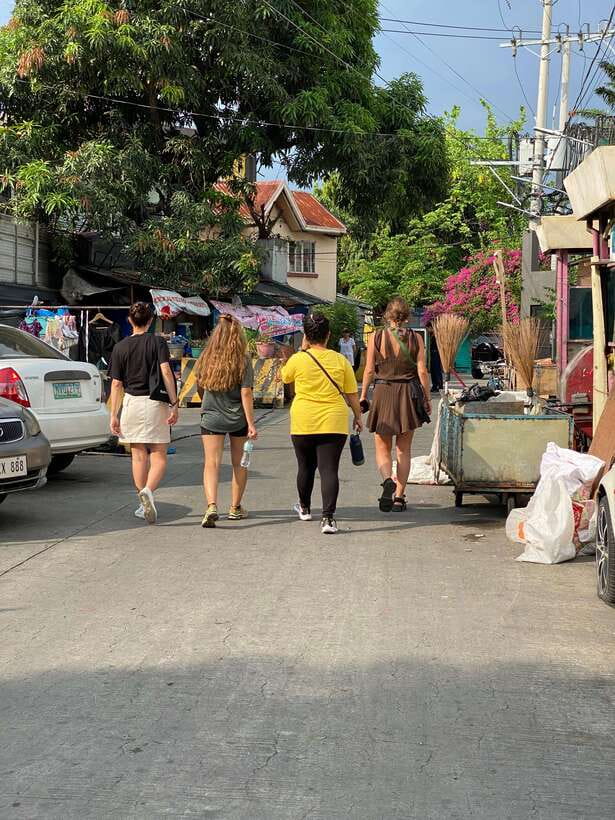
Sta. Ana gives you a side of Manila that polished business districts cannot show. With guide Bernadette, you walk past ancestral homes, enter the local rhythm of barangays and alleyways, sample snacks, and ride public transport alongside residents. I like the small group of six and the chance to see ordinary Manila life without a staged village or tourist set-up. I also like that drinks, snacks, transport fares, and a souvenir are included.
This is mainly a walking experience, and it takes place rain or shine. The route can feel intense, especially if you are not used to crowded streets or seeing poverty at close range. I would also confirm the exact ending point and meeting time before you go, since one booking had a delayed start and finished somewhere other than the stated drop-off.
Key points at a glance
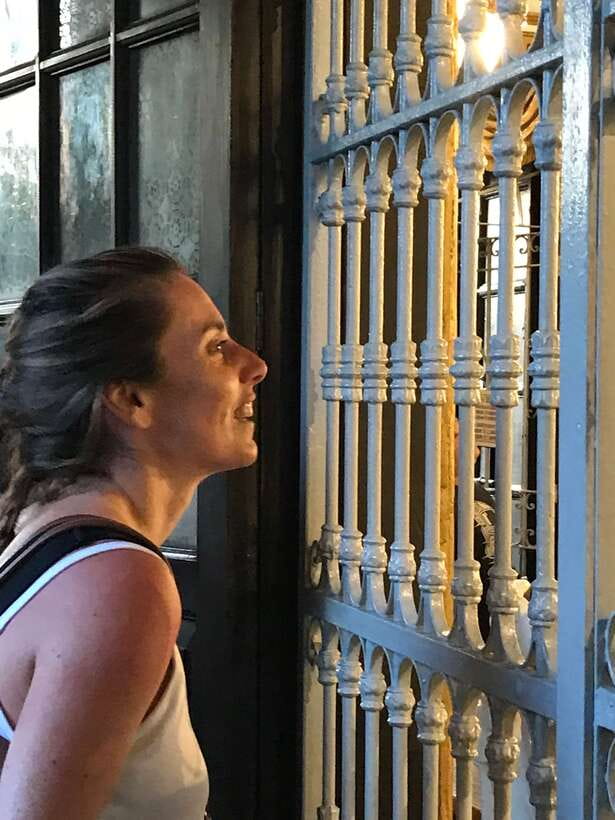
- Sta. Ana Heritage District: See old houses and ancestral structures in a neighborhood with a strong local identity.
- A local guide named Bernadette: Expect personal explanations about the buildings, families, and everyday life of Sta. Ana.
- Public transport included: The outing includes fares and a tuk tuk ride, with one confirmed booking also riding a jeepney.
- Food along the way: Drinks, snacks, local refreshments, and food tasting are part of the experience.
- Small group format: The group is limited to six, which makes conversation and questions easier.
- Circuit Makati finish: The tour ends near shops, restaurants, and activities, though you should confirm the exact handover point.
Why Sta. Ana makes a better local walk than central Manila
Many first visits to Manila stay around large malls, hotel districts, and major attractions. Those places are useful, but they can leave you with a thin picture of how the city works. This walk takes you into Sta. Ana, close to Makati, Mandaluyong, and San Juan, while keeping the focus on homes, streets, transport, food, and local routines.
The first hour centers on the Sta. Ana Heritage District. You see old houses and ancestral structures while walking through several barangays. That matters because the buildings are not presented as isolated museum pieces. They sit beside ordinary homes, small streets, public spaces, and the daily life of the neighborhood.
I like this mix of architecture and people. You are not simply stopping at a grand church, taking a photograph, and moving on. Bernadette explains what you are seeing and places it in the context of the community. One booking described her explanations of the buildings and local lives as a major part of the experience.
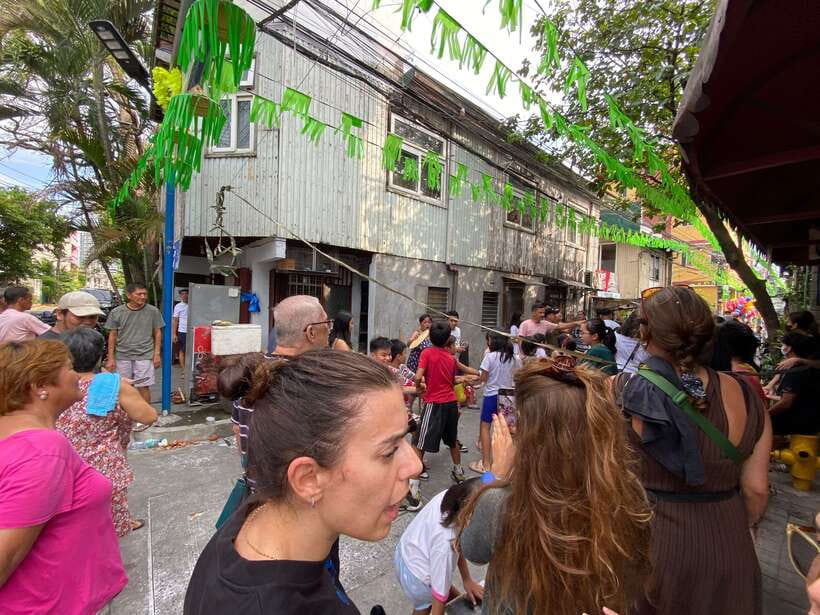
The setting also gives you a more grounded view of Manila. Children may greet you, residents may say hello, and the walk can produce natural photographs without turning the whole outing into a photo session. You should still act with care. This is a lived-in neighborhood, not a backdrop, so ask before photographing people and follow your guide’s lead.
Other Manila days worth booking alongside this:
- Intramuros, Manila: Historical Bamboo Bike Tour
★ 4.8 · 583 reviews - Experience Intramuros with Bamboo Bicycle – Ecotours
★ 5.0 · 508 reviews - Manila: Intramuros, Chinatown, and Old Manila Half-Day Tour
★ 4.8 · 475 reviews
Plaza Hugo and the first 20 minutes on foot
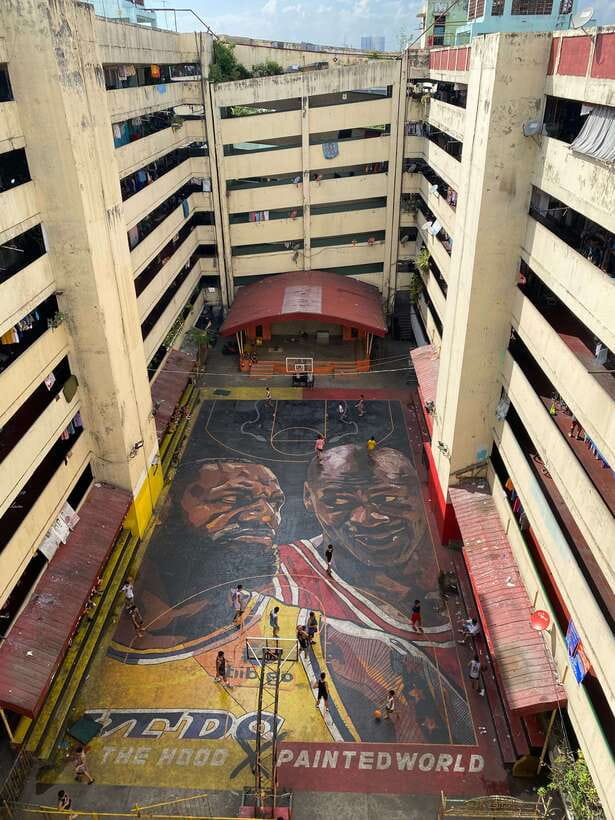
The meeting point is Plaza Hugo, an outdoor basketball court beside a stage and mini park. That description is useful because Plaza Hugo may not feel like a standard tour meeting point with a ticket booth or large sign. Give yourself time to identify the court and nearby park.
From there, you begin on foot. The first walking portion lasts about 20 minutes and leads into the local area. Wear shoes that can handle uneven pavement and a steady pace. Comfortable, breathable clothing is a better choice than anything formal, and a hat and sunscreen will help during bright weather.
You meet your guide here and get an early sense of how personal the outing will be. The tour is conducted in English and Tagalog, and the group limit of six should make it easier to ask about local customs or buildings as you go.
The route is not built around air-conditioned comfort. You may deal with heat, rain, traffic noise, narrow passages, and changing surfaces. That is part of the point, but it also means you should be realistic about your own stamina.
Our Lady of the Abandoned Church and Sta. Ana’s old houses
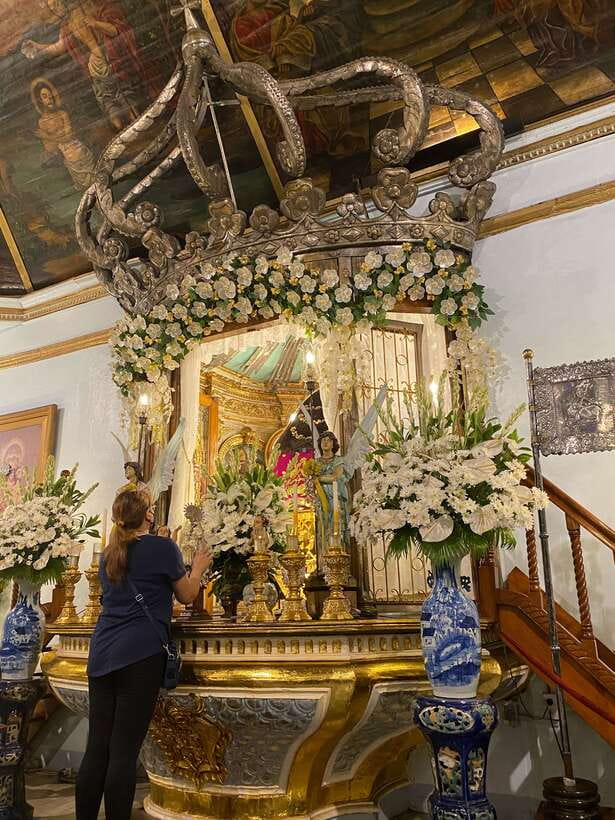
A key early stop is Our Lady of the Abandoned Church. The church provides an anchor for the heritage portion of the walk, while the surrounding streets show how historic structures exist beside present-day homes and businesses.
The tour then moves through the wider Sta. Ana cultural heritage area. You see ancestral houses and older structures, but the value comes from the guide’s local knowledge. Bernadette has personal ties to the neighborhood and explains the area from a resident’s point of view rather than delivering only dates and architectural labels.
That local angle is one of the strongest reasons to book this outing. You can learn how people use the streets, how families live in barangays, and how older buildings fit into current city life. One person who took the walk specifically wanted help making sense of the neighborhood instead of wandering without context. That is exactly where a local guide earns the fee.
Do not expect a formal heritage tour with every building restored or marked. Some structures may be worn, altered, or surrounded by the ordinary clutter of city living. If you want only pristine architecture, this will not be your ideal Manila activity. If you want to see heritage in place, with modern life pressing around it, the setting is much more revealing.
Barangay streets, alleyways, and everyday Manila
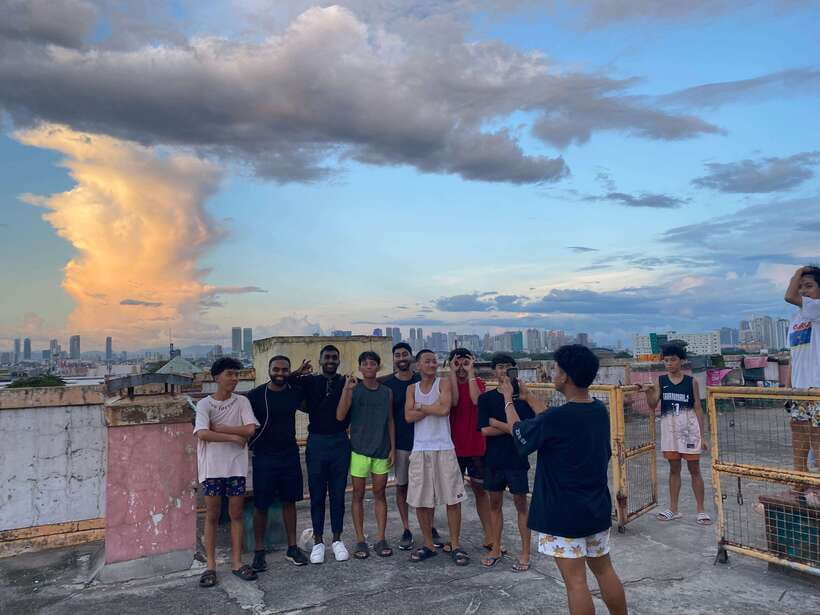
After the heritage stops, the experience shifts toward daily life. You pass through barangays and alleyways and see common Filipino families living in their neighborhood. The activity description is direct about this purpose: you are here to see Manila from a local perspective, without the fancies.
That can be eye-opening, but it is not always comfortable. The streets may feel close, noisy, crowded, or unfamiliar. You may notice housing conditions and financial hardship that are easy to miss in commercial districts. The experience asks you to observe respectfully rather than treat someone’s home as a spectacle.
I appreciate that the guide stays with you through this part. A local person can help explain what you are seeing, introduce context, and make social contact feel less awkward. One booking described the guide as friendly and caring, with enough time to take photographs and speak with residents. That breathing room is important. A rushed walk through a poor neighborhood can feel intrusive; a slower, guided visit gives you more control over how you look and listen.
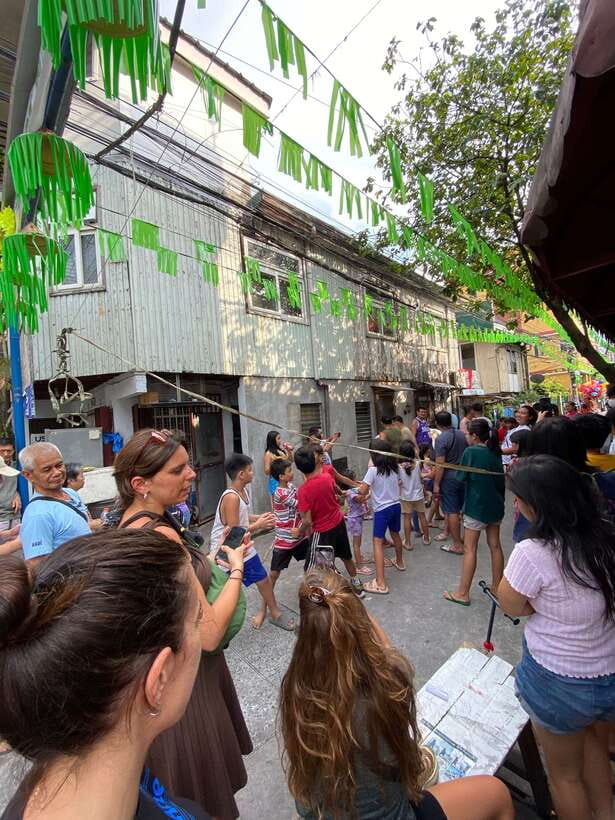
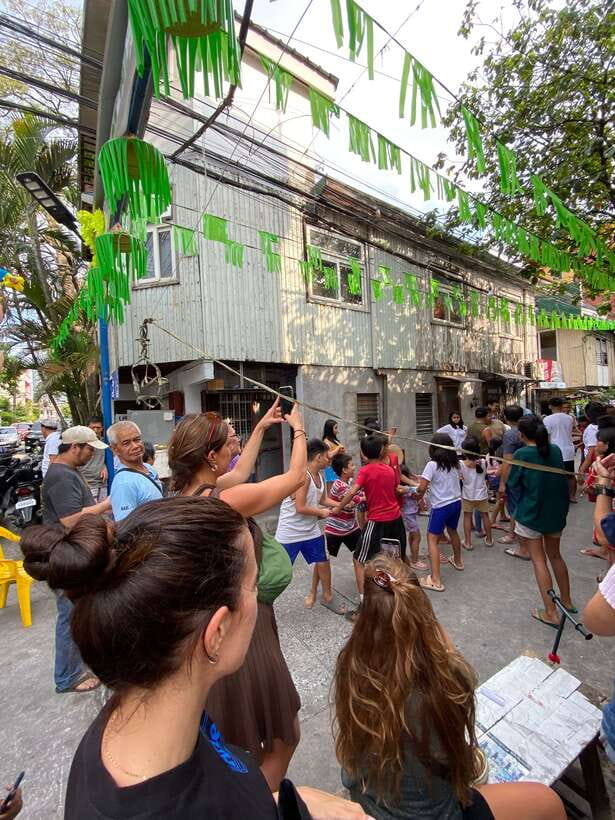
The warm response from local children was another memorable detail from one outing, including greetings and high fives. You cannot expect the same interaction every time, but the neighborhood is clearly accustomed to friendly community contact. Keep your manner modest, and let people choose how much contact they want.
Same islands, a completely different day on the water:
- Manila: Old & New 4-Hour City Tour
★ 4.5 · 458 reviews - Manila Food Tour: Introduction to Philippine Street Food
★ 5.0 · 417 reviews - Spectacular Manila to Tagaytay: Full-Day Sightseeing Tour
★ 5.0 · 349 reviews - Makati Nightlife: VIP Access to Clubs, Rooftops & Go-Go Bars
★ 4.9 · 278 reviews
Tuk tuk, jeepney, and the practical side of getting around
The route includes about 35 minutes in a tuk tuk, and public transportation fares are included in the price. One booking also specifically confirmed a jeepney ride, giving you a taste of one of Manila’s best-known forms of local transport.
This is more than a novelty ride. Public transport is part of how Manila works, and riding it helps you understand distances, traffic, and the city’s everyday pace. You also avoid a tour that keeps you sealed inside a private vehicle.
The trade-off is comfort. Public transport can be crowded, warm, and less predictable than a private car. The description does not promise a specific vehicle for every part of the route beyond the listed tuk tuk, so I would treat the jeepney as a possible feature rather than a guaranteed part of every departure.
You will want cash with you even though the listed fares are included. Cash is specifically recommended, and it is useful for extra food, drinks, or personal purchases. Large luggage and big bags are not allowed, so arrive with only what you can carry comfortably.
Street food, local snacks, and a sunset stop
Food appears during the middle portion of the walk, which lasts about an hour. The plan includes refreshments, local snacks, street food, food tasting, and a food market visit. The exact items can vary, so you should think of this as a chance to sample what is available rather than a fixed tasting menu.
I like the way food is tied to the neighborhood. You are not sitting in a restaurant chosen only for foreign visitors. You get a quick look at what people buy and eat in the area, with your guide helping you understand the setting.
Drinks and a snack are included, and the experience provider also lists refreshments along the way. Still, one booking found the group thirsty and had to request a water stop midway. I would bring cash and ask early if you need water. Do not assume every refreshment will appear exactly when you want it.
The timing may also bring a sunset view. That sounds appealing, but sunset is weather-dependent, and the walk remains the main attraction. The best photographs may come from changing streets, old houses, transport, food stalls, and candid city scenes rather than from one grand viewpoint.
The final 35 minutes and the Circuit Makati finish
The last portion lasts about 35 minutes and includes more guided walking and some free time. It gives you a little room to ask final questions, take photographs, or simply watch the neighborhood before leaving Sta. Ana.
The stated finish is Circuit Makati, an indoor and outdoor mall with stores, restaurants, and other activities. That is a practical endpoint if you want dinner, shopping, or more time in a modern Manila setting after the local walk. You can shift from neighborhood streets to a commercial complex in one afternoon.
I would confirm the precise drop-off details before departure. One Christmas Day booking ended somewhere different from the stated finish, making it harder to arrange comfortable transport back to the hotel. Holiday traffic may have played a part, but the lesson is simple: do not plan a tight onward connection.
The ending also creates an interesting contrast. You begin at a basketball court and walk through heritage streets and alleyways, then finish near one of Makati’s modern leisure areas. That contrast helps you see how many different Manilas can exist within a short distance.
What the $63 price includes
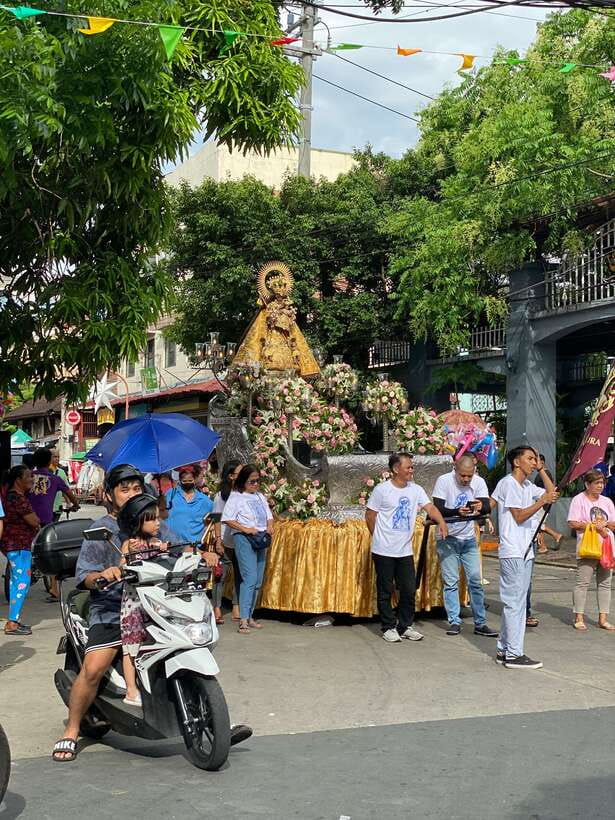
At $63 per person, this is not the cheapest way to spend two and a half hours in Manila. You can walk around a neighborhood on your own for less, and ordinary public transport and snacks usually cost little.
The value comes from the access and interpretation. Your fee covers a live guide, public transport fares, drinks, a snack, food tasting elements, and a souvenir. More important, it gives you a local person who can explain the heritage buildings and help you understand what is happening around you.
The group limit of six improves that value. A small group makes it easier to hear the guide, ask questions, and adjust the pace for photographs or conversations. It also reduces the chance that the outing feels like a line of people moving through private streets.
For me, the price makes the most sense if you want a personal introduction to Manila and would otherwise struggle to find Sta. Ana or understand what you are seeing. It makes less sense if you mainly want major landmarks, polished transport, or a predictable food tour.
Who will enjoy this experience most
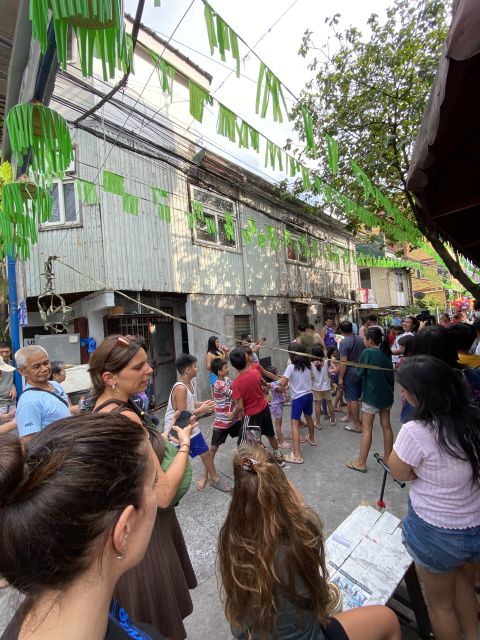
I would recommend it to curious, respectful visitors who want a nontraditional view of Manila. It suits you if you like walking, local food, public transport, personal stories, and neighborhoods that have not been arranged for tourism.
It is also a good choice for a return visit. If you have already seen the main commercial districts, Sta. Ana offers a different pace and a more personal connection to the city.
You should think twice if you dislike heat, rain, narrow streets, or uncertain timing. The tour runs rain or shine and is mainly on foot. Bring comfortable shoes, sun protection, rain gear, breathable clothing, and cash.
Professional cameras are not allowed, so take a phone or ordinary camera instead. Large luggage and large bags are also not permitted. Those rules make sense for alleyways and public transport, but they limit how much equipment you can bring.
The experience can also raise ethical questions. Seeing ordinary families and poorer housing conditions is not entertainment by itself. Book this only if you are ready to behave with tact, listen to your guide, and avoid turning residents into objects for photographs.
Timing, language, and booking flexibility
The activity lasts 2.5 hours, with starting times subject to availability. English and Tagalog are offered, and the group is limited to six participants.
You can cancel up to 24 hours before the start for a full refund, and the reserve-now, pay-later option keeps your plans flexible. Those terms are useful in Manila, where weather and traffic can affect a day’s schedule.
I would arrive early at Plaza Hugo and allow extra time after the tour if you need to reach a hotel or airport. The experience can run on local time rather than the precision of a private sightseeing transfer, especially during holidays or heavy traffic.
Should you book the Sta. Ana walk?
Book it if you want to see Manila through a resident’s eyes rather than through a string of famous sights. Bernadette’s personal approach, the old houses, the church, public transport, local snacks, and ordinary streets give you a fuller sense of how the city is lived.
Skip it if you want a relaxed, air-conditioned tour or a guaranteed list of specific food items and transport vehicles. The walk asks for flexibility, open-mindedness, and decent shoes.
For the right person, this is a memorable use of 2.5 hours. It is not polished, and that is precisely its value. Confirm the meeting and ending points, bring water-friendly gear and cash, and treat Sta. Ana as a community first. If that sounds like the Manila you want to understand, the $63 price is reasonable.
FAQ
Where does the tour begin?
It begins at Plaza Hugo in Sta. Ana, Manila. The meeting point is an outdoor basketball court with an adjacent stage and mini park.
Where does the tour end?
The stated finishing point is Circuit Makati in Makati, Metro Manila. Since one booking reported a different ending point, confirm the exact drop-off location before the tour.
How long does the experience last?
The experience lasts 2.5 hours.
What languages are available?
The live guide speaks English and Tagalog.
How many people can join?
The activity is offered as a small group limited to six participants.
Is public transportation included?
Yes. Public transportation fares are included, and the route includes a 35-minute tuk tuk section. A jeepney ride was also included on one confirmed outing, but the exact transport mix may vary.
What should I bring?
Bring comfortable shoes, a sun hat, sunscreen, rain gear, comfortable breathable clothing, and cash.
Can I cancel the booking?
Yes. You can cancel up to 24 hours in advance for a full refund. You can also reserve now and pay later.
Just added around Manila
- Underground River with Lunch★ 3.6 · 5 reviews
- Private Tour: Tagaytay Midlands & Taal Volcano Boat Ride★ 4.5 · 15 reviews
- 3 Days Private Tour in Banaue Ifugao visiting Batad Rice Terraces★ 3.5 · 3 reviews
- Tagaytay Adventure: Volcano Views, Countryside, Market & Cruise!★ 4.5 · 14 reviews
- Tagaytay Day Tour sightseeing with Panoramic Taal volcano view★ 5.0 · 6 reviews
- Unforgettable Manila Fishing Village Day Excursion 2024★ 5.0 · 4 reviews
- Tagaytay + Hidden Valley Springs: A Scenic Escape w/ Transfers★ 4.0 · 4 reviews
- Cultural Dinner and Show in Manila★ 5.0 · 4 reviews
Manila Tours, compared.

Intramuros, Manila: Historical Bamboo Bike Tour
Read our review →
Experience Intramuros with Bamboo Bicycle – Ecotours
Read our review →
Intramuros, Chinatown, and Old Manila Half-Day Tour
Read our review →
Manila Food Tour: Introduction to Philippine Street Food
Read our review →
Spectacular Manila to Tagaytay: Full-Day Sightseeing Tour
Read our review →
Discover Tagaytay’s Countryside: Half-Day Sightseeing Tour
Read our review →
Manila Food Tour: Explore World’s Oldest Chinatown
Read our review →Browse the lists this tour appears in