
Reviewed · WALKING TOURS
Manila Social and Political Walk
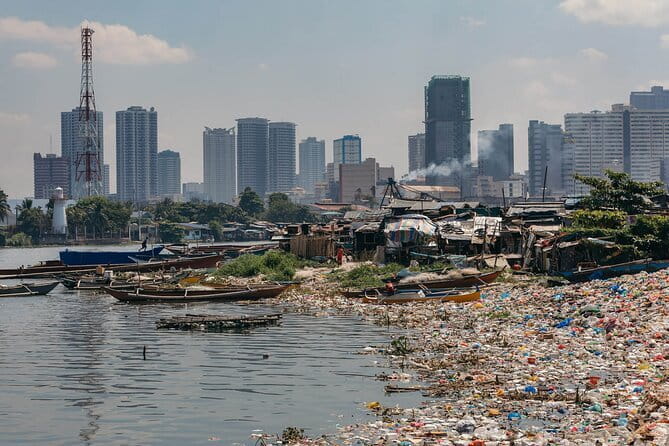
Manila’s polished towers and struggling waterways sit surprisingly close together. This two-and-a-half-hour evening walk uses that contrast to explain how the Philippines developed, who benefits from its growth, and why serious social problems remain.
I like the route because it moves through six sharply different stops, from upscale Rockwell Center to the Pasig River and Mandaluyong. I also like the documentary-style format, with Alex presenting history, politics, and present-day life rather than giving you a standard sightseeing talk. The main consideration is that this suits curious adults more than anyone seeking monuments, shopping, or light entertainment.
Key points to know before you book
- See Manila’s contrasts in one compact route: The walk links luxury residences, nightlife streets, business districts, and the troubled Pasig River.
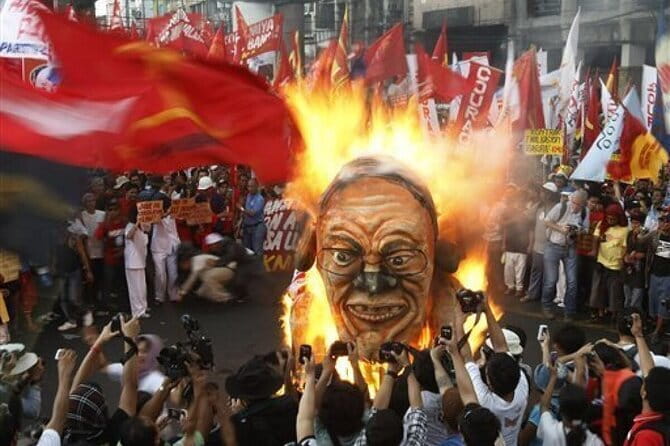
- Expect political and social discussion: The focus runs from the creation of the Filipino state to current events, presented from a balanced point of view.
- Meet at 6 pm at Starbucks One Rockwell: The activity begins and ends at Rockwell Drive in Makati City.
- Alex leads the experience: The available feedback identifies Alex as the guide, with a strong interest in Manila and the lives of its people.
- Plan for about 2 hours and 30 minutes: Each listed stop lasts about 15 minutes, with the remaining time used for walking and discussion.
- The group can reach 30 people: That is small enough for a shared discussion, though not necessarily an intimate private walk.
A different way to read Manila after sunset
Many Manila outings concentrate on food, shopping, churches, or skyline views. This one asks you to look at the city as a set of choices and consequences. It connects sleek buildings with inequality, redevelopment with displacement, and the country’s beautiful image with problems that are easier to ignore from a resort.
That gives the experience a clear purpose. You are not simply passing through Makati and checking off six places. You are being asked to compare what each district says about the Philippines. A luxury tower, a nightlife street, and a polluted river become pieces of one larger discussion.
The format is interactive storytelling. You should expect a steady flow of information, questions, and explanations rather than a long speech at one location. The description compares the experience to a documentary, which is useful shorthand: the walk is built around a connected argument, not isolated facts.
Alex is the named guide. The available feedback describes Alex as passionate about the Philippines, especially Manila and its difficulties. That matters here because a political walk needs more than dates and labels. You want someone willing to explain how national events affect ordinary lives, while still allowing you to form your own opinion.
The tone is intended to be balanced and non-partisan. That does not mean the subject matter is neutral or easy. The walk deals with political issues, social hardship, and the gap between the country’s postcard image and its daily realities. If you prefer your evening tour to stay cheerful and uncomplicated, this may feel heavy.
A few more Luzon trips to weigh up
- Manila’s Walled City: Intramuros Walking Tour
★ 5.0 · 82 reviews - Manila Intramuros Walking tour with Local Tour Guide
★ 5.0 · 33 reviews - Intramuros & Chinatown Manila Tour – Walking, Food & Culture
★ 4.5 · 32 reviews
Rockwell Center: prosperity as a starting point
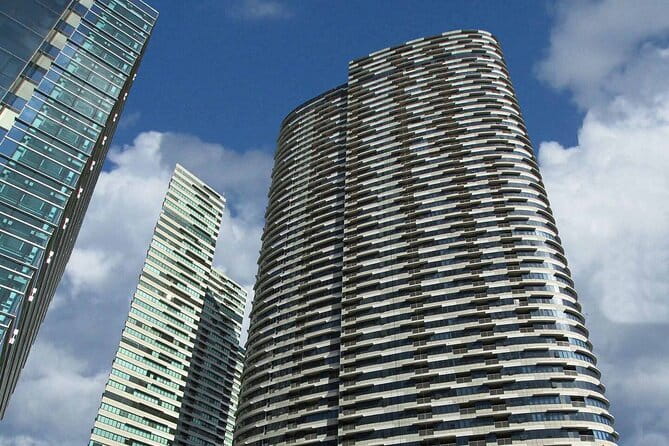
The meeting point is Starbucks One Rockwell, on Rockwell Drive in Makati City. The first stop is Rockwell Center, an upscale urban area that gives the walk an immediate reference point.
Rockwell is useful at the start because it shows the polished side of Metro Manila. You begin among high-value development and modern city planning, not in an abstract lecture hall. The setting helps you consider how private investment, wealth, and urban improvement shape daily life.
The stop lasts about 15 minutes. That is enough time for an introduction and a focused explanation, but not enough for an architectural tour or a detailed study of every building. I would treat Rockwell as the opening chapter of the walk, not as a destination requiring independent sightseeing time.
You may also find the meeting point convenient if you are already in Makati. Since the walk returns to the same place, you do not need to arrange a separate pickup at the end. The supplied details do not mention hotel pickup or transport between stops, so you should plan on meeting the group at the stated location.
Trump Tower and the language of luxury
The next stop is Trump Tower at Century City, a high-rise residential building associated with luxury and opulence. Its role in the route is less about visiting an attraction and more about examining the image of wealth in modern Manila.
This is a strong contrast with the social questions raised later. A luxury residence can tell you about aspiration, real estate, global branding, and the people who can afford the city’s most prestigious addresses. It also lets you consider how Manila presents itself to investors and affluent residents.
You should not expect admission inside the tower. The stop is listed as free, and the experience is an outdoor walking route with discussion at each point. The value comes from the guide’s interpretation of the setting, not from entering a private property.
The 15-minute timing keeps the discussion moving. I like that structure for a city walk with a wide subject. You get enough time to understand why the stop matters, then move on before the talk becomes too narrowly focused on one building.
P. Burgos Street: nightlife beside social questions
P. Burgos Street in Makati is known for restaurants, bars, and nightlife. Here, the walk shifts from private luxury to public urban life. You see a district shaped by evening commerce, entertainment, and the many ways people use the city after work.
This stop adds texture to the political discussion. A nightlife street is not only about restaurants and bars. It can raise questions about jobs, tourism, public space, safety, and the different groups who share the same road for very different reasons.
The route begins at 6 pm, so the timing should suit the character of this stop. You encounter the area as the evening gets underway rather than seeing it only in daylight. Still, the exact amount of daylight, street activity, and weather will vary. The experience requires good weather, and the operator may reschedule or refund it if conditions are poor.
P. Burgos is also a useful reminder that Manila cannot be reduced to either hardship or luxury. The city is social, commercial, messy, ambitious, and entertaining at the same time. The guide’s job is to connect those observations to wider issues without turning the stop into a simple nightlife recommendation.
Same islands, a completely different day on the water:
- Manila Old and New: Sightseeing Tour Including Intramuros and Fort Santiago
★ 4.5 · 377 reviews - Manila Filipino Cooking Class: Meryenda Favorites
★ 5.0 · 80 reviews - Batad Guided Tour
★ 5.0 · 78 reviews - Manila Super Saver: Manila Sightseeing plus Tagaytay Tour with Taal Volcano
★ 4.0 · 75 reviews
Poblacion: old streets and new energy
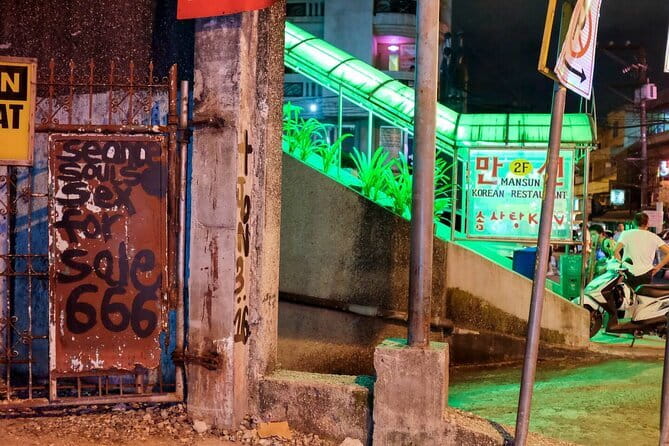
Poblacion continues the urban contrast. The area combines older character with cafes, street art, restaurants, and nightlife. It is one of the more recognizable examples of a neighborhood changing its public identity while retaining traces of its earlier life.
I like this stop because it gives you a close look at how districts evolve. Poblacion is not presented as a museum piece. It is a living part of Manila where new businesses and visitors meet long-standing residents and older streets.
The stop can help explain why urban change creates both opportunity and tension. New venues may bring jobs and attention, but rising interest can also change the feel and cost of a neighborhood. The provided details do not specify exactly how Alex handles those subjects, so you should expect the guide to frame them as part of the wider social and political discussion rather than assume a fixed lecture.
Poblacion may also be the most entertaining section of the walk for people who enjoy watching city life. It is important to keep your expectations in check, though. This is not a bar crawl, food tour, or street-art tour. The focus remains interpretation and conversation.
The Pasig River: a visible measure of change
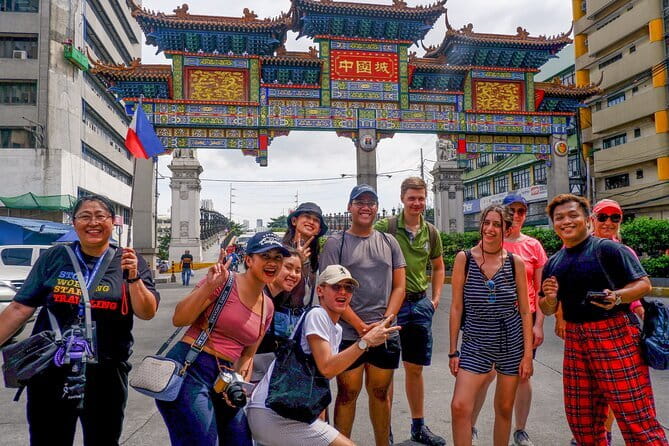
The Pasig River brings the walk’s central contrast into sharper focus. It once served as an important trade and transport route through Manila, but it now struggles with pollution and neglect while still carrying signs of its past importance.
This is likely to be one of the most meaningful stops. The river gives social and political issues a physical form. You can discuss development, public responsibility, environmental damage, transport, and the difficulty of repairing a major urban waterway while standing beside the place itself.
The stop lasts about 15 minutes, so the guide cannot cover every chapter of the river’s story. That is not a flaw if you see the walk as an introduction. I would leave room in your Manila plans for further reading or a separate visit if the river becomes your main interest.
The Pasig River also keeps the experience from becoming a tour of wealthy districts. By this point, the route has moved from polished towers and entertainment streets to an urban problem with long-term effects. That change gives the earlier stops more weight. You begin to see them as connected parts of the same city, not separate scenes.
Mandaluyong: business growth and urban pressure
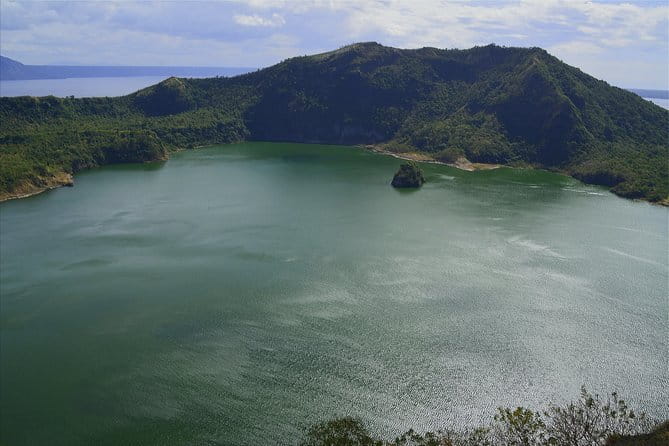
The final listed stop is Mandaluyong City, an urban area known for skyscrapers, a strong business district, and an active city atmosphere. It provides another view of Metro Manila’s growth and the pressure that comes with it.
Mandaluyong works well near the end because it broadens the discussion beyond Makati’s luxury developments. The route can consider how business districts expand, how residents experience fast city change, and how economic growth is shared or divided.
The available schedule gives each stop about 15 minutes, so do not expect a long walking tour of Mandaluyong itself. Think of it as a final case study. After seeing private wealth, nightlife, neighborhood change, and the Pasig River, you reach a district that represents the larger economic machine.
The activity returns to Starbucks One Rockwell after this section. That circular ending is practical. You finish where you began, with no need to find a new meeting point in an unfamiliar part of Metro Manila.
How the six stops work as one story
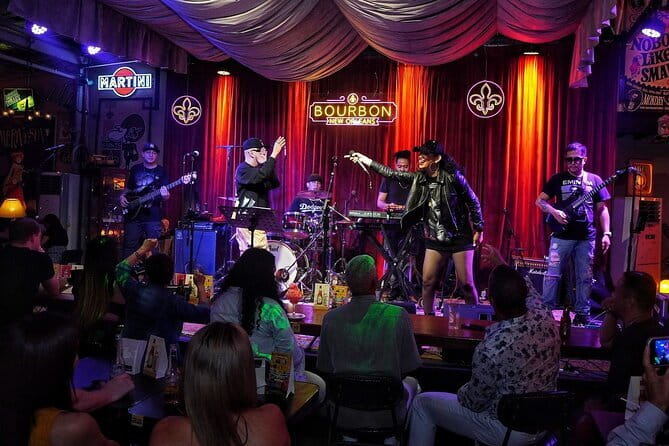
The individual stops are interesting, but the route’s real value comes from the order. Rockwell Center and Trump Tower show concentrated wealth. P. Burgos Street and Poblacion show social life, commerce, and neighborhood change. The Pasig River reveals public and environmental strain. Mandaluyong brings the discussion back to business growth and city development.
I would not book this experience if you want six major attractions with lots of time for photos. The stops are short, and admission is not the point. You are paying for the guide’s connections between places, plus the chance to ask questions during the walk.
The interactive approach may be especially useful if you have already seen Manila’s famous sights and want help making sense of the city. It can also suit someone visiting the Philippines for the first time who wants political and social context before forming quick opinions about what they see.
The walk is aimed at people with a genuine interest in politics and those willing to conduct first-hand research. That phrase matters. You are not being handed a simple answer about the Philippines. The stated goal is to provide information from a balanced viewpoint and let you decide what you think.
What $45.75 buys you
At $45.75 per person, this is not the cheapest way to spend two and a half hours in Manila. You are not paying for entry tickets, a meal, or a long list of included attractions. The listed stops are free.
The value depends on how much you want interpretation. If you only need directions or photographs, the price will feel high. If you want a focused conversation about the country’s political development, social issues, and current events while moving through real neighborhoods, the cost is easier to justify.
A guide-led experience also saves you from trying to connect these districts alone. You could visit parts of Makati and the surrounding area independently, but you might not know why the stops belong in one route or how to place them within the Philippines’ national story.
The group may include up to 30 people. That keeps the per-person price understandable, but it also means the level of personal attention can vary. If you want a quiet, highly personal conversation, ask Planetwonk about a suitable date and time before booking. The provider invites you to contact the team about scheduling.
The walk is booked, on average, five days ahead. That is useful planning information if you have a short stay in Luzon. I would arrange it early enough to protect your preferred evening, especially because the activity depends on a minimum number of participants and good weather.
Who should choose this walk
I would recommend it to you if you enjoy asking why a city looks and works as it does. It is a good match for students, politically curious visitors, repeat visitors to Manila, and anyone who wants more than a polished tourist version of the Philippines.
It may also suit you if you are comfortable with difficult subjects. The discussion includes historical and current events, social challenges, the creation of the Filipino state, and the difference between the country’s paradise image and its less visible problems.
I would choose another activity if you want a relaxed introduction with little political content. Families with young children may find the format too information-heavy, though the supplied details say most people can participate. The walk is also not designed around food, shopping, architecture, or nightlife access.
Wear practical walking clothes and prepare for an evening outdoors, but keep your plans flexible because the exact duration is approximate and weather can affect the schedule. No special physical restriction is listed, although the activity is a walking experience lasting about 2 hours and 30 minutes.
Booking, cancellation, and practical details
Your mobile ticket is confirmed when you book. The start time is 6 pm, and the meeting point is Starbucks One Rockwell, Rockwell Drive, Makati City, Metro Manila. The walk ends back at that same meeting point.
Free cancellation is available if you cancel at least 24 hours before the local start time. Cancellations or changes made inside that period are not accepted for a refund. If poor weather causes the operator to cancel, you will be offered another date or a full refund.
The activity also requires a minimum number of participants. If that minimum is not reached, Planetwonk will offer another date or experience, or provide a full refund. Most people can participate, and the maximum group size is 30.
Should you book the Manila Social and Political Walk?
Book this if you want Manila explained through its contrasts rather than simply photographed. The route is short enough to fit into an evening, but the subject matter reaches from state formation to current social and political concerns.
I especially like the mix of places: Rockwell Center, Trump Tower, P. Burgos Street, Poblacion, the Pasig River, and Mandaluyong do not present one tidy image of the city. Together, they give Alex room to discuss wealth, business, neighborhood change, public problems, and the people living among them.
At $45.75, the walk makes sense for you only if the guide’s interpretation is the main attraction. You are buying context, conversation, and a structured way to look at Manila. If that sounds more valuable than another standard sightseeing circuit, this is a thoughtful choice.
FAQ
Where does the Manila Social and Political Walk begin?
It begins at Starbucks One Rockwell on Rockwell Drive in Makati City, Metro Manila, Philippines.
What time does the walk start?
The scheduled start time is 6 pm.
How long does the experience last?
The experience lasts approximately 2 hours and 30 minutes.
Where does the walk end?
It ends back at the original meeting point at Starbucks One Rockwell.
What places are included on the route?
The route includes Rockwell Center, Trump Tower at Century City, P. Burgos Street, Poblacion, the Pasig River, and Mandaluyong.
Who leads the experience?
The experience provider is Planetwonk, and the available information identifies Alex as the guide.
How many people can join the activity?
The maximum group size is 30 people.
Can I cancel for a full refund?
Yes. You can receive a full refund if you cancel at least 24 hours before the experience start time. Cancellations made less than 24 hours before the start are not refunded.
Just added around Luzon
- Villa Escudero Tour with Lunch From Manila (SHARED)★ 5.0 · 5 reviews
- Villa Escudero Coconut Plantation Day Trip from Manila★ 3.5 · 9 reviews
- Private Filipino Cooking Class in the Heart of Manila,Makati City★ 5.0 · 5 reviews
- VILLA ESCUDERO DAY TOUR with Carabao Cart Ride and Bamboo from Manila★ 4.0 · 6 reviews
- Angeles City / Clark Airport to La Union (Bauang, San Fernando, San Juan)★ 3.5 · 4 reviews
- The Jeepney & Tuk Tuk Adventure ride with Local Guide★ 4.5 · 4 reviews
- Sagada and Banaue Rice Terraces 4-Day Tour★ 5.0 · 4 reviews
- Pagsanjan Falls Adventure with Lunch and Rapids Experience★ 4.5 · 3 reviews
Walking Tours, compared.
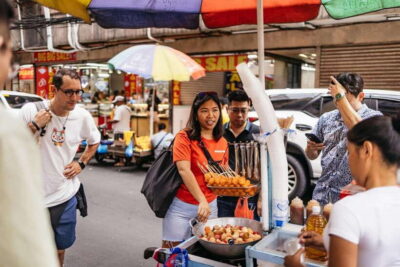
Street Food and Drinks Walking Tour with Tastings
Read our review →
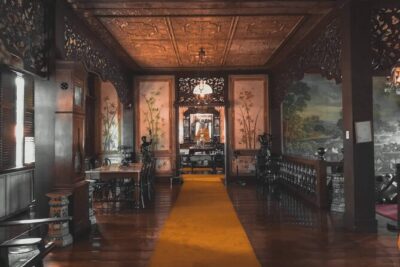

The Original Cebu City Historical and Food Walking Tour
Read our review →
Intramuros Walking Tour with Transportation by Don’t Skip Manila
Read our review →
Manila Intramuros Walking tour with Local Tour Guide
Read our review →Browse the lists this tour appears in