
Reviewed · MANILA STREET FOOD TOURS
Manila: Street Food and Drinks Walking Tour with Tastings
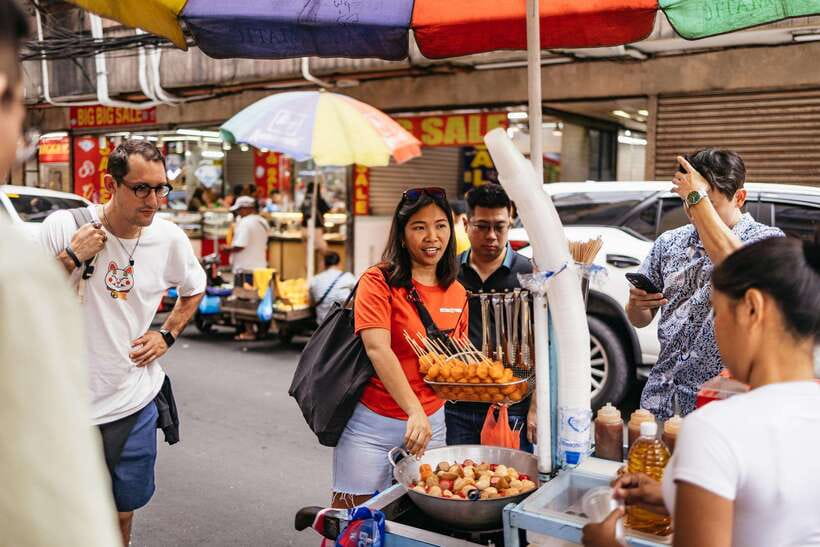
Manila’s best food lesson may happen beside a crowded market stall, not at a polished restaurant. This two-hour walk through Binondo and nearby old Manila neighborhoods takes you to the places locals eat, with Filipino dishes such as kwek kwek, turon, pancit palabok, grilled seafood, and halo-halo. I like the generous range of tastings, and I like that the guide explains the food, vendors, and streets as you go. The local transport ride, by jeepney or the much-loved limousine-style tricycle, adds a fine bit of Manila character.
The main catch is simple: you need to come hungry, and the food is heavily based on meat, seafood, and other animal products. Vegetarians and vegans should skip this tour, while anyone sensitive to heat, crowds, or unfamiliar foods should expect busy streets and an adventurous menu.
Key points to know before booking
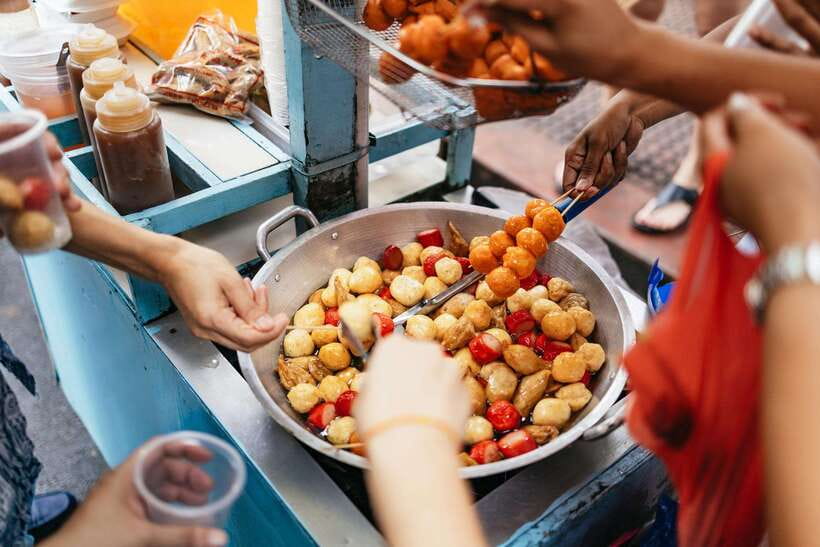
- Six to ten tastings: Expect a full sampling of snacks, soups, noodles, grilled food, fruit, drinks, and dessert.
- Binondo meeting point: The tour begins at Grand Cafe 1919 on Juan Luna Street, a useful place to meet, have a drink, and use the facilities.
- Local transport included: Depending on the day, you may ride a jeepney or a limousine-style tricycle.
- Guides with personality: Mari receives the strongest praise, while Tess, Tessie, Jessie, Chai, and other guides have also led tours.
- Small group format: The stated group limit is between 10 and 12 people, making it easier to stay together in crowded streets.
- Not a light snack crawl: Skip breakfast or eat very lightly, because the food portions add up quickly.
Why this food walk gets you off the usual Manila path
At $68 per person, this is not the cheapest way to eat in Manila. You can buy individual snacks for very little money. The price pays for something else: a guide who knows which stalls to use, how to move through crowded lanes, how to explain unfamiliar dishes, and how to connect food with the surrounding neighborhoods.
That matters in Manila. A visitor walking alone may pass a food cart without knowing what is being sold, how to order, or which dish is worth trying first. On this tour, you have someone introducing each stop and helping you make sense of the setting.
The tour is limited to a small group, though the stated maximum varies between 10 and 12 participants. That is still a workable size for a crowded walking route. Several guides have been praised for keeping people together, including one guide who carefully led the group through packed streets during Chinese New Year.
You should also set your expectations correctly. This is not a seated tasting menu with fixed courses and long explanations at every stop. The food depends partly on what is available from street vendors that day. That gives the route a local feel, but it also means the exact selection can change.
More Manila Street Food Tours in Manila
- Manila: Intramuros, Chinatown, and Old Manila Half-Day Tour
★ 4.8 · 475 reviews - Manila Food Tour: Introduction to Philippine Street Food
★ 5.0 · 417 reviews - Manila Food Tour: Explore World’s Oldest Chinatown
★ 5.0 · 158 reviews
Meeting at Grand Cafe 1919 in Binondo
You meet at Grand Cafe 1919 in Binondo, on Juan Luna Street in Manila. The cafe is a sensible starting point because you can gather indoors, have a drink, and use the facilities before setting off.
From there, the guide leads you into side streets, market areas, and parts of old Manila that can feel far removed from the city’s main sightseeing route. Binondo is especially useful for this kind of walk because food, commerce, and daily life sit close together.
The guide’s role is important from the first few minutes. Mari is the name most often associated with this experience, and her style is energetic, warm, and personal. Other guides named in the feedback include Tess, Tessie, Jessie, Chai, and assistants working with the main guide.
The best guides here do more than name each dish. They explain how the food fits Filipino life, point out neighborhood details, answer questions, and keep the mood easy. That personal connection is a large part of what you are paying for.
Banana cue, kamote fries, and turon
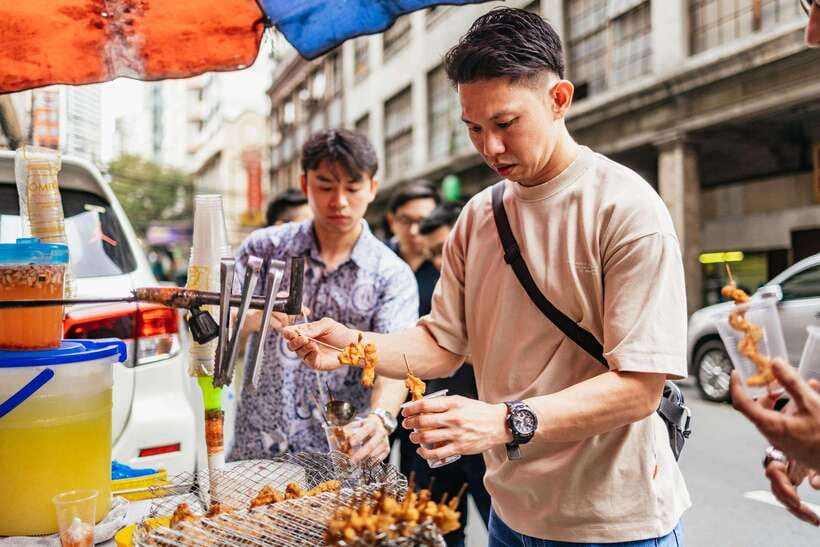
The opening food stops may include sweet and savory snacks such as banana cue, kamote fries, and turon. These are approachable introductions to Filipino street food, especially if you are trying this style of eating for the first time.
Banana cue is fried banana with brown sugar, a simple combination that several people particularly enjoyed. Turon is another fried banana snack, usually wrapped before frying. It gives you a sweet, crisp taste early in the route.
Kamote fries bring sweet potato into the mix. Together, these snacks show how Filipino street food often makes clever use of inexpensive ingredients, hot oil, sugar, and familiar produce.
A practical warning: do not treat the first stop as a small sample and assume you will have room for a large meal later. The tour can include many generous tastings, and the early fried foods are filling.
Kwek kwek, siomai, and adventurous choices
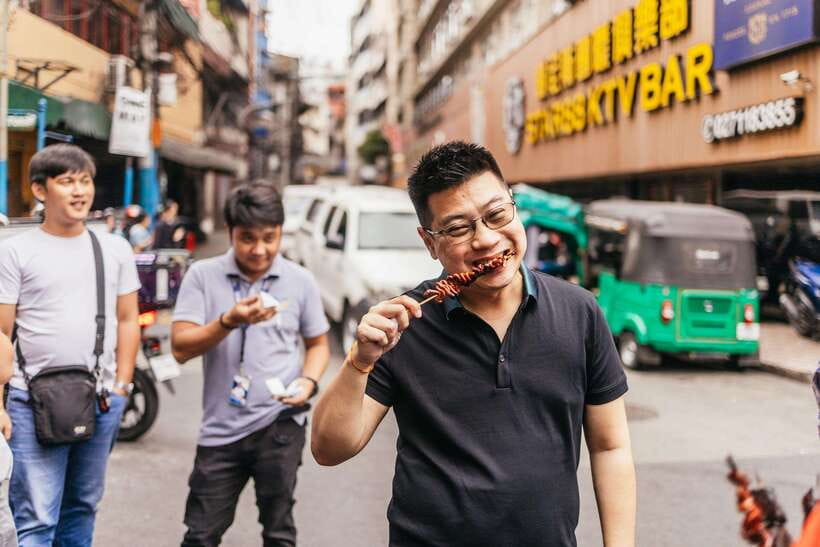
Kwek kwek is one of the more recognizable Filipino street snacks on the route. It consists of quail eggs coated in orange batter and fried, usually served with a dipping sauce. The color catches your eye, but the flavor is mild and the texture is easy for most first-time tasters.
Siomai adds a dumpling-style stop to the food list. It also reflects the Chinese influence found in Binondo, where Filipino and Chinese food traditions meet in everyday cooking and commerce.
The menu can include more challenging choices as well. Balut, a fertilized duck egg, appears in several accounts of the experience, although it is not included in the formal tasting list. You may be offered a chance to try it, but you are not required to force yourself through a dish you dislike.
That is one reason a guide helps. You can ask what you are eating, how locals approach it, and whether there is a less intense option. The tone is adventurous rather than competitive. Try what appeals to you, and pass on what does not.
Same islands, a completely different day on the water:
- Intramuros, Manila: Historical Bamboo Bike Tour
★ 4.8 · 583 reviews - Experience Intramuros with Bamboo Bicycle – Ecotours
★ 5.0 · 508 reviews - Manila: Old & New 4-Hour City Tour
★ 4.5 · 458 reviews - Spectacular Manila to Tagaytay: Full-Day Sightseeing Tour
★ 5.0 · 349 reviews
Soup, noodles, grilled seafood, and mango
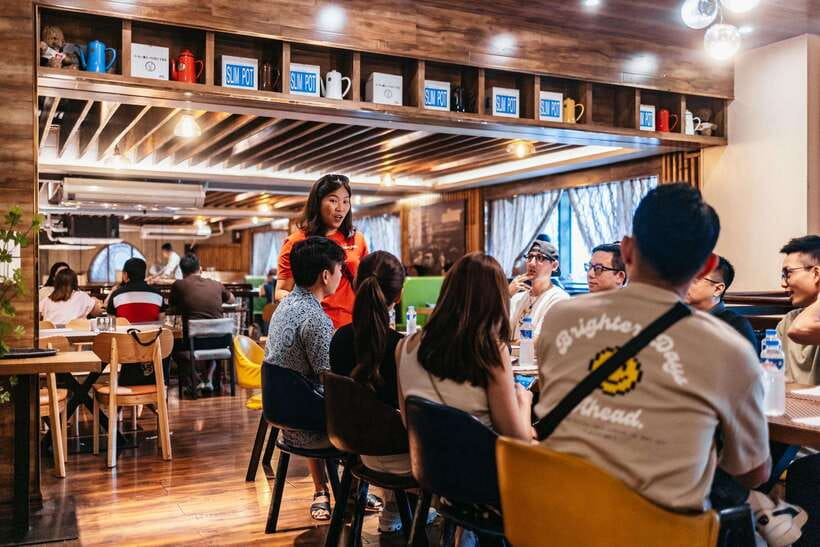
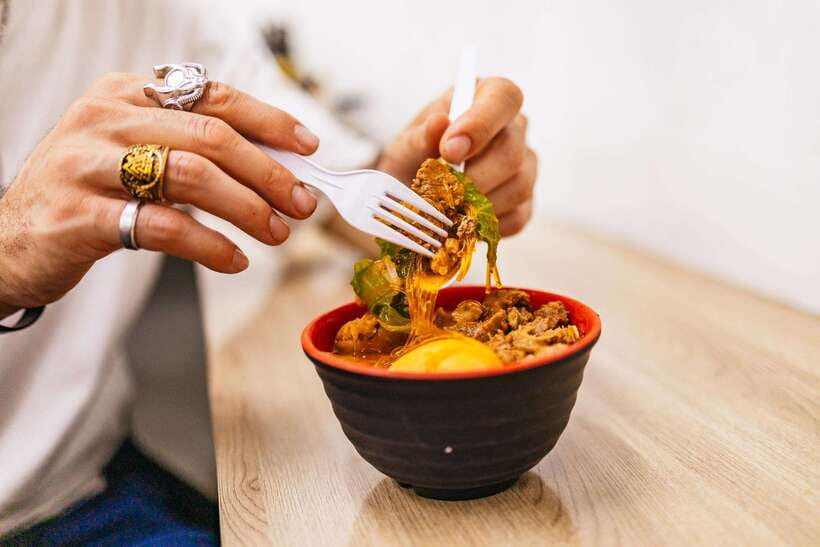
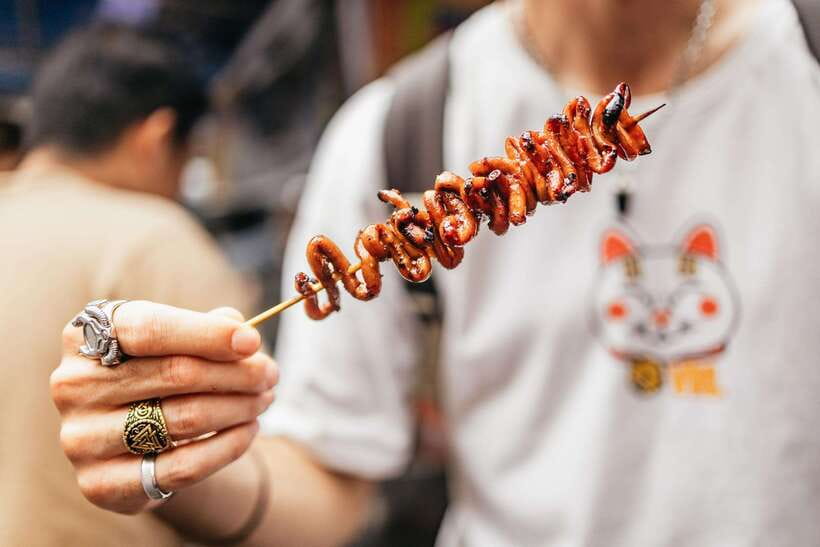
The savory portion can include sotanghon soup, palabok, Filipino pancit, grilled squid, calamari, pork on a stick, and other available street foods. This part of the walk gives you a broader picture of Filipino cooking than a snack-only route would.
Sotanghon soup is a welcome pause from fried food, particularly in Manila’s heat. Several people singled out the soup as a favorite. Pancit palabok, with its noodles and savory toppings, is another strong stop for anyone who wants to understand the range of Filipino comfort food.
You may also encounter fried or grilled seafood, including squid or calamari. The precise vendor and preparation can change, so think of the published food list as a guide rather than a guaranteed menu.
Mango with shrimp paste gives you one of the tour’s sharper flavor combinations. The sweetness of ripe mango meets the salty, savory punch of shrimp paste. It is exactly the sort of snack that can be hard to identify or order on your own, yet easy to remember after you have tried it.
The tour may include drinks such as water, refreshing juice, buko juice, or other available beverages. These breaks matter because you are walking and eating in warm conditions. One guide was praised for pacing refreshments well during the heat.
Halo-halo is the proper finish
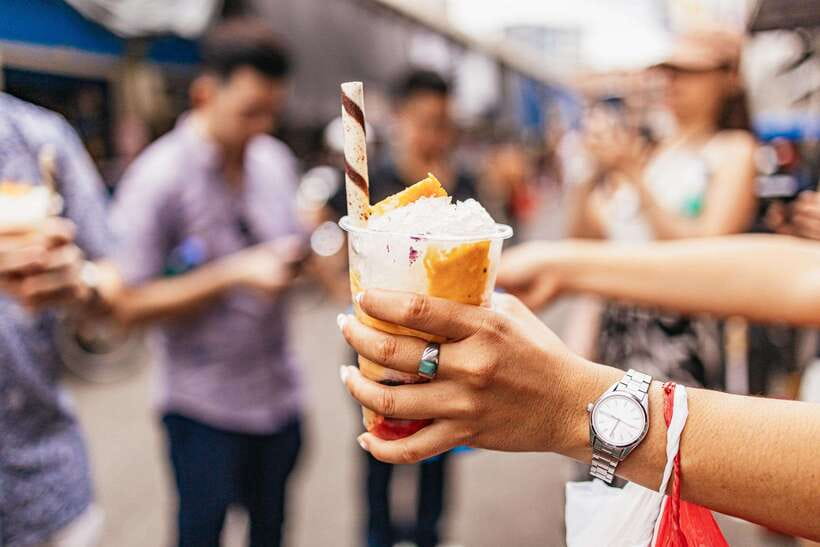
The route typically ends with halo-halo, a Filipino dessert made with a mix of sweet ingredients, shaved ice, and creamy toppings. It is cold, colorful, and filling, which makes it a welcome finish after several savory and fried stops.
Halo-halo also shows the playful side of Filipino food. You mix the ingredients together, so each spoonful can have a different balance of sweetness, texture, and creaminess.
The end of the tour may include a ride back by limousine-style tricycle. That unusual local ride has become one of the most memorable details for many people, and it gives you a final taste of everyday Manila transport without adding another long walk.
The transport arrangement is not completely fixed. The advertised experience refers to a jeepney ride or limousine tricycle, and one person did not receive the promised jeepney ride. If riding a jeepney is essential to you, ask about the plan before the tour begins.
Walking through crowded old Manila streets
The food is only half the experience. You will walk through busy lanes, open market areas, and crowded sections of Binondo and nearby neighborhoods. The guide may point out local history and cultural details while you move between vendors.
This is not a quiet stroll. Streets can be tight, noisy, and crowded, especially during festivals or major public events. Chinese New Year brought heavier crowds and made movement more difficult for one group, though the guide still kept everyone together.
Wear comfortable shoes. You should also bring questions, because the tour works best as a conversation. Ask about ingredients, eating customs, neighborhood history, transport, or the vendors you pass.
A guide can make the difference between feeling lost and feeling looked after. Mari has been praised for taking care of solo participants, helping people cross chaotic streets, carrying or assisting with belongings at times, and providing hand sanitizer. Those are small touches, but they matter on a food walk where you are constantly moving and handling new foods.
What the $68 price really buys
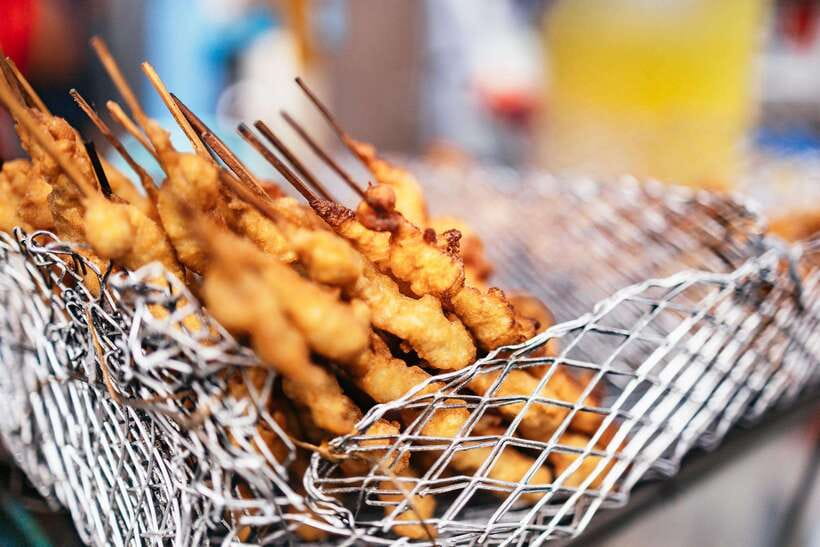
The food itself is unlikely to add up to $68 if purchased independently. If your only goal is to eat the cheapest possible Filipino snacks, this tour is not the best value.
I see the price as reasonable for a short, guided introduction when you value local access and confidence. You get six to ten tastings, an English-speaking guide, a walking route, cultural explanation, and local transportation. You also avoid the trial and error of choosing stalls on your own.
The price makes more sense if you have only one day in Manila. You can sample a wide range of dishes in two hours, learn what you want to seek out later, and see parts of the city that may not be obvious from a standard sightseeing plan.
It also suits solo visitors. A guide provides company, structure, and a hand when the streets become confusing. Some people have used the tour as a way to try foods they would not have ordered alone.
The value is weaker if you already know Filipino cuisine well and mainly want a large, relaxed meal. One person familiar with Filipino food still enjoyed the stalls and neighborhood, but noted that many dishes were already familiar. In that case, the cultural walk and vendor access matter more than culinary discovery.
Who should book this Manila street food tour
I would choose this tour if you:
- Want to try Filipino street food but feel unsure about ordering alone
- Prefer small stalls and side streets to polished restaurants
- Enjoy learning the story behind dishes and neighborhoods
- Have a short stay in Manila and want a concentrated food introduction
- Are comfortable walking in crowded areas and using local transport
- Like trying unusual foods, including the possibility of balut
I would look elsewhere if you are vegetarian, vegan, pregnant, or dependent on wheelchair access. The experience is specifically marked as unsuitable for those groups, and many of the listed dishes contain meat, seafood, eggs, or animal-based ingredients.
Children aged three to seven may join with guidance. Parents should consider the walking, crowd levels, unfamiliar food, and need to stay close to the guide.
You should also be prepared for a full stomach. Several people advised skipping breakfast, and one person even suggested that the tasting size could be reduced. If you enjoy small portions and slow meals, this pace may feel like a lot.
Timing, weather, and practical details
The experience lasts two hours, with starting times based on availability. You must book at least 24 hours before the tour begins.
The tour operates rain or shine. Wear comfortable shoes and bring the attitude of someone ready to eat outdoors and keep moving. A little flexibility helps because street availability can affect the exact dishes and transport used.
The guide speaks English and Tagalog. The group is described as small, with a maximum listed between 10 and 12 people.
You can cancel up to 24 hours before the start for a full refund, and the reserve-now, pay-later option keeps you from paying immediately. The meeting point is a pickup point, not hotel pickup, so plan to reach Grand Cafe 1919 in Binondo on your own.
The experience carries a 4.8 rating from 114 reviews, with repeated praise for the guides’ energy, care, food knowledge, and ability to introduce local areas. The most consistent strength is the human side of the tour: Mari in particular is described as funny, organized, welcoming, and proud to share Manila.
Should you book it?
Book it if you want a direct, food-first look at Manila and you are willing to eat boldly. The combination of small vendors, generous tastings, neighborhood history, and a jeepney or tricycle ride gives you much more than a list of dishes.
At $68, you are paying for guidance and access rather than bargain food. That is a fair trade if you are new to Manila, traveling alone, or short on time. Come hungry, wear good shoes, expect crowds, and keep your menu expectations flexible.
Skip it if you need vegetarian food, wheelchair access, a quiet meal, or a fixed itinerary. For everyone else, this is a lively and practical first taste of Filipino street food, especially with Mari leading the way.
FAQ
Where does the Manila street food tour meet?
The meeting point is Grand Cafe 1919 in Binondo, at Juan Luna Street in Manila.
How long does the tour last?
The walking and food experience lasts two hours.
How many food tastings are included?
You can expect between six and ten food tastings, depending on what is available from the street vendors.
What foods may be included?
Possible tastings include banana cue, kamote fries, turon, kwek kwek, siomai, sotanghon soup, palabok, Filipino pancit, grilled squid, mango with shrimp paste, halo-halo, water, and refreshing juice.
Is transportation included?
Yes. The experience includes a jeepney ride or a limousine-style tricycle ride, depending on availability. The exact transport may vary.
Is the tour suitable for vegetarians or vegans?
No. The tour is marked as unsuitable for vegetarians and vegans because several dishes cannot be eaten by people following those diets.
Is the tour suitable for wheelchair users?
No. The experience is marked as unsuitable for wheelchair users.
What should I bring?
Bring comfortable shoes. You should also come hungry, since the tour includes many tastings and walking between stops.
Can I cancel the booking?
Yes. You can cancel up to 24 hours in advance for a full refund. A reserve-now, pay-later option is also available.
More Food in Manila
- Makati Street Food Tour Experience
★ 5.0 · 20 reviews - ⭐ Manila Street Food Tour in the Downtown, Eat and Drink⭐
★ 4.6 · 19 reviews - Makati: Street Food Experience with a Local Guide
★ 4.6 · 14 reviews - Skip the Line: Hike Eat Swim at Mount Purro Nature Reserve Ticket
★ 5.0 · 13 reviews
More Food & Drink in Manila
- Manila: Sightseeing and Food Walking Tour with Tastings
★ 4.7 · 68 reviews - Manila’s Culinary Expedition: The Ultimate Food and Market Tour
★ 5.0 · 42 reviews - Manila: Guided Food Tour of Binondo with Tastings
★ 4.8 · 38 reviews - Manila Street food and Night Market Tour
★ 4.7 · 21 reviews
Just added around Manila
- Underground River with Lunch★ 3.6 · 5 reviews
- Private Tour: Tagaytay Midlands & Taal Volcano Boat Ride★ 4.5 · 15 reviews
- 3 Days Private Tour in Banaue Ifugao visiting Batad Rice Terraces★ 3.5 · 3 reviews
- Tagaytay Adventure: Volcano Views, Countryside, Market & Cruise!★ 4.5 · 14 reviews
- Tagaytay + Hidden Valley Springs: A Scenic Escape w/ Transfers★ 4.0 · 4 reviews
- Tagaytay Day Tour sightseeing with Panoramic Taal volcano view★ 5.0 · 6 reviews
- Unforgettable Manila Fishing Village Day Excursion 2024★ 5.0 · 4 reviews
- Cultural Dinner and Show in Manila★ 5.0 · 4 reviews
Manila Street Food Tours, compared.

Intramuros, Chinatown, and Old Manila Half-Day Tour
Read our review →
Manila Food Tour: Introduction to Philippine Street Food
Read our review →
Manila Food Tour: Explore World’s Oldest Chinatown
Read our review →
Intramuros, Chinatown, and Old Manila Half-Day Tour
Read our review →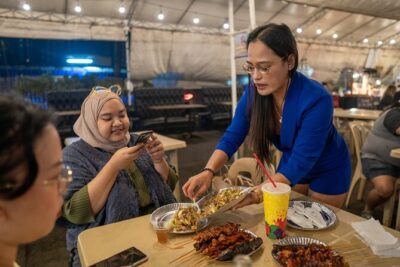
Makati Street Food Experience end with a Rooftop Bar
Read our review →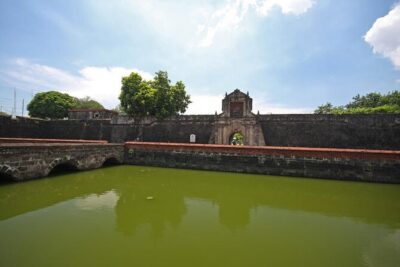
Intramuros & Chinatown Manila Tour – Walking, Food & Culture
Read our review →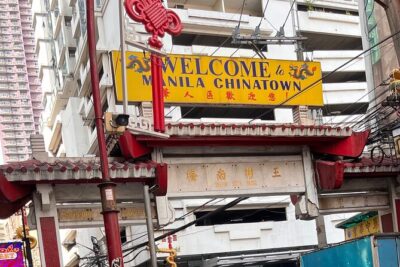
Browse the lists this tour appears in