
Reviewed · MANILA INTRAMUROS WALKING TOURS
Manila: Filipino Historic Walking Tour in Intramuros
Intramuros tells Manila’s story in stone. On this three-hour walk, you move from the country’s oldest stone church to an aristocratic home, a wartime memorial, the national cathedral, and the old military garrison at Fort Santiago. The route gives you a clear view of how Spanish rule, Catholicism, war, and the Filipino fight for independence shaped the city.
I like the mix of major landmarks and lesser-seen wall sections, since you get more than a quick parade of famous buildings. I also like that the entrance fees are included, especially for San Agustin Museum, Casa Manila, and Fort Santiago. The main caution is the pace and footing: this is a walking tour on historic streets, and it is not suitable for wheelchair users or people with mobility impairments.
Key points
- Three hours inside Intramuros: A compact route covers six important sites without requiring a full day.
- San Agustin begins the story: Start at the oldest stone church in the Philippines, then continue into its museum.
- Casa Manila shows colonial-era home life: Furnishings and design reveal how European and Asian influences met in an upper-class residence.
- Fort Santiago closes the tour: Learn about military control and the Filipino struggle for independence at Intramuros’ best-known fortress.
- Small-group setting: The maximum group size is 15 people, with tours offered in English or Tagalog.
- Straightforward value at $55: The price includes the guide and entry to three paid attractions, but not transport to or from the meeting point.
Why Intramuros is the right place to learn Manila’s past
Intramuros means within the walls, and the name explains the feel of the district. You are not simply visiting isolated monuments. You are walking through a planned old city shaped by Spanish colonial rule, Catholic institutions, military defenses, and later destruction during World War II.
That makes this route useful for first-time visitors. Manila can feel sprawling and hard to read on your own, but Intramuros gives you a concentrated setting where the guide can connect one stop to the next. The church explains religion and Spanish arrival. Casa Manila shows social class and domestic life. Fort Santiago brings in military power and independence.
The route also helps you separate the surviving buildings from the layers of history around them. A restored house may show how an elite family lived, while a damaged wall or war memorial points to a much more difficult past. I appreciate tours that make those connections instead of treating old buildings as pretty backdrops.
You meet in the lobby of the San Agustin Church museum. There is no hotel pickup, so plan your own way to Intramuros and allow enough time to find the museum lobby. You contact the guide through the supplied WhatsApp number, which is especially useful if you are unsure where to wait.
More Manila Intramuros Walking Tours in Manila
- Intramuros, Manila: Historical Bamboo Bike Tour
★ 4.8 · 583 reviews - Experience Intramuros with Bamboo Bicycle – Ecotours
★ 5.0 · 508 reviews - Manila: Intramuros, Chinatown, and Old Manila Half-Day Tour
★ 4.8 · 475 reviews
San Agustin Church opens the colonial story
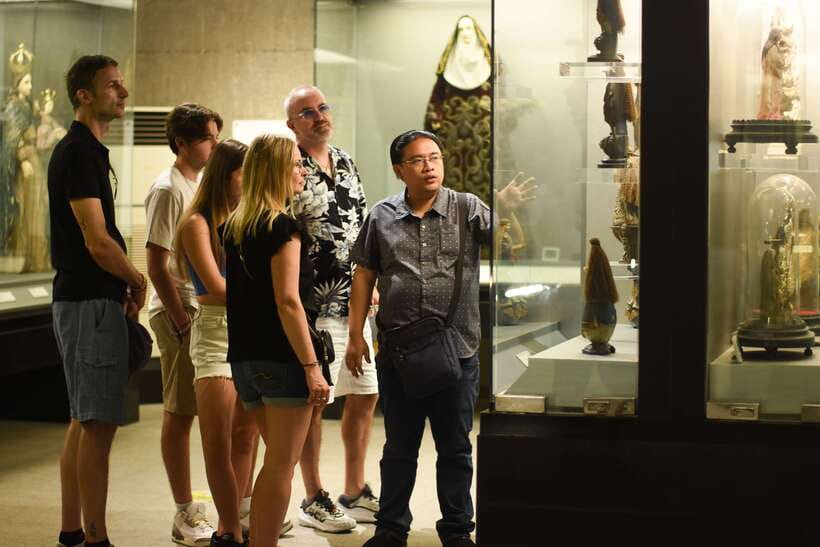
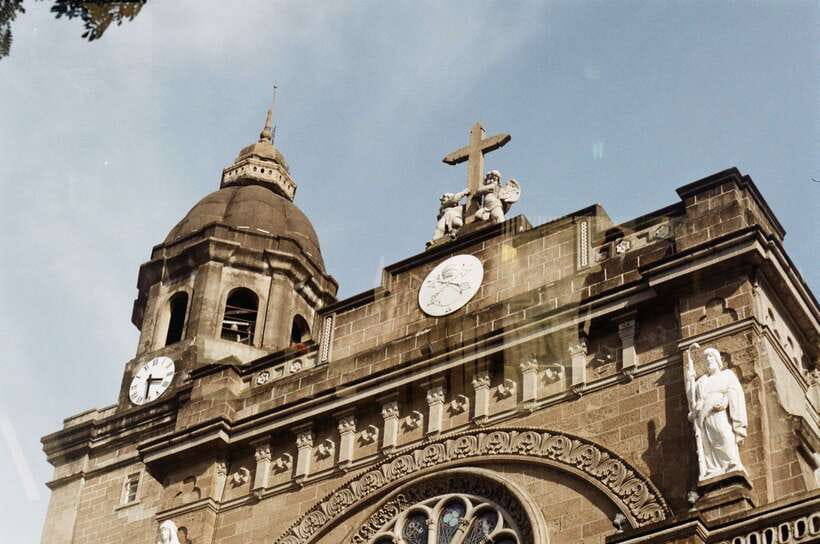
The tour starts at San Agustin Church, the oldest stone church in the Philippines. That fact alone gives the building weight, but the guide’s explanation is what makes the stop useful. You hear why the Spanish came to this part of the world, how their presence lasted for more than 300 years, and what marks that period left on Filipino society.
This is an important place to begin because the Catholic Church was not a side issue in colonial Manila. It was tied closely to education, government, public life, and the organization of the city. The church gives you a physical place to understand that relationship before you move on to the museum.
You should dress respectfully. Short skirts and sleeveless shirts are not allowed, so this is not the place for beach clothing or a casual tank top. Comfortable shoes matter too, since the tour continues on foot through narrow streets and historic areas.
San Agustin Museum adds objects and detail
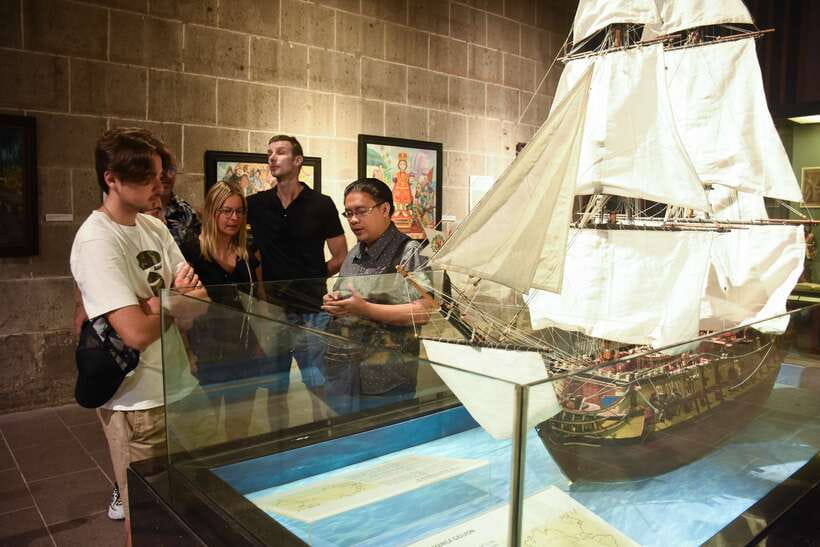
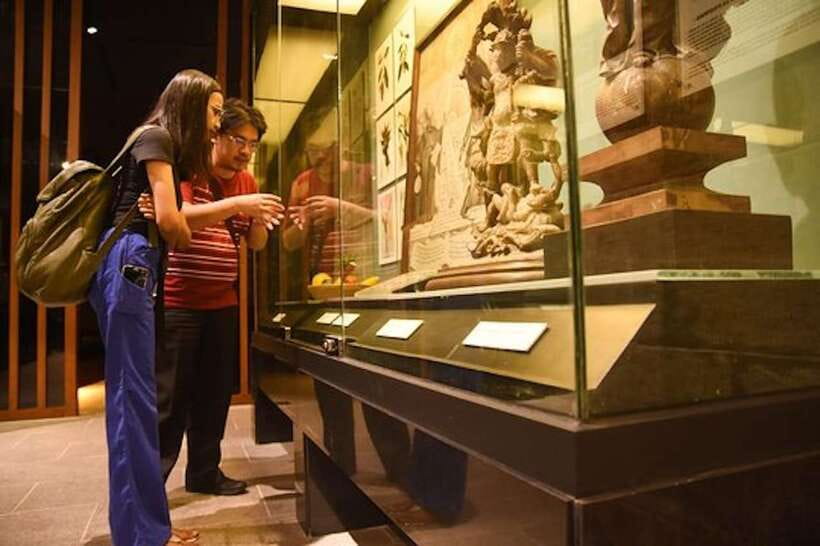
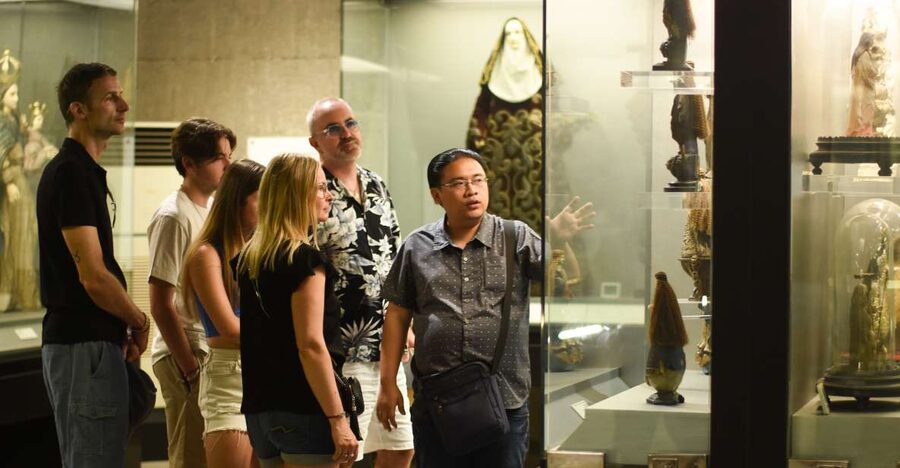
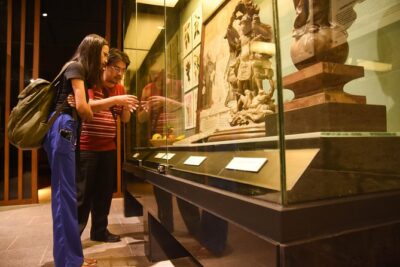
After the church, you take a guided visit through San Agustin Museum. This is where the broad story gains physical evidence. Old artifacts help explain Manila’s past and the way the Catholic Church became intertwined with the city’s development.
I like having the museum early in the route. It gives you context before the tour reaches the residential and military sites. Instead of seeing colonial architecture as a series of grand façades, you begin to understand the institutions and beliefs that supported it.
The museum is also one reason the $55 price is easier to justify. Entry is included, along with admission to Casa Manila and Fort Santiago. If you tried to arrange the same route independently, you would still need to pay entry fees and assemble the historical links yourself. The guide’s role is especially valuable here, since artifacts often need explanation to mean much beyond their age.
The visit does add indoor time to a walking route, which is welcome if the day is hot or rainy. Still, the tour depends on good weather overall. If poor weather forces a cancellation, you are offered another date or a full refund.
Casa Manila reveals the world of the colonial elite
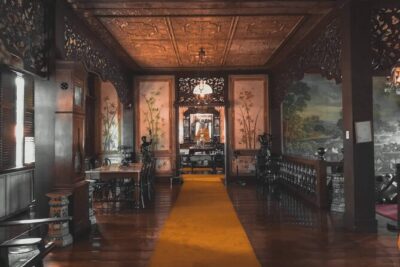
From San Agustin, you cross the street to Casa Manila, an expertly restored 19th-century home. The mood changes quickly. Instead of a church and museum, you are looking at domestic rooms, furnishings, and design linked to Manila’s upper class.
Casa Manila is valuable because it turns colonial history into everyday life. You can consider how people ate, entertained, organized their homes, and displayed status. The design reflects a meeting of east and west, which helps explain that colonial Manila was not simply a European outpost copied onto Philippine soil.
The house also gives the tour a social angle. San Agustin focuses on faith and institutions. Casa Manila asks who had comfort and influence within that system. I find that contrast useful, because it keeps the history from becoming a simple story of buildings and rulers.
Restoration means the house is presented in polished form, so you should not mistake it for an untouched home from the 19th century. Its value lies in the way it presents the period and helps you picture elite life. Your guide can explain what the rooms and objects suggest about class and cultural exchange.
Same islands, a completely different day on the water:
- Manila: Old & New 4-Hour City Tour
★ 4.5 · 458 reviews - Manila Food Tour: Introduction to Philippine Street Food
★ 5.0 · 417 reviews - Spectacular Manila to Tagaytay: Full-Day Sightseeing Tour
★ 5.0 · 349 reviews - Makati Nightlife: VIP Access to Clubs, Rooftops & Go-Go Bars
★ 4.9 · 278 reviews
A quieter section of the Intramuros walls
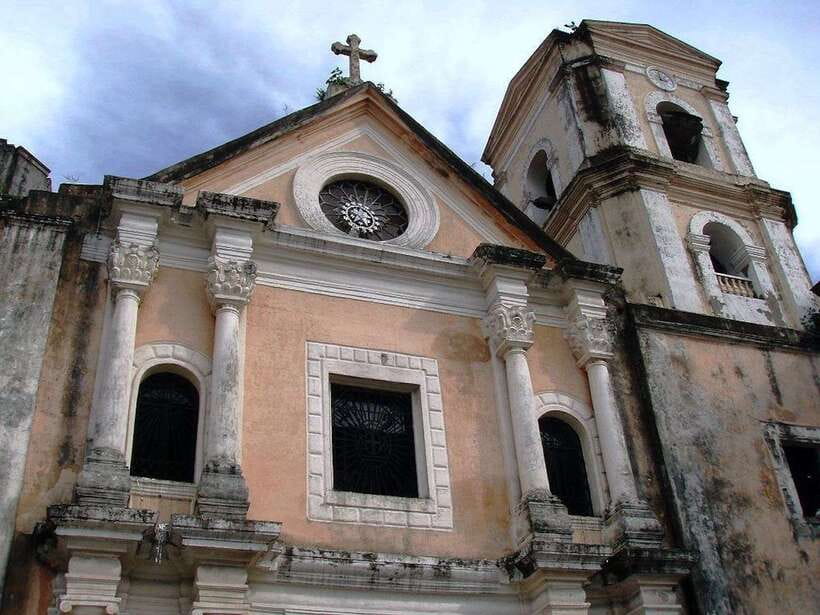
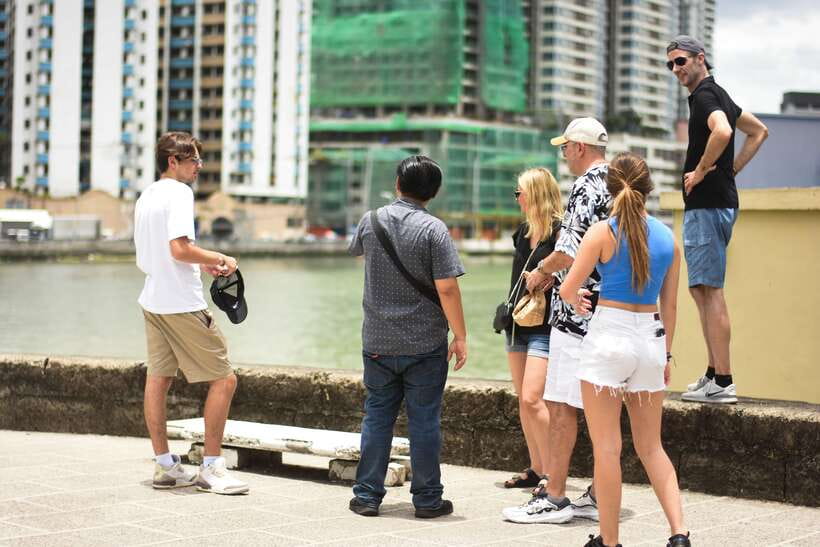
The walk then heads toward a less frequently visited section of the historic wall. This part gives you a break from the better-known interiors and lets you consider Intramuros as a defensive city.
The walls are not just scenic remains. They help explain why the Spanish built a walled center and how military planning shaped daily life inside it. A guide can point out the relationship between the wall, the riverfront setting, the church district, and Fort Santiago, even if the stop itself is brief.
This is one of my favorite parts of the route in concept because it slows the tour down. You are not rushing from ticket counter to ticket counter. You get a chance to look at the old city as a whole and imagine how its boundaries affected the people who lived and worked there.
Historic walls also mean uneven surfaces, heat, and limited shade in places. Wear shoes with good support and bring water. The tour does not list transport between stops, so expect to walk the entire route rather than being driven from site to site.
Memorare Manila 1945 brings World War II into view
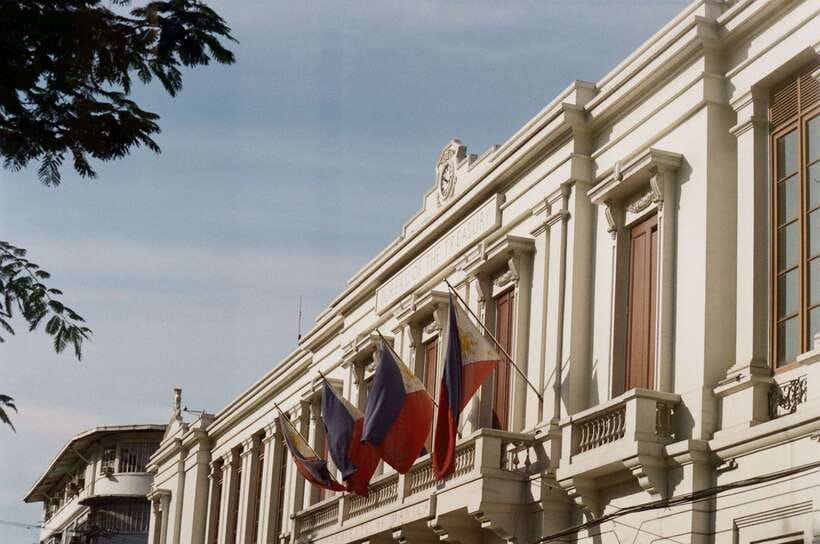
The stop at Memorare Manila 1945 adds a painful modern chapter to the route. Here, the guide explains the role of the Philippines during World War II and the wartime experience connected to Manila.
This memorial matters because it prevents the tour from stopping with Spanish rule. Intramuros has a long colonial story, but it also suffered during the war. The memorial gives you a place to pause and consider the human cost behind the district’s damaged buildings and rebuilt sections.
The stop is described as a sightseeing visit rather than a long museum session. That means the guide’s words carry much of the context. If you prefer a tour with extended time at every site, the three-hour limit may feel brisk. If you want a focused introduction to Intramuros, the short stop keeps the route moving.
The changing tone is important. You begin with churches and colonial homes, then reach a site tied to mass suffering and destruction. That progression shows how Manila’s past is not one neat period. It is a series of overlapping experiences that continue to shape the city.
Manila Cathedral represents the Catholic center
The next stop is Manila Cathedral, the seat of the Catholic Church in the Philippines. It is another short sightseeing visit, but it reinforces the religious thread that began at San Agustin.
Seeing both churches in one tour lets you compare their roles. San Agustin takes you back to the early Spanish period and the survival of an old stone church. Manila Cathedral represents the continuing importance of Catholicism in the country. Together, the stops show that the church is part of both the historical record and present-day Filipino life.
Because this is a sightseeing stop rather than a listed guided interior visit, your time there may be limited. You should think of it as a key point on the walking route, not as a full cathedral tour. The guide’s broader explanation of Catholic influence is the main benefit.
Religious sites can have their own clothing expectations, so the tour’s rule against short skirts and sleeveless shirts is worth taking seriously. Modest clothing keeps you prepared for every stop.
Fort Santiago closes with the independence struggle
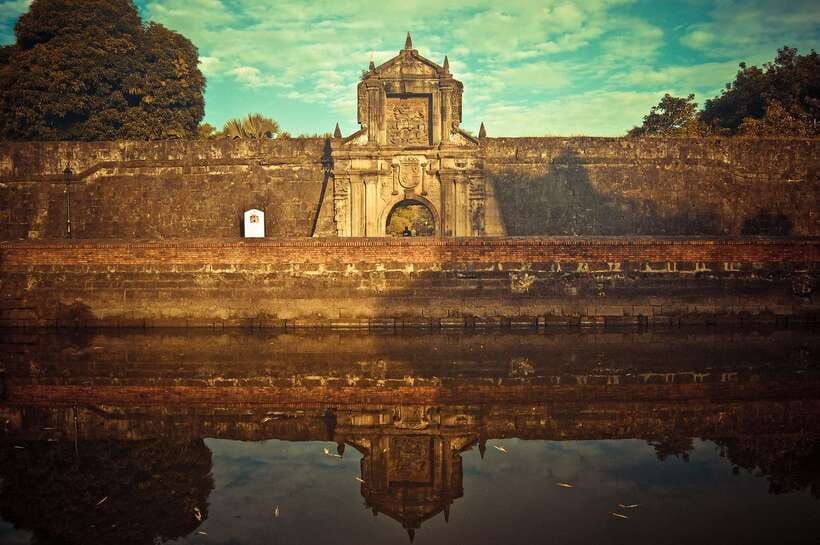
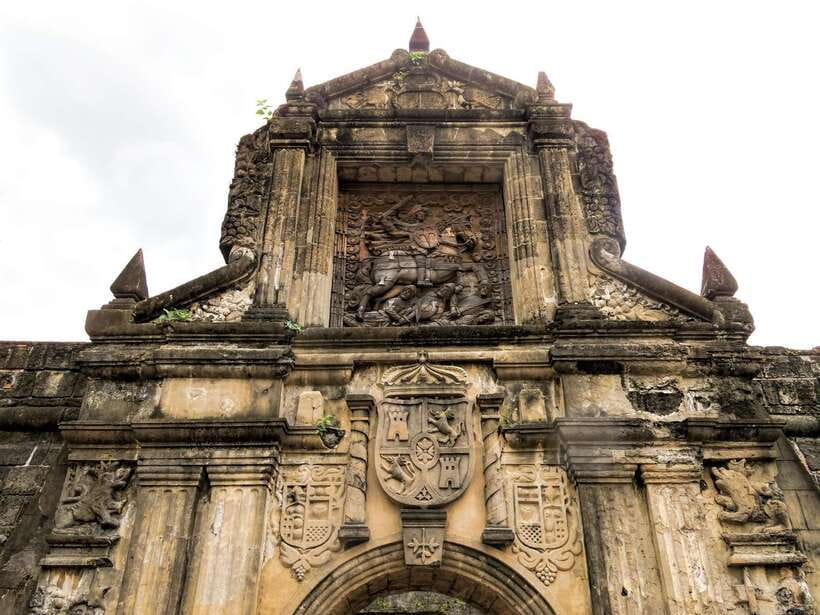
The final major stop is Fort Santiago, where the tour turns directly to military history and the Filipino fight for independence. The fort is a fitting ending because it brings together the themes introduced earlier: colonial control, defense, political power, and resistance.
Unlike the brief memorial and cathedral stops, Fort Santiago receives a guided visit and included admission. The setting gives the guide room to explain how a military garrison functioned and how the struggle for Filipino independence developed within the country’s longer colonial story.
Ending here also gives the tour a clear narrative shape. You start with the arrival and lasting influence of Spanish rule, move through religion and elite life, confront wartime destruction, and finish with the push for self-rule. That structure is easier to remember than a disconnected list of Intramuros attractions.
The tour ends at Fort Santiago, so you are not returned to San Agustin Church. That is convenient if you want to continue exploring the fort afterward, but less convenient if your next plan is back near the starting point. Arrange your onward transport separately.
What the guide adds to the walk
The guide is the main reason to choose this experience over a self-guided stroll. The buildings are easy to locate, but the connections between them are not always obvious. A good guide explains why the Spanish came, how their long occupation affected Filipino culture, and how Catholic institutions fit into colonial society.
The strongest feedback points to guides who are friendly, informed, funny, and willing to adjust the route. Jerome is specifically praised for being warm, well-informed, and flexible about what the group wanted to see. That flexibility can make a difference in a historic district where one group may want more church detail while another prefers military history.
You should still allow for the fact that live tours can have small surprises. One past booking took place during the Parade of Mary, and some details became confused because the event changed the usual setting. That is not a flaw in the core route, but it is a useful reminder that Intramuros is an active district, not a sealed museum.
The maximum group size is 15 people. That is small enough for questions to be practical, though the actual feel depends on the number booked that day. Tours are offered in English and Tagalog.
Is $55 good value for three hours?
At $55 per person, this is not the cheapest way to walk around Intramuros. You can see several exterior landmarks without booking a guide. The value comes from the included admissions, the compact route, and the explanations that connect architecture to Philippine history.
Three paid attractions are included: Fort Santiago, San Agustin Church and Museum, and Casa Manila Museum. You also visit the Memorare Manila 1945 memorial, Manila Cathedral, and a section of the old wall. That is a solid amount for three hours, particularly if you are visiting Manila for a short stay.
I would choose this tour if you want structure and context. I would skip it if you prefer to spend a whole morning inside one museum, move at your own pace, or stop often for photographs. The route is designed to cover the main story efficiently, not to offer long free periods at each attraction.
The 4.8 rating from 17 bookings reflects strong satisfaction, with repeated praise for the guide’s friendliness, clear explanations, and value compared with going alone. One person found the tour lasted just under three hours and considered that length ideal. That sounds right for most people, but your experience can vary slightly with walking speed, site conditions, and events in Intramuros.
Who should book this Intramuros walk?
This tour fits first-time visitors who want a firm introduction to Manila’s old city. It is also useful for anyone who wants more historical context than a photo stop provides, especially if you are curious about Spanish rule, Catholic influence, World War II, and independence.
I would recommend it for:
- First-time visitors to Manila
- People with only a few hours for Intramuros
- History-minded visitors who prefer a guide’s explanation
- Visitors comfortable walking on historic streets
- Those who want admissions handled as part of one booking
- English or Tagalog speakers
It is less suitable for people with mobility limitations, wheelchair users, or anyone uncomfortable walking for most of three hours. It is also a poor match for visitors dressed for a beach day, since short skirts and sleeveless shirts are not allowed.
Bring comfortable shoes and dress modestly. The tour requires good weather, and rain or other poor conditions can lead to a new date or a full refund. You can cancel up to 24 hours ahead for a full refund, and the reserve-now, pay-later option keeps your plans flexible.
Should you book it?
Book this tour if you want to understand Intramuros rather than simply pass through it. The route covers the essential landmarks, includes the main entrance fees, and gives you a useful progression from Spanish colonial rule to Catholic life, wartime suffering, and Filipino independence.
The best reason to book is the guide. A well-informed and engaging guide can turn San Agustin, Casa Manila, and Fort Santiago into one connected story. The main tradeoff is that three hours goes quickly, so you will get an efficient overview instead of a slow, detailed study of every room and wall.
For a first visit, I think $55 is fair value, particularly if your time in Manila is limited. Meet at the San Agustin Church museum, wear proper walking shoes, and arrive ready to listen, walk, and ask questions.
FAQ
Where does the tour begin?
The tour begins in the lobby of the San Agustin Church museum in Intramuros.
Where does the tour end?
The tour ends at Fort Santiago.
How long does the walking tour last?
The scheduled duration is three hours. One booking finished just under three hours.
What languages are available?
The live guide can conduct the tour in English or Tagalog.
What attractions are included?
Admission is included for Fort Santiago, San Agustin Church and Museum, and Casa Manila Museum.
Is hotel pickup and drop-off included?
No. Hotel pickup and drop-off are not included, so you must arrange your own transport to the meeting point and from Fort Santiago.
What should I wear?
Wear comfortable shoes and modest clothing. Short skirts and sleeveless shirts are not allowed.
Is the tour suitable for wheelchair users?
No. The activity is not suitable for wheelchair users or people with mobility impairments.
What happens if the weather is bad?
The tour requires good weather. If it is canceled because of poor weather, you can choose another date or receive a full refund.
How many people can join?
The tour has a maximum of 15 participants.
More Walking Tours in Manila
- Manila: Street Food and Drinks Walking Tour with Tastings
★ 4.8 · 114 reviews - Viva Old Manila: Intramuros Walking Tour
★ 4.9 · 104 reviews - Manila: Sightseeing and Food Walking Tour with Tastings
★ 4.7 · 68 reviews - Manila: Intramuros Walking Tour.
★ 4.9 · 63 reviews
More Historical Tours in Manila
- Explore Intramuros: Introduction to Philippine History
★ 5.0 · 80 reviews - Experience Manila’s Heritage: Intramuros & More in Half a Day!
★ 5.0 · 76 reviews - Tagaytay, Taal Volcano & Heritage Town: A Journey of Discovery
★ 5.0 · 29 reviews - Half-Day Heritage Tour: Manila’s Historic Gems
★ 4.9 · 29 reviews
Just added around Manila
- Underground River with Lunch★ 3.6 · 5 reviews
- Private Tour: Tagaytay Midlands & Taal Volcano Boat Ride★ 4.5 · 15 reviews
- 3 Days Private Tour in Banaue Ifugao visiting Batad Rice Terraces★ 3.5 · 3 reviews
- Tagaytay Adventure: Volcano Views, Countryside, Market & Cruise!★ 4.5 · 14 reviews
- Tagaytay + Hidden Valley Springs: A Scenic Escape w/ Transfers★ 4.0 · 4 reviews
- Tagaytay Day Tour sightseeing with Panoramic Taal volcano view★ 5.0 · 6 reviews
- Unforgettable Manila Fishing Village Day Excursion 2024★ 5.0 · 4 reviews
- Cultural Dinner and Show in Manila★ 5.0 · 4 reviews
Manila Intramuros Walking Tours, compared.

Intramuros, Manila: Historical Bamboo Bike Tour
Read our review →
Experience Intramuros with Bamboo Bicycle – Ecotours
Read our review →
Intramuros, Chinatown, and Old Manila Half-Day Tour
Read our review →
Manila Old and New: Sightseeing Tour Including Intramuros and Fort Santiago
Read our review →
Explore Intramuros: Introduction to Philippine History
Read our review →Browse the lists this tour appears in