
Reviewed · MANILA INTRAMUROS WALKING TOURS
A Night in Old Manila: Intramuros Walking Tour
Fort Santiago is at its most atmospheric after sunset, when its old walls, gates, and stone paths take on a softer glow. This tour uses that setting well, pairing an evening walk with stories about war, colonial life, and Dr. Jose Rizal’s final days. Steven, Steve, and Cedhie have each led tours praised for clear explanations, strong local knowledge, and an easy way with questions.
I like the practical two-hour format and the fact that entrance fees, bottled water, and an English or Tagalog DOT-accredited guide are included. I also like the use of old photographs, which helps you picture Manila before the modern city grew around Intramuros. The main consideration is the pace: you cover several sites in a short time, and a 25-person public group may feel less personal than a private tour.
Key details at a glance
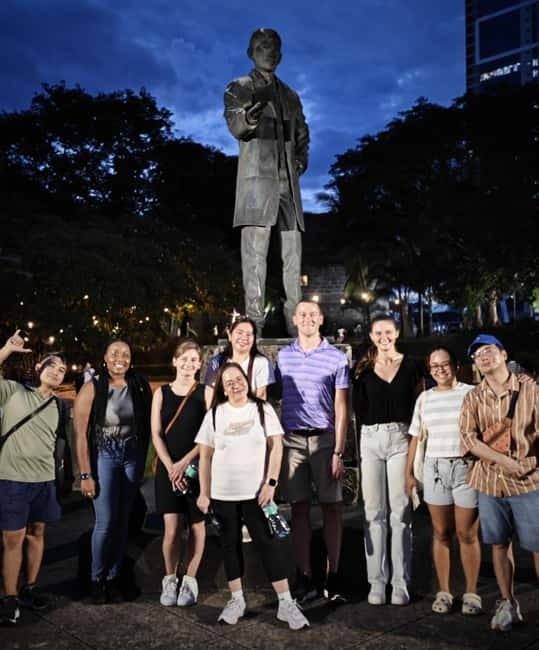
- Fort Santiago after dark: Spend about an hour at Intramuros’ best-known fortress, including its dungeon and wartime stories.
- Rizal’s final days: Visit the chapel cell linked to Dr. Jose Rizal before his execution.
- Four more historic stops: See Manila Cathedral, Memorare Manila 1945, San Agustin Church, and the Plaza San Luis Complex.
- A guide-led history lesson: English and Tagalog guides explain difficult parts of Manila’s past in clear, approachable terms.
- A short evening route: The walk lasts two hours, beginning at 5:30 PM and finishing at Casa Manila.
- Good value at $23: Admission, guiding, bottled water, and landmark photo opportunities are covered, but transport and food are not.
Why an evening walk changes Intramuros
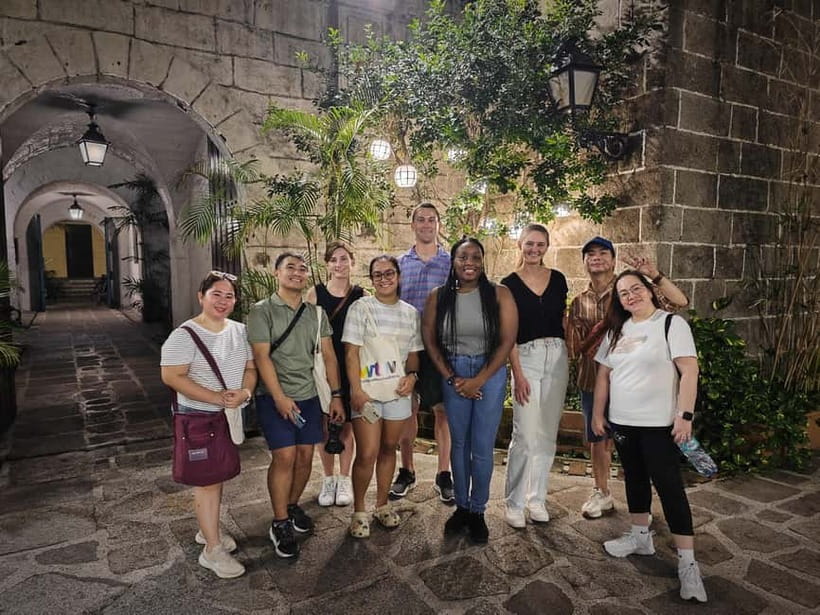
Intramuros can feel very different after sunset. The stone walls and cobbled streets are less exposed to the heat of the day, and lighting around the old buildings gives the walled city a quieter mood. You are not simply moving between daytime sights. You are seeing the same places in a setting that suits their age and atmosphere.
The timing also helps if your Manila schedule is tight. You meet at the Fort Santiago ticket booth at 5:15 PM, with the walk starting at 5:30 PM. Two hours gives you a focused introduction without taking up a full day, though it does mean the guide must keep things moving.
I see this as a history walk rather than a food tour, a transport tour, or a long architectural study. You will hear about military rule, wartime suffering, Spanish-era life, and the final days of one of the Philippines’ most important national figures. The stories give the buildings purpose, which is useful if you do not already know much about Philippine history.
The guides are a major part of the experience. Steven was praised for making the subject easy to follow and for welcoming questions. Cedhie has used period photographs to make past events more concrete. That matters here because several stops can look like old walls or grand churches unless someone explains what happened there.
More Manila Intramuros Walking Tours in Manila
- Intramuros, Manila: Historical Bamboo Bike Tour
★ 4.8 · 583 reviews - Experience Intramuros with Bamboo Bicycle – Ecotours
★ 5.0 · 508 reviews - Manila: Intramuros, Chinatown, and Old Manila Half-Day Tour
★ 4.8 · 475 reviews
Fort Santiago: the main event of the evening
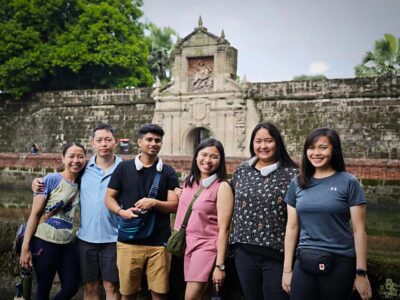
The tour gives Fort Santiago about an hour, making it the clear center of the route. This is where the evening begins, and it is also where you spend the most time. The fortress helped shape Manila’s military and political story, so it provides the broad setting for the rest of the walk.
Expect a guided visit rather than a quick photo stop. The route includes the dungeon, whose wartime stories add a darker side to the tour. This part may be difficult for younger children or anyone who prefers light sightseeing, but it gives useful context about the human cost of conflict.
Dr. Jose Rizal’s chapel cell is another important stop within the fort. You can trace his final days there, bringing a personal focus to a national story. Instead of hearing only about rulers, battles, and buildings, you get a close look at the last chapter of Rizal’s life.
I like the way this section combines several kinds of history. You get the fortress as a military site, the dungeon as a place tied to wartime suffering, and the chapel cell as a personal memorial. If you have limited time in Intramuros, this is the portion that gives you the most substance.
The drawback is that an hour can pass quickly. You may hear the main stories and see the key places, but this is not a slow, detailed museum visit. One participant who preferred outdoor sights to museums especially enjoyed the latter half of the tour, so your own interests will shape how you rate this opening section.
Manila Cathedral and the changing face of the walled city
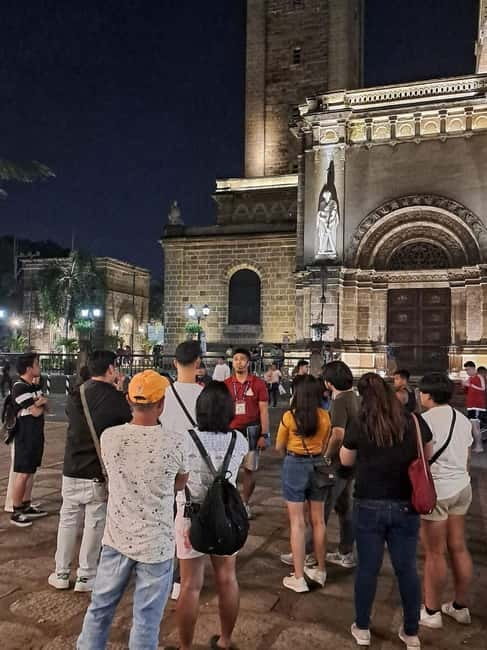
After Fort Santiago, the group spends about 15 minutes at Manila Cathedral. That short visit is best understood as an introduction, not a full church tour. Your guide helps place the cathedral within Intramuros and connects the building to the wider story of Manila.
The brief timing keeps the tour moving, but it also limits how long you can look around or ask detailed questions. If church architecture is your main interest, you may want more time than this tour provides. If you want a clear overview of the city’s major landmarks, 15 minutes is a useful amount.
This stop also breaks up the heavier material at Fort Santiago. After the dungeon and Rizal’s final days, the cathedral adds a different view of life in the old walled city. The larger point is not just the building itself. It is how religion, government, military power, and daily life once occupied the same compact district.
Your guide’s explanations matter here. A short stop can feel thin without context, but a well-told account helps you understand why the cathedral belongs on an introductory Intramuros route.
Memorare Manila 1945 and the cost of war
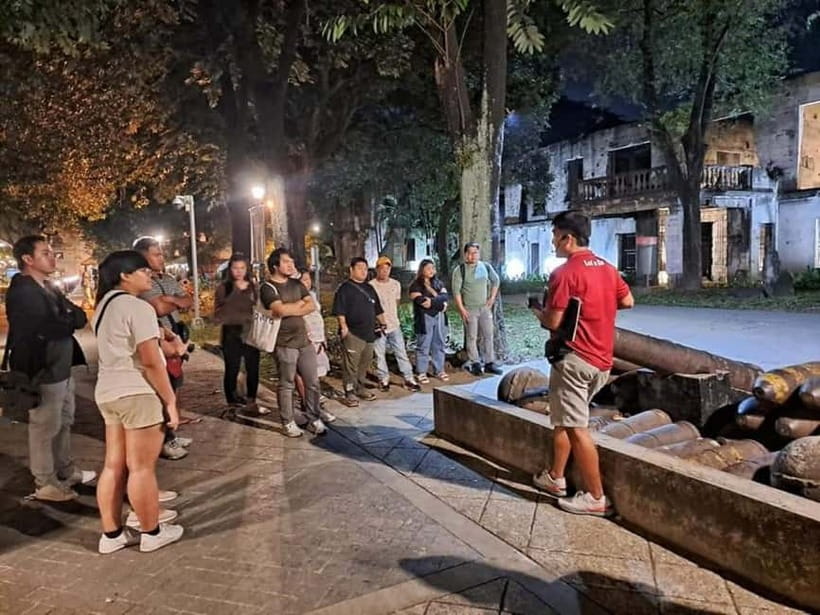
The next 15-minute stop is Memorare Manila 1945, a memorial connected with the destruction and deaths of civilians during the Battle of Manila in World War II. This gives the tour another wartime perspective, following the dungeon stories at Fort Santiago.
You should expect a reflective stop rather than an entertainment-focused one. The memorial adds emotional weight to the walk and shows why Intramuros is not only a place of Spanish-era walls and attractive photographs. It is also a place marked by violence and loss.
The timing is again brief. You will get the essential explanation and time for photographs, but probably not an extended memorial visit. That is a fair trade for a two-hour route, especially if your goal is to understand how several events fit together.
I value this stop because it prevents the evening from becoming a simple tour of old buildings. The guide’s job is to connect the architecture to the people who lived, suffered, and died here. The overall experience is stronger when you treat Intramuros as a place with painful chapters as well as beautiful ones.
Same islands, a completely different day on the water:
- Manila: Old & New 4-Hour City Tour
★ 4.5 · 458 reviews - Manila Food Tour: Introduction to Philippine Street Food
★ 5.0 · 417 reviews - Spectacular Manila to Tagaytay: Full-Day Sightseeing Tour
★ 5.0 · 349 reviews - Makati Nightlife: VIP Access to Clubs, Rooftops & Go-Go Bars
★ 4.9 · 278 reviews
San Agustin Church in a 15-minute visit
San Agustin Church is another short guided stop, planned for about 15 minutes. It gives you a chance to see one of Intramuros’ major religious landmarks and to compare it with Manila Cathedral.
Do not book this expecting an extended church service, museum visit, or architecture lecture. The route is designed to introduce the site, explain why it matters, and keep you moving toward the Plaza San Luis Complex. That works well for first-time visitors who want a broad picture of Intramuros.
The church also helps show the variety within the walled city. Fort Santiago is defensive and political. Memorare Manila 1945 is memorial-focused. San Agustin Church points toward the religious and colonial side of old Manila. Together, these stops make the tour more useful than a walk that only follows pretty streets.
You should also keep your expectations practical. The tour includes photo opportunities at key landmarks, but it is not built around long photography sessions. If you want carefully framed night shots at every stop, you may need to return on your own.
Plaza San Luis and colonial life at Casa Manila
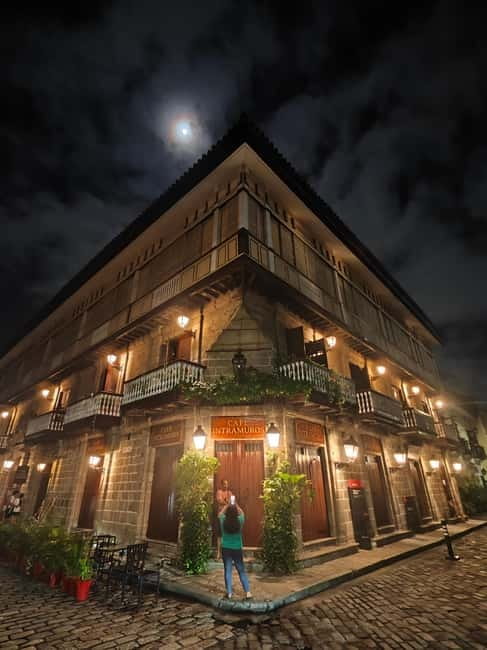
The final part of the route moves through the Plaza San Luis Complex and finishes at Casa Manila. The Plaza San Luis stop lasts about 15 minutes and helps set up the tour’s look at colonial life.
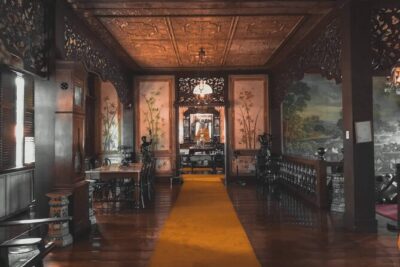
Casa Manila offers a glimpse of how affluent life was presented in the old colonial period. It adds domestic detail to a route otherwise focused on forts, churches, war, and public memorials. That change of scale is welcome. You move from national events to the way people lived inside a historic urban setting.
Casa Manila is the stated finishing point, so it is worth noting that the tour does not loop back to Fort Santiago. Plan your evening from there rather than assuming you will end where you started. The supplied details do not include hotel transport, drop-off, or a return transfer, so you handle the next part of your evening yourself.
This last section may be the most enjoyable part for anyone who prefers buildings, rooms, and street atmosphere to formal museum displays. One guide’s past group found the second half particularly appealing for that reason. The route gives you a good spread of Intramuros, but Casa Manila is not presented as a long, private house tour.
What $23 covers, and what it does not
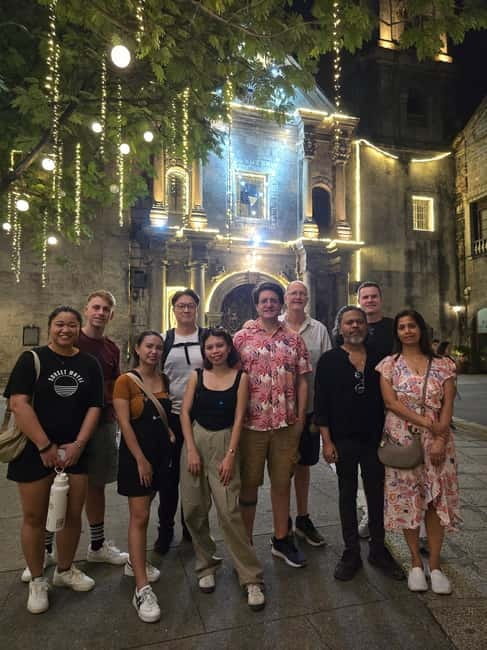
At $23 per person, the tour is priced as a compact, guided introduction rather than a full-day historical program. The fee includes admission to the listed sites, the tour guide fee, bottled water, and photo opportunities at key landmarks. Those inclusions make the price easier to judge, since you are not adding separate entry costs at every major stop.
The strongest value comes from the guide. Intramuros is more rewarding when you understand the events attached to each location, and the tour gives you a local English or Tagalog speaker to connect the pieces. The use of old photographs by Cedhie is a useful touch because visual evidence can make a difficult story easier to grasp.
You still need to budget for your own transport to the meeting point and after the tour. Food and drinks are also not included. Hotel pick-up and drop-off are not part of the package, so this works best if you are comfortable arranging your own way to Fort Santiago and from Casa Manila.
The public tour allows up to 25 people. That is a manageable size for a walking route, but it is not the same as having a guide just for your family or party. A private group is available if you want more control over questions, pace, or group atmosphere.
Walking comfort, weather, and family fit
Bring water and an umbrella. The operator specifically advises both, and one family’s evening included drizzle despite the guide’s reminder. The umbrella is useful protection from rain, while the supplied bottled water helps during the walk.
The experience is listed as wheelchair accessible, but the route includes cobblestone streets, old fortress areas, and historic structures. Since access can vary from one heritage site to another, you should raise any arrival or assistance concern in advance through WhatsApp or Viber. The available information confirms accessibility, but it does not describe the exact surface or access conditions at every stop.
You will be walking for two hours, with several short guided visits. An eight-year-old joined one group and enjoyed the experience, so the tour can work for families when children like stories and old places. The dungeon and wartime material may call for a little preparation, especially with younger children.
The tour is not suitable for people over 95, according to the activity information. Alcohol and drugs are not allowed. Those are simple rules, but they help set the tone: this is a structured cultural walk, not a late-night party outing.
Guides who make the history easier to follow
The strongest pattern in the guide feedback is not showmanship. It is clarity, warmth, and a willingness to answer questions. Steven was described as easy to talk to and engaging from start to finish. Steve was praised for a well-organized explanation of Philippine history, especially for someone arriving with little background.
Cedhie’s use of old photographs is especially helpful. Manila’s past can be hard to picture when modern streets and restored walls occupy the same space. Period images give you something concrete to compare with what you see in front of you.
Guide names can change by date, so you should not book on the assumption that one particular person will lead your group. The important point is that the experience is led by a Department of Tourism accredited local guide, with English and Tagalog available.
This also makes the tour a good first activity in Manila. You get a basic framework for the city’s past, then you can decide which sites deserve a longer return visit. I would not use it as a substitute for a full museum day, but I would use it to make later sightseeing more meaningful.
Who should book this Intramuros night tour?
I would choose this tour if you want a short, organized introduction to Intramuros and prefer stories to simply walking around without context. It suits first-time visitors, culture-focused families, and anyone who likes seeing historic places in a cooler evening setting.
It is also a good match if you have only one free evening. The route covers Fort Santiago, two major churches, a wartime memorial, the Plaza San Luis Complex, and Casa Manila in two hours. You will not master every chapter of Manila’s past, but you will leave with a useful map of the district.
I would think twice if you want a relaxed photography walk, a food experience, or a very slow architectural tour. The public group can reach 25 people, and the schedule gives most stops only 15 minutes. A private group is the better choice if personal questions and flexible timing matter to you.
The tour has free cancellation up to 24 hours before departure, and you can reserve now while paying later. That is useful when your Manila plans are still changing, but the main decision should remain the content: this is a compact history walk with a serious wartime thread and a strong evening mood.
Should you book it?
Book this tour if you want Fort Santiago to make sense, not just look photogenic. The combination of the fortress, dungeon, Rizal’s chapel cell, Memorare Manila 1945, the churches, and Casa Manila gives you a balanced introduction to Intramuros in a short window.
At $23, the included admissions and guide make the package reasonable, especially if you value local explanation. Bring an umbrella, arrive at the Fort Santiago ticket booth by 5:15 PM, and expect a steady walk ending at Casa Manila. If you prefer a slower pace, choose the private option. For most first-time visitors with two hours to spare, this is a practical way to meet Old Manila after dark.
FAQ
Where does the tour start?
Meet your guide at the Fort Santiago ticket booth.
What time should I arrive?
The call time is 5:15 PM, and the tour starts at 5:30 PM.
Where does the tour finish?
The tour finishes at Casa Manila.
How long does the experience last?
The walking tour lasts two hours.
What languages are available?
The live guide is available in English and Tagalog.
Is the tour guided by a certified local guide?
Yes. The experience includes a Department of Tourism English-speaking local tour guide.
What is included in the price?
Admission fees, the guide fee, bottled water, and photo opportunities at key landmarks are included.
Is transportation included?
No. Hotel pick-up, hotel drop-off, and transportation are not included.
Is this a private tour?
The standard experience is a public joiner tour with a maximum of 25 participants per group. A private group is also available.
Can I cancel for a full refund?
Yes. You can cancel up to 24 hours in advance for a full refund.
More Evening Experiences in Manila
- Manila: Guided Sunset Bamboo Bike Tour in Intramuros
★ 4.8 · 119 reviews - Manila by Night: Discovering City Highlights with Intramuros
★ 4.5 · 70 reviews - Manila: Guided Night Market Experience
★ 5.0 · 54 reviews - Manila Street food and Night Market Tour
★ 4.7 · 21 reviews
More Walking Tours in Manila
- Manila: Street Food and Drinks Walking Tour with Tastings
★ 4.8 · 114 reviews - Viva Old Manila: Intramuros Walking Tour
★ 4.9 · 104 reviews - Manila: Sightseeing and Food Walking Tour with Tastings
★ 4.7 · 68 reviews - Manila: Intramuros Walking Tour.
★ 4.9 · 63 reviews
Just added around Manila
- Underground River with Lunch★ 3.6 · 5 reviews
- 3 Days Private Tour in Banaue Ifugao visiting Batad Rice Terraces★ 3.5 · 3 reviews
- Tagaytay Adventure: Volcano Views, Countryside, Market & Cruise!★ 4.5 · 14 reviews
- Private Tour: Tagaytay Midlands & Taal Volcano Boat Ride★ 4.5 · 15 reviews
- Tagaytay + Hidden Valley Springs: A Scenic Escape w/ Transfers★ 4.0 · 4 reviews
- Tagaytay Day Tour sightseeing with Panoramic Taal volcano view★ 5.0 · 6 reviews
- Unforgettable Manila Fishing Village Day Excursion 2024★ 5.0 · 4 reviews
- Cultural Dinner and Show in Manila★ 5.0 · 4 reviews
Manila Intramuros Walking Tours, compared.

Intramuros, Manila: Historical Bamboo Bike Tour
Read our review →
Experience Intramuros with Bamboo Bicycle – Ecotours
Read our review →
Intramuros, Chinatown, and Old Manila Half-Day Tour
Read our review →
Manila Old and New: Sightseeing Tour Including Intramuros and Fort Santiago
Read our review →
Explore Intramuros: Introduction to Philippine History
Read our review →Browse the lists this tour appears in