
Reviewed · MANILA INTRAMUROS WALKING TOURS
Intramuros Walking Tour by Don’t Skip Manila | Shore Excursion
Intramuros is where Manila’s past becomes easy to see and hear. Behind its old walls, you move from a Spanish citadel to José Rizal’s prison cell, then into churches and a colonial house filled with period details. The guide’s story matters here, since the tour aims to explain more than 400 years in one half-day.
I like the story-first approach and the mix of walking, museums, historic churches, and included transport. I also like that the tour begins at Pier 15, which makes it a practical choice for a cruise stop. The main drawback is the tight schedule: four to five hours gives you a useful introduction, but not a slow, detailed study of every site.
Key points to know before booking
- A history lesson with a clear route: The tour links Rizal Park, Fort Santiago, the Rizal Shrine, the cathedral, San Agustin Church, and Casa Manila.
- Useful for cruise passengers: Pickup begins at Pier 15 South Harbor between 8:00 and 8:30 AM on Tuesday through Sunday.
- The guide shapes the experience: Anne, Andrew, and Andrei have been praised for friendly delivery, clear English, humor, and strong storytelling.
- Transport is built in: You receive an air-conditioned vehicle, bottled water, and a horse-drawn carriage ride when the group has more than four people.
- Admission costs are covered: Museum and entrance fees are included, so you do not need to sort out tickets at each stop.
- Small enough to stay personal: The maximum group size is 24 people, with group discounts available.
Why Intramuros works so well in half a day

Intramuros means within the walls, and this old district once served as the center of Spanish Manila. It was the seat of government and political power during the colonial period. Today, its streets and surviving buildings give you a compact way to understand how Manila developed under Spanish rule, how José Rizal became a national symbol, and how war damaged much of the old city.
This is not designed as a quick ride past famous buildings. The guide connects the places into one story. You hear about the colonial city, the role of the church, the struggle for Philippine independence, and the final days of Rizal. That approach is useful if you want context instead of a long list of dates.
The pace is brisk but manageable. You walk at several stops, enter museums, spend time at major landmarks, and use included transport between parts of the district. Wear comfortable shoes, and keep water handy even though a bottle is provided. The exact balance between walking and riding depends on the group and the day’s arrangements.
More Manila Intramuros Walking Tours in Manila
- Intramuros, Manila: Historical Bamboo Bike Tour
★ 4.8 · 583 reviews - Experience Intramuros with Bamboo Bicycle – Ecotours
★ 5.0 · 508 reviews - Manila: Intramuros, Chinatown, and Old Manila Half-Day Tour
★ 4.8 · 475 reviews
Starting at Rizal Park
The tour opens at Rizal Park, Manila’s main central park and the place associated with the execution of José Rizal in 1896. You spend about 10 minutes here, with admission included.
That is a short visit, but it gives the rest of the morning a clear focus. Rizal was a writer, doctor, and reformer whose life and death helped shape Philippine national identity. Beginning here means you meet the central figure of the tour before reaching the places connected to his imprisonment and final night.
Do not expect a long park walk. This is a brief orientation stop, useful for setting the political and personal story before the tour moves into Intramuros. If you want extensive time at the park itself, you would need to return on your own.
Fort Santiago and the story of a walled capital
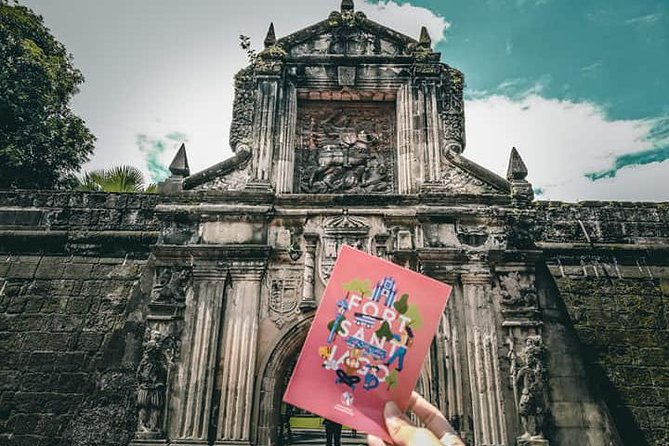
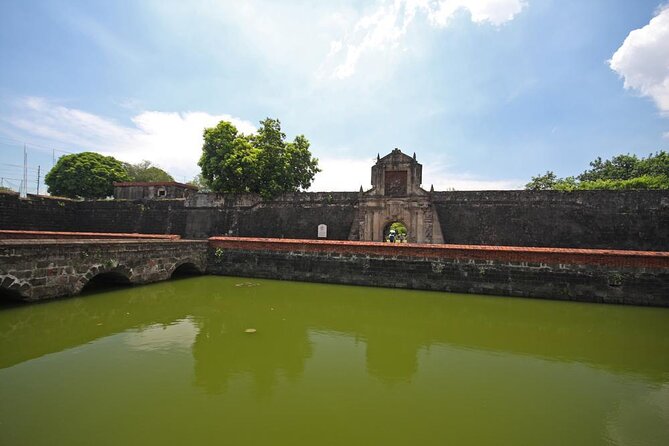
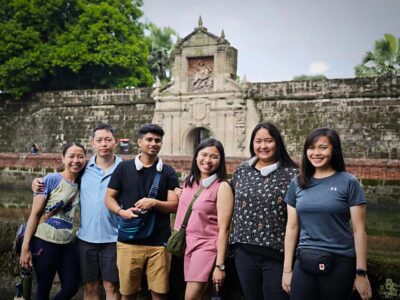
Fort Santiago receives about an hour, making it the main historical stop. Spanish conquistador Miguel López de Legazpi first built the citadel for the newly established city of Manila. The fort later became part of the defensive system of Intramuros.
The value of Fort Santiago is not only its walls. Its courtyards, passages, and prison areas help you picture how the Spanish colonial government protected and controlled the city. This is where the guide’s storytelling carries real weight. Without explanation, a fortress can become a series of old stones and photo stops. With a good guide, it becomes part of a larger story about power, resistance, imprisonment, and war.
Rizal’s final days also come into sharper focus here. One of the tour’s memorable details is the chance to see the cell where he was imprisoned. That personal connection gives the fort a stronger emotional pull than a standard military-site visit.
One hour is enough for the main route, but it is not enough for every corner. You will need to stay with the group and listen while walking. If you prefer to read every sign at your own pace, this tour may feel too structured.
The Rizal Shrine and the final night of José Rizal
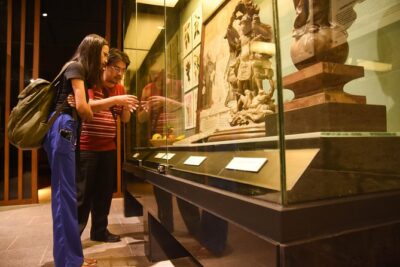
The Rizal Shrine takes about 30 minutes and is dedicated to Rizal’s life and work. It is located in the building where he spent his final night. The museum also preserves the story of how he hid his famous poem, Mi último adiós, in an oil lamp.
This stop brings the broad political story down to one person. You are not simply hearing that Rizal was important. You are seeing the setting connected to his last hours and learning about the writing that became part of his legacy.
I especially like the way this stop follows Fort Santiago. The fort explains the setting of imprisonment, while the shrine explains the man behind the national symbol. Together, they give the tour a stronger human focus.
The 30-minute visit is concise. It works best if you listen closely to the guide rather than trying to inspect every museum detail. The tour is built around interpretation, not an extended museum session.
Same islands, a completely different day on the water:
- Manila: Old & New 4-Hour City Tour
★ 4.5 · 458 reviews - Manila Food Tour: Introduction to Philippine Street Food
★ 5.0 · 417 reviews - Spectacular Manila to Tagaytay: Full-Day Sightseeing Tour
★ 5.0 · 349 reviews - Makati Nightlife: VIP Access to Clubs, Rooftops & Go-Go Bars
★ 4.9 · 278 reviews
Manila Cathedral and the role of the church
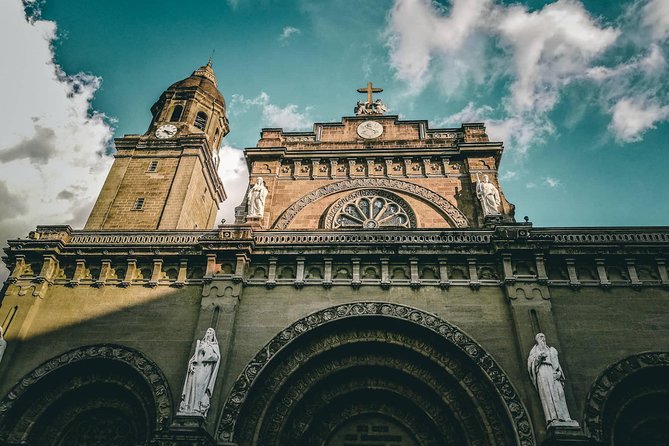
Manila Cathedral is the first cathedral in the Philippines and a basilica dedicated to the Immaculate Conception, the country’s principal patroness. The visit lasts about 15 minutes.
That time allows you to see the building and hear why it matters, but it is not a full architectural study or a long religious visit. The cathedral helps explain the central role of Catholic institutions during the Spanish colonial period. In Intramuros, government, religion, and daily life were closely tied together, and the cathedral makes that relationship visible.
A short stop also helps the tour maintain its pace. You get the major point without losing too much time from Fort Santiago, the museums, or Casa Manila. If the cathedral is open for worship or special events, the experience may naturally be more limited, so treat this as a guided exterior and interior visit rather than a long quiet stay.
San Agustin Church and surviving Spanish Manila
San Agustin Church is another major Intramuros landmark. It is one of four Philippine churches built during the Spanish colonial period that were recognized by UNESCO under the collective title Baroque Churches of the Philippines.
The church adds architectural and religious depth to the route. After the military setting of Fort Santiago and the political story of Rizal, San Agustin shows how Spanish influence was expressed through worship and building design.
The provided schedule does not assign a separate time to this stop, so the visit fits into the wider Intramuros portion of the tour. That means the amount of time inside may depend on traffic, group size, opening conditions, and the guide’s pacing. You should expect an important stop, but not necessarily an extended church tour.
Casa Manila and colonial domestic life
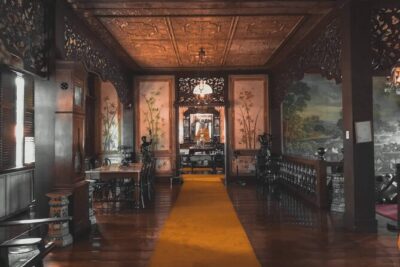
Casa Manila takes about 30 minutes and offers a different view of the colonial period. Instead of focusing on forts, heroes, and cathedrals, it presents domestic life during Spanish rule.
The house is a copy of an 1850s San Nicolas House that once stood on Calle Jaboneros. Its rooms and furnishings help you picture how an affluent colonial home might have looked. This is a useful change of scale. You move from the story of governments and national figures to the way people arranged and experienced private life.
Casa Manila also helps keep the tour from becoming a sequence of military and political sites. You see how history affected homes, furniture, social customs, and daily routines. The visit is short enough to stay focused, though anyone fascinated by historic interiors may wish for more time.
Walking, vehicles, and the carriage ride
This experience is part walking tour and part vehicle-based excursion. An air-conditioned vehicle is included, along with bottled water, museum admission, entrance fees, and taxes. For a cruise passenger arriving in Manila’s heat, that air-conditioned break is more than a minor comfort.
A horse-drawn carriage ride is included when there are more than four people in the group. This adds a traditional way to move through the old district and gives you a change from walking. Past tour outings have also included an open bus, so the exact ride you experience may depend on the day’s arrangements. Confirm the transport plan if the carriage is a major reason you are booking.
The group can reach as many as 24 people. That is still a manageable size for a professional guide, but it is not a private tour. You may need to wait while everyone gathers at entrances and crossings. Group discounts can make the price more attractive for families or friends traveling together.
How the guides shape the morning
The strongest part of this tour is the guide’s delivery. Anne has been praised for friendly, clear storytelling and for fitting 400 years of history into roughly four hours. Andrew is described as personable, funny, accommodating, and good at explaining Manila and Philippine history. Andrei has also led the tour, with clear English and a strong approach to historical storytelling.
Those details matter because Intramuros rewards explanation. You can see old walls and grand buildings without understanding how they fit together. A guide who keeps the story moving helps you connect the fortress, Rizal’s imprisonment, the cathedral, the church, and the colonial house.
The experience is not aimed at people who want to rush from one photo point to another. It suits you best if you enjoy asking questions, listening while walking, and learning the meaning behind the buildings. The tone appears friendly rather than formal, with room for humor and practical help at meeting points.
Is $83.34 a fair price?
At $83.34 per person, this is not the cheapest way to see Intramuros. The price includes pickup, an air-conditioned vehicle, guide services, museum and entrance fees, taxes, bottled water, and the carriage ride for groups larger than four. Those inclusions make the cost easier to justify than a basic walking tour with tickets added separately.
The bigger value is time. If you are in Manila for only half a day, arranging Fort Santiago, the Rizal sites, Casa Manila, the cathedral, and San Agustin Church on your own could take more planning. A guide also supplies the historical thread that individual visits often lack.
I would see the price as reasonable for a cruise shore excursion, especially if you want transportation from Pier 15 and a planned route. It is less compelling if you already know Intramuros well, prefer very slow museum visits, or are comfortable arranging your own transport and tickets.
Who should book this Intramuros tour?
I would recommend it to first-time Manila visitors, cruise passengers, families with limited time, and anyone who wants a strong introduction to Philippine history. It also suits people who prefer a guide-led story to a fast sightseeing loop.
The tour can accommodate most people, and it is near public transportation. Still, you should be ready for walking, standing, museum visits, and a fairly full morning. The maximum group size is 24, so expect company rather than private attention.
It is less suitable if you want a quiet, flexible day or extensive time inside every church and museum. You may also prefer a private guide if your group has specific interests in architecture, religion, wartime Manila, or Rizal’s writings.
The listed meeting time is 8:00 to 8:30 AM at Pier 15 South Harbor, Tuesday through Sunday. Confirmation is sent within 48 hours of booking, subject to availability. Free cancellation is available up to 24 hours before the start time, while poor weather may lead to another date or a full refund.
Final call: a strong half-day introduction to Manila
Book this tour if you want Intramuros explained rather than simply photographed. The combination of Fort Santiago, Rizal’s final-night museum, the cathedral, San Agustin Church, Casa Manila, and included transport gives you a solid picture of Manila’s colonial past and national story.
Skip it if you want a private pace or plan to spend an entire day in one museum. For most cruise passengers and first-time visitors, though, the practical pickup, covered admissions, and story-led route make this a sensible way to use a short stop in Manila.
FAQ
How long does the Intramuros Walking Tour last?
The tour lasts approximately four to five hours. The experience is designed as a half-day visit, with walking, transport, museum stops, and historic sites.
Where does the tour begin?
The meeting point is Pier 15 South Harbor in Manila. The listed meeting window is 8:00 to 8:30 AM.
On which days does the tour operate?
The listed operating days are Tuesday through Sunday. The provided schedule covers February 15 through December 31 for both 2025 and 2026.
Is transportation included?
Yes. An air-conditioned vehicle is included. A horse-drawn carriage ride is also included when there are more than four people in the group.
Are entrance and museum fees included?
Yes. Museum and entrance fees, all fees and taxes, tour guide services, and bottled water are included.
How many people can join the tour?
The maximum group size is 24 people. Group discounts are available.
Can I cancel for a full refund?
Yes. You can cancel up to 24 hours before the experience start time for a full refund. Cancellations or changes made less than 24 hours before the start time are not accepted, and poor weather may result in a different date or a full refund.
More Walking Tours in Manila
- Manila: Street Food and Drinks Walking Tour with Tastings
★ 4.8 · 114 reviews - Viva Old Manila: Intramuros Walking Tour
★ 4.9 · 104 reviews - Manila: Sightseeing and Food Walking Tour with Tastings
★ 4.7 · 68 reviews - Manila: Intramuros Walking Tour.
★ 4.9 · 63 reviews
More Shore Excursions in Manila
- Shared Cruise Shore Excursion of Manila Old and New City Tour
★ 4.0 · 10 reviews - Private Half-Day Shore Excursion in Manila
★ 5.0 · 7 reviews - Shore excursion: Puerto Princesa Island Hopping Tour
★ 4.0 · 27 reviews - Puerto Princesa Honda Bay Island Hopping Shore Excursion
★ 5.0 · 16 reviews
Just added around Manila
- Underground River with Lunch★ 3.6 · 5 reviews
- Tagaytay Adventure: Volcano Views, Countryside, Market & Cruise!★ 4.5 · 14 reviews
- Private Tour: Tagaytay Midlands & Taal Volcano Boat Ride★ 4.5 · 15 reviews
- 3 Days Private Tour in Banaue Ifugao visiting Batad Rice Terraces★ 3.5 · 3 reviews
- Tagaytay + Hidden Valley Springs: A Scenic Escape w/ Transfers★ 4.0 · 4 reviews
- Tagaytay Day Tour sightseeing with Panoramic Taal volcano view★ 5.0 · 6 reviews
- Unforgettable Manila Fishing Village Day Excursion 2024★ 5.0 · 4 reviews
- Cultural Dinner and Show in Manila★ 5.0 · 4 reviews
Manila Intramuros Walking Tours, compared.

Intramuros, Manila: Historical Bamboo Bike Tour
Read our review →
Experience Intramuros with Bamboo Bicycle – Ecotours
Read our review →
Intramuros, Chinatown, and Old Manila Half-Day Tour
Read our review →
Manila Old and New: Sightseeing Tour Including Intramuros and Fort Santiago
Read our review →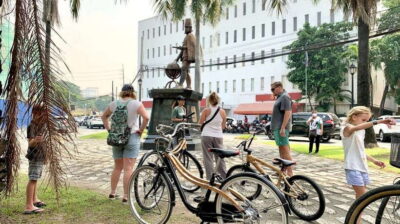
Explore Intramuros: Introduction to Philippine History
Read our review →Browse the lists this tour appears in