
Reviewed · MANILA INTRAMUROS WALKING TOURS
Intramuros & Chinatown Manila Tour – Walking, Food & Culture
Manila’s story comes through best when you move between its markets, food stalls, old streets, and everyday transport. This five-hour tour takes you from Quiapo Market to Binondo Chinatown, then into the fortified streets of Intramuros, giving you a quick but useful introduction to the city’s many layers.
I like the mix of food and history, and I like that the tour does not keep you inside an air-conditioned vehicle all day. You may walk, bike, ride a jeepney, or even use a ferry, depending on the route. The main drawback is that the food tasting is shared, and some dishes may feel ordinary if you expect a full meal or restaurant-style dining.
Key points to know before booking
- Three very different areas in five hours: Quiapo shows daily Manila, Binondo brings Chinese and Filipino food together, and Intramuros supplies the major historical setting.
- Food is part of the education: You taste Filipino dishes and fruits while learning how Manila’s many cultural influences appear in its cooking.
- Transport adds variety: Some departures have included ferries, jeepneys, buses, tricycles, tuk-tuks, and bicycles.
- Intramuros finishes the tour strongly: The old fortified city gives you the clearest view of Manila’s long past and wartime damage.
- Guides shape the experience: Mike, Fred, George, Erick, Carmen, Eric, and Jen have all been praised for explaining food, customs, and history clearly.
- Plan for an active morning: You need moderate physical fitness, and bottled water, soft drinks, coffee, tea, and alcohol are not included.
A fast route through Manila’s old and new faces
This is not a polished sightseeing loop built around grand monuments. It is a moving lesson in how Manila works. You begin in a market, eat in Chinatown, and finish among stone walls and restored buildings. The contrast is the point.
The tour starts at 9:00 a.m. at Quinta Market in Quiapo and ends at Casa Manila in Intramuros. That arrangement is practical because you finish in one of Manila’s main sightseeing areas, rather than being returned to your starting point. If you want to keep exploring Intramuros afterward, the end point puts you in a useful spot.
The listed duration is about five hours. That is long enough to cover three districts, but not long enough for a slow, museum-heavy visit. I would think of this as a city orientation with food, transport, and local context, not as a detailed study of every stop.
The maximum group size is 18 people. That is not a private tour, but it is small enough for a guide to manage a walking group without turning every stop into a head-count exercise. Group discounts may be available, and a mobile ticket makes arrival simple.
More Manila Intramuros Walking Tours in Luzon:
- Manila Old and New: Sightseeing Tour Including Intramuros and Fort Santiago
★ 4.5 · 377 reviews - Manila’s Walled City: Intramuros Walking Tour
★ 5.0 · 82 reviews - Express Bamboo Bike Tour inside Intramuros
★ 4.5 · 66 reviews
Quiapo Market: Manila at street level
Quiapo Market is the first stop, with about an hour set aside for wandering and tasting. The description of this area is deliberately broad: old and new, East and West, common and scarce. That tells you what kind of place to expect. It is a sensory introduction to Manila rather than a neat sequence of monuments.
Your guide can help you make sense of what you are seeing and point out food worth trying. The market is where the tour begins to answer its central question: who are the Filipinos, and how has Manila absorbed different groups over time?
This is also the least predictable part of the day. Markets can feel crowded, noisy, and confusing, and the food may be unfamiliar. That is part of the value, but you should not expect a calm morning stroll or a carefully plated tasting menu.
The stop is free to enter, and the tour includes snacks and food tastings. Bring an open mind and a little patience. If you have a sensitive stomach, ask your guide what each item is before trying it. Water is not supplied, so carry some.
Binondo Chinatown: food, faith, and city life
The tour spends about two hours in Binondo, the longest single stop. That extra time matters. Chinatown is not simply a quick photo opportunity. You walk through a district where Catholic, Chinese, and Muslim communities sit close together, and you taste Filipino food shaped by those connections.
The food is served as part of the walking experience. You may sample several dishes rather than order one large meal. Sharing food is common in the Philippines and across East Asia, so this setup lets the group try more items. Still, it can also mean that you receive smaller portions and have less control over exactly what you eat.
This is where the tour’s cultural idea works best. Architecture may show Manila’s changing population, but street food makes those influences easier to understand. Your guide can explain ingredients, fruits, and local eating habits as you move through the district.
Several guides have been singled out for this part of the experience. Eric has explained different foods, fruits, and Filipino customs, while Jen has combined food tasting with stories about the city. Fred has also been praised for giving useful suggestions for other Manila activities, including a heritage dinner and a rooftop bar at Bayleaf Hotel. Those recommendations are not part of the tour, but they can help you plan the evening.
The food is not guaranteed to please every palate. One person rated the guiding and transport very highly but found most of the tasting only average, with fruit making the strongest impression. That is useful advice. Book this for the chance to sample and learn, not for a gourmet meal.
Getting around Manila: more than a transfer
Transportation is one of the tour’s most appealing features. The package includes transport between sites, and the bike rental is included. Past outings have used a mix of ferry, jeepney, bus, tricycle, tuk-tuk, bicycle, and other local forms of transport.
You should not assume every listed vehicle will appear on every departure. Routes and conditions can change. But the tour’s design clearly treats getting around as part of the lesson. A jeepney or tricycle shows you more about ordinary city movement than a private car would.
The variety also keeps the five hours from feeling like one long walk. At the same time, it adds a little uncertainty. Manila traffic, boarding points, and street conditions can affect the pace. If you prefer a fixed schedule with no changes of vehicle, this may feel less comfortable than a standard bus tour.
The bike segment is especially appealing inside Intramuros. Cycling gives you a wider reach than walking while keeping you close to the old streets. You still need to be comfortable riding in an urban setting and following your guide’s instructions.
More Manila Street Food Tours in Luzon:
- Manila: Intramuros, Chinatown, and Old Manila Half-Day Tour
★ 5.0 · 37 reviews - Makati Street Food Experience end with a Rooftop Bar
★ 5.0 · 33 reviews - Manila: Binondo Walking Tour ( Oldest Chinatown )
★ 5.0 · 30 reviews - Makati Street Food tour Experience
★ 5.0 · 16 reviews
Intramuros: Manila’s fortified past
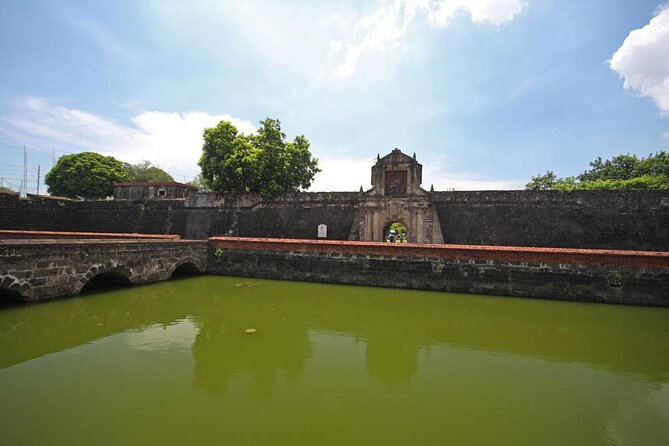
The final two hours are spent in Intramuros, Manila’s old fortified city. This is the tour’s strongest setting for history. The area connects the country’s story from the ninth century through 1946, and its streets still show the shape of an earlier Manila.
World War Two caused heavy damage here, but the district’s surviving and restored character remains visible. The contrast between old walls, rebuilt spaces, and modern city life gives the stop emotional weight without requiring a museum lecture.
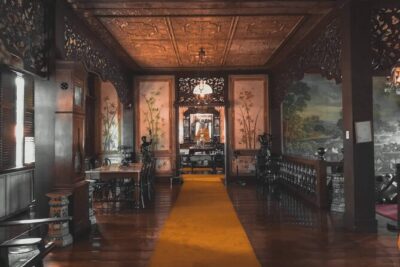
The tour ends at Casa Manila, within the Plaza San Luis complex on General Luna Street. Entrance fees are included, and the guide leads you around the area. The pace appears designed for seeing the district as a whole rather than spending the entire time inside one attraction.
Mike has been praised for explaining Intramuros and its past in an engaging way. George has also been credited with placing Philippine occupation and history into a wider five-hundred-year story. These comments point to the main strength of this stop: the guide helps connect buildings and streets to events, rather than simply naming them.
Intramuros is also where the bike rental makes the most sense. You can cover more ground and see the district from several angles. If you prefer a quiet, slow walk, the cycling portion may feel like a compromise, but it adds energy and saves time.
Why the guides matter so much
A tour like this depends heavily on its guide. Quiapo and Binondo can be hard to read on your own, while Intramuros has enough history to become a blur of dates and names. A good guide links the food, buildings, transport, and local customs into one story.
The named guides connected with this experience include Mike, Fred, George, Erick, Carmen, Eric, and Jen. Their strengths have included explaining food and fruits, discussing Philippine culture, sharing occupation-era history, and finding unusual corners of Manila.
Erick and Carmen have also taken groups through several types of local transport, including a river ferry, tricycle, and jeepney. That is an important detail for anyone who wants more than a conventional walking tour. You can see how Manila moves as well as how it looks.
Guide quality can vary from one departure to another, as it does with any group experience. Still, the repeated praise for clear explanations, humor, and practical recommendations is a good sign. I would book this tour for the guide-led interpretation as much as for the route itself.
Food expectations and what to bring
The included tasting is best understood as a series of shared snacks. It is not advertised as breakfast, lunch, or a private food crawl. You may try Filipino dishes and fruit, with the exact selection depending on the day and the places visited.
This format gives you range. Instead of spending the whole food budget on one dish, you can try several flavors and ask questions as you go. It also means that food quality may vary, and personal taste becomes a bigger factor.
Bring bottled water because it is not included. Soda, coffee, tea, and alcoholic drinks are also excluded. If you want a proper meal afterward, plan for one. The five-hour schedule may include enough food to keep you going, but the tasting should not be treated as a guaranteed full lunch.
The most useful approach is to let the guide explain what you are eating. Food names and ingredients may be unfamiliar, and the cultural context is part of what you are paying for. If you only want Manila’s most famous dishes served in comfortable restaurants, choose a dedicated food tour instead.
Is $62 a fair price?
At $62 per person, this tour costs more than a basic neighborhood walk, but it includes several elements that would be harder to arrange alone. You get a guide, food tastings, transport between areas, entrance fees, and bike rental.
The value is strongest if you want variety in one morning. You see three districts, eat in Binondo, visit Intramuros, and may use several kinds of local transport. Arranging that combination independently would require research, local route knowledge, and separate payments.
The price is less convincing if your priority is food quantity or a private experience. The tasting is shared, the group can reach 18 people, and the itinerary moves at a steady pace. You are paying for access, explanation, and a broad city introduction rather than luxury.
For a first day in Manila, I think the price is reasonable if you want an efficient orientation. It is also useful for anyone staying briefly in the city. If you already know Quiapo, Binondo, and Intramuros well, you may get better value from a focused food tour or a private guide.
Who should book this Manila tour?
I would recommend it to first-time visitors who want to understand Manila beyond the usual landmarks. It suits curious eaters, history-minded visitors, and people who enjoy local transport more than private vans.
It is also a good choice if you have only one free day in Manila. The route covers a lot without becoming a full-day commitment. The end in Intramuros lets you continue sightseeing, take photos, or arrange your next activity nearby.
You should think twice if you dislike shared food, cycling, market crowds, or changing vehicles. Moderate physical fitness is required, and five hours on foot and by bike can feel tiring in Manila’s heat.
The tour can work for families and groups, though the food and street conditions may not suit every child. A maximum of 18 people keeps it from being a massive coach outing, but it is still a group tour rather than a personal itinerary.
Cancellation is free up to 24 hours before the 9:00 a.m. start time. Late cancellations and changes are not refunded, and poor weather or an insufficient number of bookings can lead to a new date or a full refund.
My verdict: book it for the city lesson
Book this tour if you want Manila explained through movement, food, and place. Its best moments are the contrast between Quiapo’s market life, Binondo’s shared dishes, and Intramuros’s wartime past. The added transport and cycling make the day feel more like an encounter with the city than a checklist of sights.
Do not book it expecting a polished food feast or a slow private tour. The tasting can be uneven, and the group format means you will need to adapt. But if you arrive ready to walk, taste, listen, and change vehicles, this is a smart way to get your bearings in Manila while seeing parts of the city you might otherwise miss.
FAQ
How long is the Intramuros and Chinatown Manila tour?
The tour lasts approximately five hours. It starts at 9:00 a.m. and ends at Casa Manila in Intramuros.
Where does the tour start?
The meeting point is Quinta Market, Carlos Palanca, Quiapo, Manila, Metro Manila. The tour starts at 9:00 a.m.
Where does the tour end?
The tour ends at Casa Manila in the Plaza San Luis complex on General Luna Street, Intramuros, Manila.
What places are included?
The route includes Quiapo Market, Binondo Chinatown, and Intramuros. About one hour is allocated to Quiapo, two hours to Binondo, and two hours to Intramuros.
Is food included?
Yes. Snacks and food tastings are included. Bottled water, soda, coffee, tea, and alcoholic beverages are not included.
Is transportation included?
Yes. Transportation to all sites is included, along with bike rental. Some outings have used local transport such as ferries, jeepneys, buses, tricycles, tuk-tuks, and bicycles.
How many people can join the tour?
The maximum group size is 18 people. Group discounts may be available, and mobile tickets are accepted.
More Food in Luzon
- Manila Food Tour: Explore World’s Oldest Chinatown
★ 5.0 · 158 reviews - Manila: Street Food and Drinks Walking Tour with Tastings
★ 4.8 · 114 reviews - The Original Cebu City Historical and Food Walking Tour
★ 4.5 · 81 reviews - Manila: Sightseeing and Food Walking Tour with Tastings
★ 4.7 · 68 reviews
More Food & Drink in Luzon
- Binondo Bites Manila Food Tour with 15+ Tastings
★ 5.0 · 5 reviews - Manila Food Tour Experience with Local Guide
★ 5.0 · 4 reviews - Manila Food Tour: Introduction to Philippine Street Food
★ 5.0 · 417 reviews - Boracay Sunset Cruise with Party DJ & Unlimited Food and Drinks
★ 5.0 · 211 reviews
Just added around Luzon
- Villa Escudero Tour with Lunch From Manila (SHARED)★ 5.0 · 5 reviews
- Private Filipino Cooking Class in the Heart of Manila,Makati City★ 5.0 · 5 reviews
- Villa Escudero Coconut Plantation Day Trip from Manila★ 3.5 · 9 reviews
- VILLA ESCUDERO DAY TOUR with Carabao Cart Ride and Bamboo from Manila★ 4.0 · 6 reviews
- Angeles City / Clark Airport to La Union (Bauang, San Fernando, San Juan)★ 3.5 · 4 reviews
- The Jeepney & Tuk Tuk Adventure ride with Local Guide★ 4.5 · 4 reviews
- Sagada and Banaue Rice Terraces 4-Day Tour★ 5.0 · 4 reviews
- Pagsanjan Falls Adventure with Lunch and Rapids Experience★ 4.5 · 3 reviews
Manila Intramuros Walking Tours, compared.

Intramuros, Manila: Historical Bamboo Bike Tour
Read our review →
Experience Intramuros with Bamboo Bicycle – Ecotours
Read our review →
Intramuros, Chinatown, and Old Manila Half-Day Tour
Read our review →
Manila Old and New: Sightseeing Tour Including Intramuros and Fort Santiago
Read our review →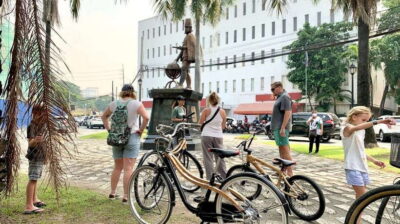
Explore Intramuros: Introduction to Philippine History
Read our review →Browse the lists this tour appears in