Reviewed · MANILA INTRAMUROS WALKING TOURS
Manila: Intramuros and Chinatown Food Tour with Food Samples
Manila’s story makes the most sense when you walk from Fort Santiago to Binondo. This five-hour tour links the walled Spanish district with the Chinese-Filipino food culture across the river, so you get monuments first and a full table of snacks later. I like that the route is not just a string of photo stops: the guide explains how these places connect.
I also like the small group of no more than eight and the short tuk-tuk ride between Intramuros and Chinatown. Guides named Jane and Jayne have been singled out for clear explanations, kindness, and practical help, including waiting with guests for a taxi after the tour. The main drawback is the walking: five hours in Manila heat, plus food stops, can be tiring, and the tour is not suitable for wheelchair users or people with food allergies.
Key points at a glance
- Seven Binondo tastings: Try fried siopao, pork siomai, lumpia, hopia, pansit, egg tart, and buchi, with some items subject to availability.
- Three major Intramuros landmarks: Visit Fort Santiago, Manila Cathedral, and San Agustin Church in one compact route.
- A 20-minute tuk-tuk transfer: Ride from Intramuros to Chinatown while passing Manila streets and landmarks.
- A genuinely small group: The limit of eight makes it easier to hear the guide and ask questions.
- A guide-led cultural link: Learn how Chinese traditions shaped Filipino food and how Binondo became Manila’s Chinese cultural center.
- Useful end point: Finish at Binondo Church, where you can continue exploring or arrange your onward ride.
Why this Manila combination works
Many Manila tours split history and food into separate half-days. This one puts them together. You begin inside Intramuros, where stone gates, churches, and military defenses tell the story of colonial Manila. You finish in Binondo, where the focus shifts to family cooking, snack stalls, and Chinese influence on everyday Filipino food.
That change of mood is the tour’s best feature. You do not spend five hours looking at churches. You also do not rush through Chinatown without context. The first part gives you a framework, and the second part gives you something to taste.
The $80 price is reasonable if you value a guide, Fort Santiago admission, transportation between districts, photography help, and seven tastings. It is less attractive if you only want a quick walk around Intramuros or prefer choosing your own restaurants. The food is included, but the exact seven items can change with availability, so do not book this expecting a fixed restaurant menu.
The tour is listed in Nueva Vizcaya, while the actual route begins in central Manila at Fort Santiago and ends at Binondo Church. Check the final meeting instructions sent after booking, especially if you are staying outside Manila. The stated meeting details are provided within 24 hours of booking.
More Manila Intramuros Walking Tours in Manila
- Intramuros, Manila: Historical Bamboo Bike Tour
★ 4.8 · 583 reviews - Experience Intramuros with Bamboo Bicycle – Ecotours
★ 5.0 · 508 reviews - Manila: Intramuros, Chinatown, and Old Manila Half-Day Tour
★ 4.8 · 475 reviews
Starting at Fort Santiago
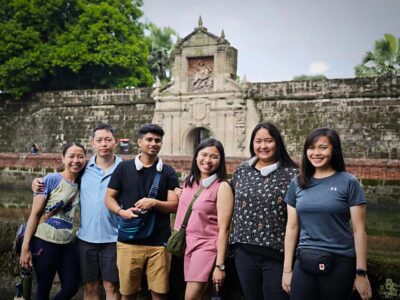
Meet at the Fort Santiago Gate. This is a strong starting point because the fort introduces Manila through power, conflict, and memory rather than through a general city overview.
You spend about an hour walking around Fort Santiago. The preserved ruins and defensive setting provide plenty of picture opportunities, but the value is in the guide’s explanation of the site’s colonial role and its connection to José Rizal, the Philippine national hero.
Give yourself room for a careful look rather than treating the fort as a quick entrance fee stop. The tour includes admission, and the guide can help place the remaining structures in context. Photography assistance is also included, useful if you want a group photo or help framing the old stonework.
Wear shoes with good grip. You are walking outdoors, and comfortable footwear matters more here than dressing up for photographs. Bring water, sunscreen, and a camera. Flash photography is not allowed, so use natural light.
Manila Cathedral and the walk through Intramuros
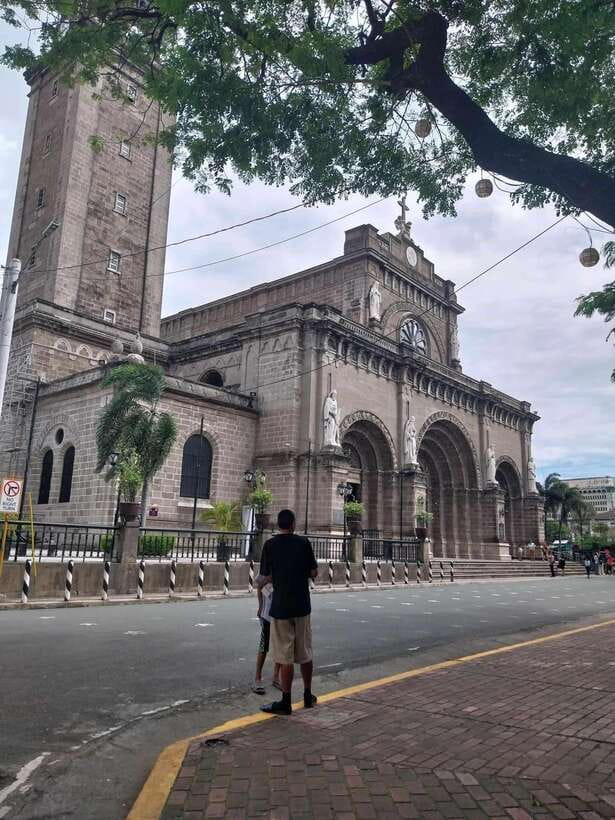
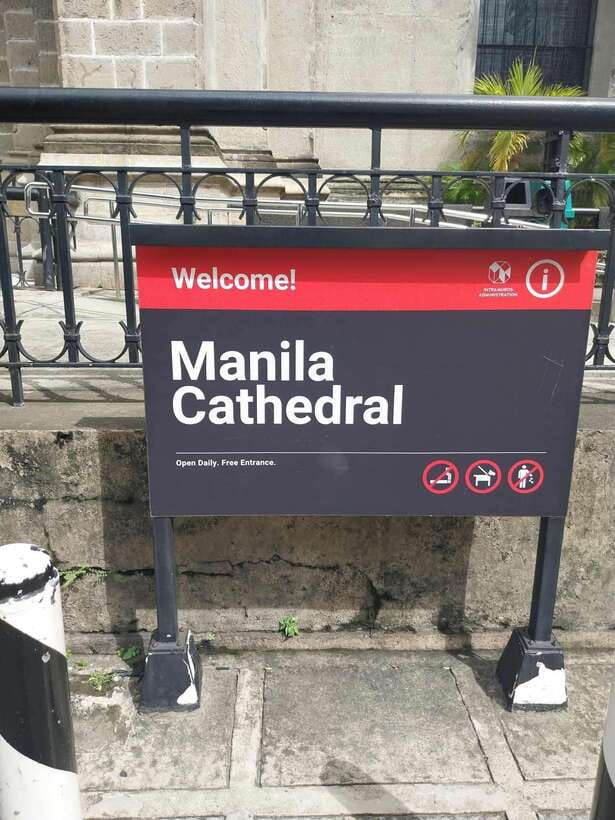
From Fort Santiago, you walk about 20 minutes to Manila Cathedral. This section is short enough to be manageable, but it adds street-level context between the major stops.
Manila Cathedral has survived repeated natural disasters and long changes in the city’s past. Your guide explains why it remains both a religious center and an important public symbol. The building gives you a different view of Intramuros from Fort Santiago: the fort represents defense and political control, while the cathedral reflects the lasting role of Catholic institutions in Manila.
The walk itself is part of the point. You are not being driven from one isolated sight to another. You move through the district at a human pace, with time to notice the old walls, roads, and changing city around them.
San Agustin Church, the old stone survivor
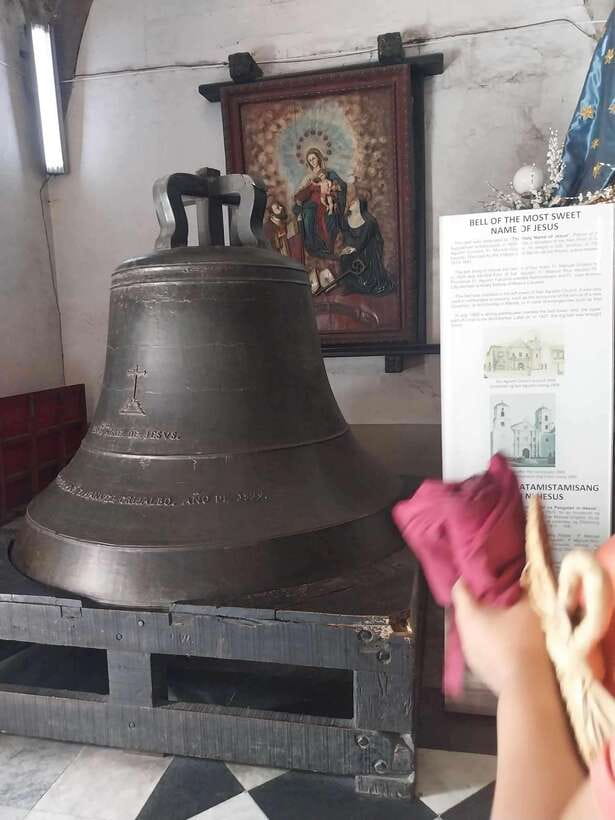
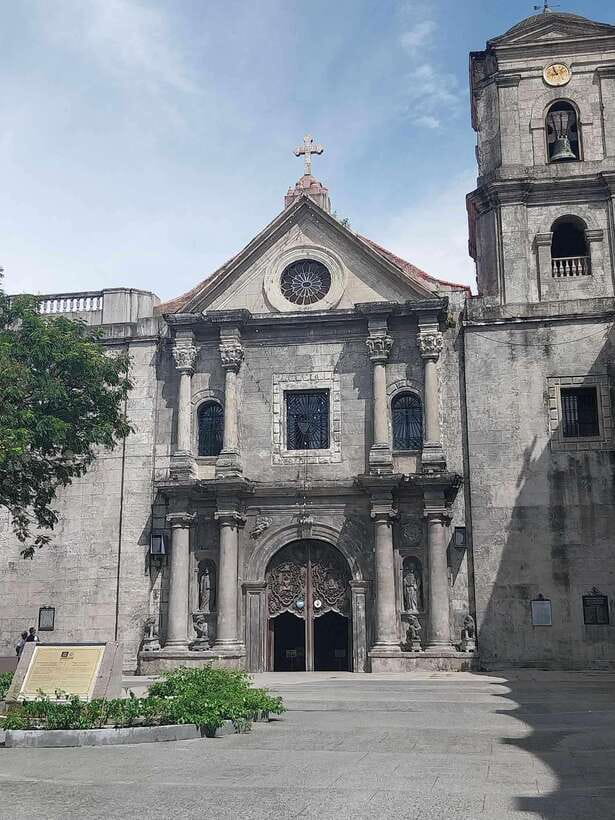
Another 20-minute walk brings you to San Agustin Church. It is the oldest stone church in the Philippines and a UNESCO World Heritage Site, known for its baroque design.
This is one of the tour’s most important stops. San Agustin gives you a chance to see a building that has endured when other structures did not. Listen for the details about its age, design, and place in Intramuros rather than only looking for a quick photograph.
The church also helps complete the historical sequence. Fort Santiago shows military authority, Manila Cathedral shows an ongoing religious center, and San Agustin shows the endurance of early stone construction. A guide makes these links easier to grasp than a solo walk with only a map.
The first three stops are not physically extreme, but the tour is still a walking experience. Manila can be hot, and the pavement may make the distance feel longer than it looks on paper. Bring water and plan your clothing for movement and heat.
More Manila Street Food Tours in Manila
- Manila Food Tour: Introduction to Philippine Street Food
★ 5.0 · 417 reviews - Manila Food Tour: Explore World’s Oldest Chinatown
★ 5.0 · 158 reviews - Manila: Street Food and Drinks Walking Tour with Tastings
★ 4.8 · 114 reviews - Manila: Guided Food Tour of Binondo with Tastings
★ 4.8 · 38 reviews
The tuk-tuk ride to Chinatown
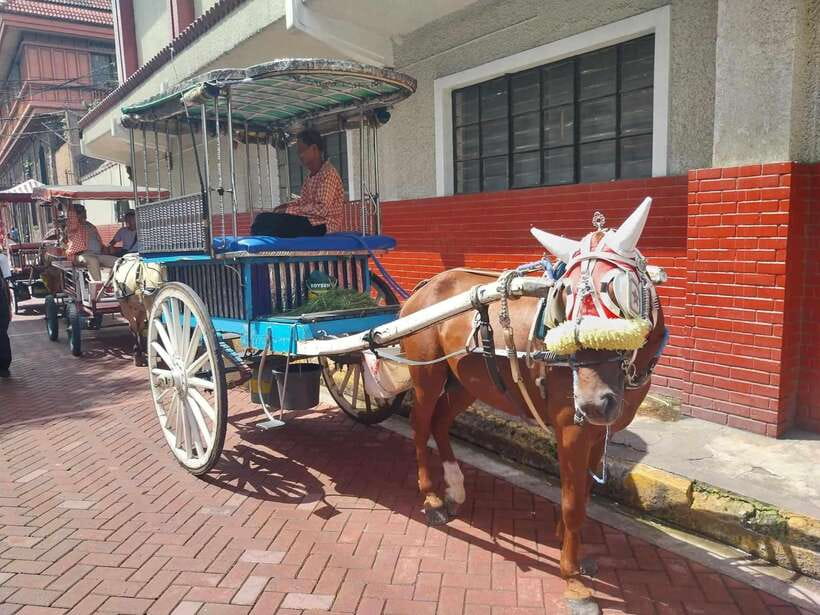
After Intramuros, you take a tuk-tuk for about 20 minutes to Binondo. This is not a long sightseeing drive, but it breaks up the walking and gives the tour a change of pace.
The ride passes by city landmarks, old roads, and the meeting point between Manila’s historic center and its modern streets. A tuk-tuk is more open and informal than a standard vehicle, so you get a breezier view of the city as you go. The ride is also practical: it saves your feet before the food portion, which lasts about three hours.
Do not expect the tuk-tuk to replace a full city drive. Its role is to connect the two districts in a memorable way. The vehicle is part transportation and part experience, while the guide continues to help you understand how the city changes from one neighborhood to the next.
Seven tastes in Binondo
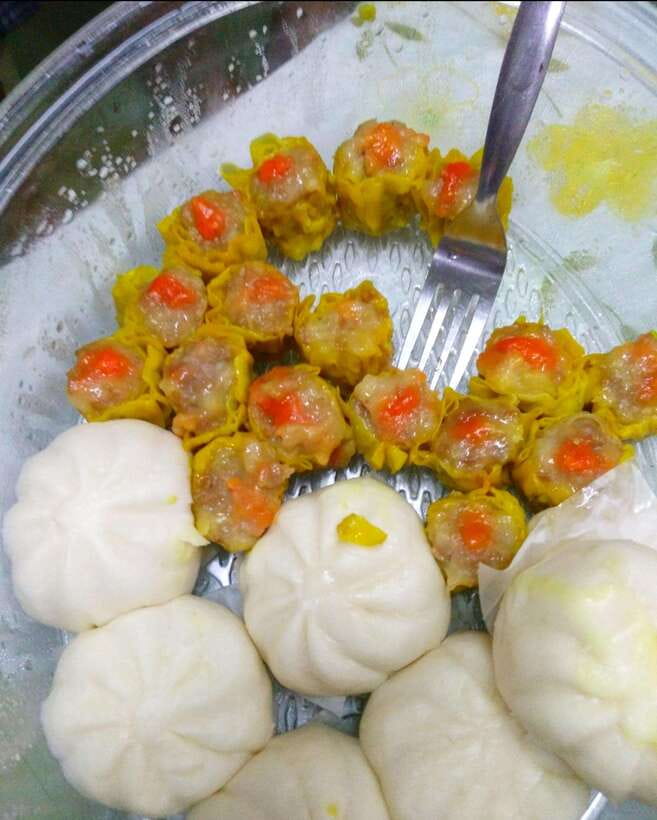
Binondo is known as the world’s oldest Chinatown, and the food section is where the tour becomes most hands-on. You taste at least seven Chinese delicacies, with the final selection depending on what is available.
The expected range includes:
- Fried siopao
- Pork siomai
- Lumpia
- Hopia with mung bean pastry filling
- Pansit
- Egg tart
- Buchi
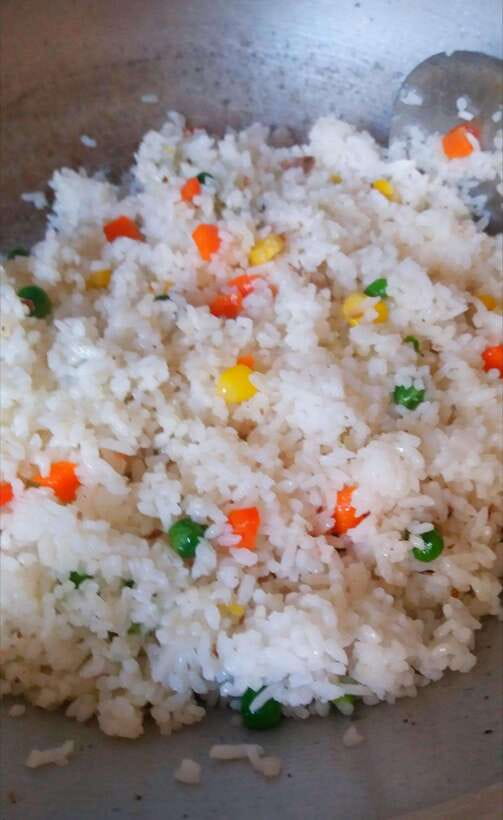
This is a useful selection because it covers several kinds of food: steamed or fried dough, dumplings, spring rolls, noodles, pastry, and a sweet rice-based bite. You are not simply eating the same dish seven times in different forms.
The guide explains how Chinese culture influenced Filipino cuisine and how Binondo developed into an important cultural center. That explanation matters. A plate of lumpia tells you more when you understand how Chinese cooking traditions became part of Filipino daily food, rather than treating every dish as a separate snack.
The three-hour food section does not mean three hours of nonstop eating. It allows time to move through the area, stop at food places, hear the stories, and eat at a comfortable pace. One practical point: the food can add up. If you usually eat lightly, you may want to pace yourself at the first few stops. Some food may also be offered after the main tastings, so save a little room.
People with food allergies should not book this experience. The tour specifically lists food allergies as a reason it may not be suitable, and the food selection can vary. Dietary restrictions should be shared in advance, but you should not assume every request can be accommodated.
Finishing at Binondo Church
The tour ends at the Minor Basilica and National Shrine of Saint Lorenzo Ruiz, commonly called Binondo Church. This is a fitting finish because the church sits within the same Chinese-Filipino district that supplied the final food portion.
Ending here gives you a quiet place to pause after the tasting walk. It also leaves you in a useful part of Manila, with the option to continue your own exploration or arrange a taxi. The guide may be able to help with practical directions, but your onward plans remain your responsibility.
The end point is different from the starting point, so do not leave a car, hotel shuttle, or other transport waiting at Fort Santiago. Plan your day around finishing in Binondo.
The guide makes the difference
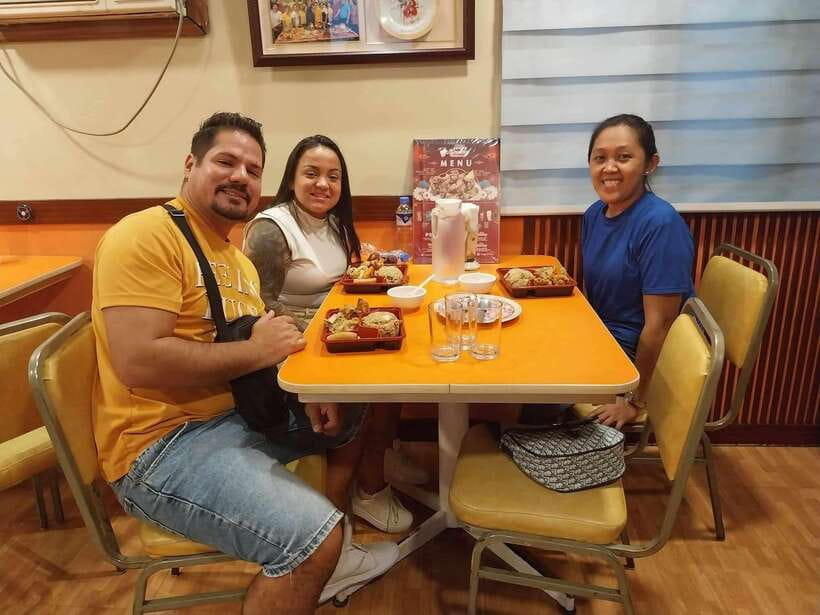
The tour is built around a live English or Tagalog guide, and that person will shape the experience more than any single monument. Jane has guided guests through both Intramuros and Chinatown, while another guide is referred to as Jayne. If one of them leads your group, you can expect a friendly and attentive approach based on the feedback attached to this experience.
The strongest praise centers on clear explanations, personal attention, and practical help. One guide kept a parent and adult child interested throughout the walk, while another helped guests find their way after the tour and checked that they reached their taxi safely. One couple also appreciated feeling secure during the experience.
That matters in Manila, where a good guide can make the difference between seeing old buildings and understanding the city around them. A small group helps here. With a maximum of eight people, you should have a better chance of hearing the commentary, asking about dishes, and getting help with photographs.
Do remember that guide assignments can vary. The information provided names Jane and Jayne in connection with the experience, but it does not guarantee a particular guide for every date.
Is $80 good value?
At $80 per person, this is not the cheapest way to walk around Intramuros. You could see some Manila landmarks independently for less, especially if you skip admission, transport, and organized tastings.
The price makes more sense when you use the whole package:
- A five-hour guided route
- Fort Santiago admission
- Three major heritage stops
- A 20-minute tuk-tuk ride
- Seven food tastings
- Photography assistance
- A small group capped at eight
Food in Binondo can be inexpensive when bought on your own, but ordering seven different items without knowing where to go takes time and planning. The guide also handles the cultural explanation and route between districts. For a first day in Manila, that convenience has real value.
I would not choose this tour if your main goal is a long, leisurely church visit or a serious restaurant meal. It is a sampler and introduction, not a culinary class or a private heritage tour. You trade some independence for a prepared route and a steady flow of information.
Who will enjoy this five-hour walk?
I would recommend it to first-time Manila visitors who want a clear introduction to two important districts. It is also a good choice for people who like food tours but want more than snacks, and for families or mixed-age groups who benefit from a guide keeping the day moving.
The tour suits you if you enjoy:
- Walking between major sights
- Trying several small portions instead of one large meal
- Hearing stories about Filipino and Chinese cultural links
- Traveling in a small group
- Having a guide help with photographs and local orientation
It may not suit you if you have limited mobility, dislike heat, avoid many common ingredients, or want to set your own pace. Smoking is not allowed, and flash photography is prohibited.
You should also allow enough energy for the full five hours. The route includes one hour at Fort Santiago, two separate 20-minute walks, the tuk-tuk ride, and a long food-focused section. Comfortable clothing and footwear are essential, not optional extras.
Booking flexibility and practical details
You can cancel up to 24 hours before the tour for a full refund, and the reserve-now, pay-later option keeps your plans flexible. Availability and starting times need to be checked for your chosen date.
The tour starts at the Fort Santiago Gate and ends at Binondo Church. Final meeting details are advised within 24 hours after booking, so check your messages before setting out. Bring water, sunscreen, comfortable shoes, and a camera. Tell the operator about allergies or dietary restrictions in advance, while keeping in mind that the tour is specifically not suitable for people with food allergies.
Should you book it?
Book this tour if you want Manila explained through both its monuments and its food. The pairing of Fort Santiago, Manila Cathedral, San Agustin Church, and Binondo gives you a useful sense of how the city’s colonial, religious, Filipino, and Chinese influences meet.
The strongest reasons to choose it are the small group, the tuk-tuk transfer, and the seven tastings. The clearest caution is the walking and the food restrictions. If those fit your needs, $80 buys a well-shaped introduction to Manila rather than a simple sightseeing loop.
FAQ
Where does the tour start?
It starts at the Fort Santiago Gate in Intramuros, Manila.
Where does the tour end?
It ends at the Minor Basilica and National Shrine of Saint Lorenzo Ruiz, also known as Binondo Church.
How long does the experience last?
The tour lasts five hours.
How many people are in the group?
The group is limited to eight participants.
What languages are available?
The live guide speaks English or Tagalog.
What food is included?
The tour includes seven Chinatown tastings. Possible items include fried siopao, pork siomai, lumpia, hopia, pansit, egg tart, and buchi. The selection depends on availability.
Is transportation included?
Yes. A tuk-tuk ride from Intramuros to Chinatown is included and lasts about 20 minutes.
Is the tour suitable for wheelchair users or people with food allergies?
No. The experience is listed as unsuitable for wheelchair users and people with food allergies. You should share dietary restrictions in advance.
More Food in Manila
- ⭐ Manila Street Food Tour in the Downtown, Eat and Drink⭐
★ 4.6 · 19 reviews - Makati: Street Food Experience with a Local Guide
★ 4.6 · 14 reviews - Skip the Line: Hike Eat Swim at Mount Purro Nature Reserve Ticket
★ 5.0 · 13 reviews - Makati Street food Tour, End with a Rooftop City View
★ 4.7 · 9 reviews
More Food & Drink in Manila
- Manila: Sightseeing and Food Walking Tour with Tastings
★ 4.7 · 68 reviews - Manila’s Culinary Expedition: The Ultimate Food and Market Tour
★ 5.0 · 42 reviews - Manila Street food and Night Market Tour
★ 4.7 · 21 reviews - Makati Street Food Tour Experience
★ 5.0 · 20 reviews
Just added around Manila
- Underground River with Lunch★ 3.6 · 5 reviews
- Private Tour: Tagaytay Midlands & Taal Volcano Boat Ride★ 4.5 · 15 reviews
- 3 Days Private Tour in Banaue Ifugao visiting Batad Rice Terraces★ 3.5 · 3 reviews
- Tagaytay Adventure: Volcano Views, Countryside, Market & Cruise!★ 4.5 · 14 reviews
- Tagaytay + Hidden Valley Springs: A Scenic Escape w/ Transfers★ 4.0 · 4 reviews
- Tagaytay Day Tour sightseeing with Panoramic Taal volcano view★ 5.0 · 6 reviews
- Unforgettable Manila Fishing Village Day Excursion 2024★ 5.0 · 4 reviews
- Cultural Dinner and Show in Manila★ 5.0 · 4 reviews
Manila Intramuros Walking Tours, compared.

Intramuros, Manila: Historical Bamboo Bike Tour
Read our review →
Experience Intramuros with Bamboo Bicycle – Ecotours
Read our review →
Intramuros, Chinatown, and Old Manila Half-Day Tour
Read our review →
Manila Old and New: Sightseeing Tour Including Intramuros and Fort Santiago
Read our review →