
Reviewed · MANILA STREET FOOD TOURS
The Oldest Chinatown in Manila with Local Guide
Manila’s old Chinatown is best understood on foot, with a guide who knows which food stalls matter and how the streets fit together. This tour puts Venus beside you in Binondo, where Chinese traditions, Filipino flavors, temples, shops, and city traffic share the same tight urban space.
I like the chance to sample Chinese-Filipino food instead of simply looking at landmarks, and I like that the outing can include a jeepney and tricycle ride. The main thing to consider is the short two-hour schedule: with Binondo and Divisoria both included, the pace may feel brisk.
Key points to know before booking
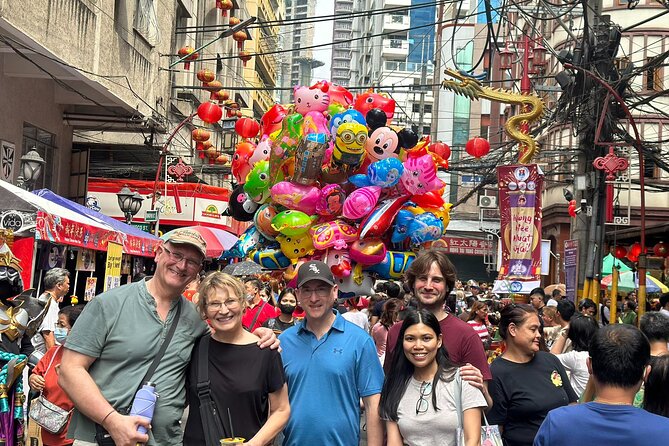
- Venus leads the walk: Her personal style includes food stops, local transport, and suggestions for bars and nightlife.
- Binondo is the main cultural stop: You’ll see Chinese shops, food stalls, temples, and streets shaped by both Chinese and Filipino life.
- Divisoria adds bargain shopping: Clothing, accessories, home goods, and electronics are part of this busy market stop.
- The transport is part of the fun: Past outings have included two tricycles, a jeepney, and other local rides.
- The group is capped at 10: That is a useful size for a food walk through crowded streets.
- Plan for a quick introduction: The tour lasts about two hours and ends near SM Manila, not back at the starting point.
Binondo: Manila’s Chinatown in close-up
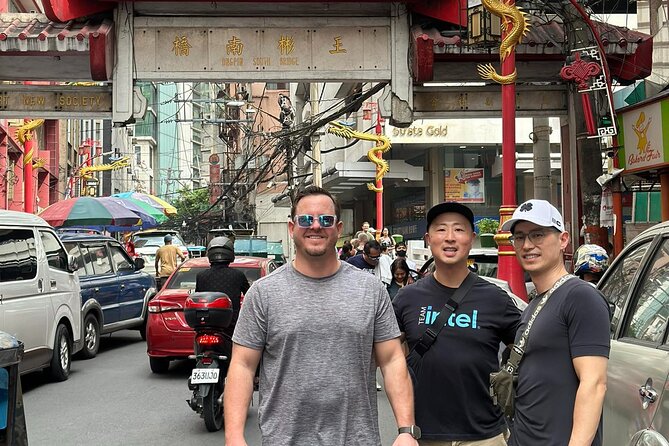
Binondo is the heart of this experience. It is one of the oldest Chinatowns in the world, and its appeal comes from daily life rather than a single grand attraction. You move through streets where Chinese restaurants, traditional shops, markets, temples, and Filipino city traffic sit side by side.
That mix is what makes the district worth your time. You are not seeing a preserved historic quarter that has been tidied for visitors. You are seeing a working part of Manila, with commerce, faith, food, and transport all packed into the same streets.
Venus guides the walk, helping you make sense of the Chinese and Filipino influences that shaped the area. That matters here because the food and culture are not neatly divided. Chinese cooking traditions have changed over generations in the Philippines, creating a local style that is best understood through actual dishes and neighborhood businesses.
The walk is listed as free admission at the stop, but the tour price is $55 per person. That price is paying for the guide’s time, route planning, and local knowledge, not simply entry to Binondo. You should also confirm what food and transport costs are included before booking, since the available details do not spell that out.
More Manila Street Food Tours in Luzon:
- Manila: Intramuros, Chinatown, and Old Manila Half-Day Tour
★ 5.0 · 37 reviews - Makati Street Food Experience end with a Rooftop Bar
★ 5.0 · 33 reviews - Intramuros & Chinatown Manila Tour – Walking, Food & Culture
★ 4.5 · 32 reviews
Food is the main reason to choose this walk
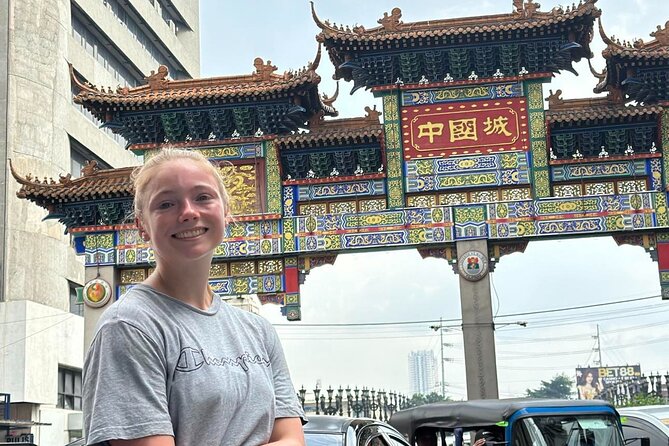
The strongest feature is the food. Venus takes you to selected stalls and eateries rather than leaving you to guess which places are worth your limited time. That can make a big difference in Binondo, where the choice is wide and the streets can feel confusing at first.
The food focus also gives the tour more depth. Instead of treating Chinatown as a collection of photo stops, you get to taste how Chinese and Filipino cooking have developed together. The menu is described as a broad selection of Filipino food and Chinese-Filipino flavors, with enough food to make the outing feel like more than a sample or two.
I would approach this as a tasting walk, not a formal restaurant meal. The available information does not name every dish or promise a fixed menu, so your exact stops may depend on the day, the stalls that are open, and Venus’s choices. That flexibility is useful in a market district, though diners with strict dietary needs should ask ahead.
The food has a personal angle, too. Venus has been praised for taking one guest back to childhood through the places and flavors she chose. That suggests a guide who treats food as part of local memory, not just fuel between sightseeing stops.
Getting around by jeepney and tricycle
The local transport is a memorable part of the outing. Previous tours with Venus have included two tricycle rides and a jeepney, along with other forms of local transportation. The descriptions also refer to tuk-tuks, which may be another way guests describe the tricycles used during the trip.
A jeepney ride gives you a quick look at one of Manila’s most recognizable forms of public transport. A tricycle offers a different experience, closer to the street and more tightly linked to short local trips. These rides help you see Manila as residents use it, rather than from behind the window of a private vehicle.
Still, do not book this expecting a dedicated sightseeing vehicle. The transport is part of getting around and part of the local experience. It may also mean a little more noise, crowding, and uncertainty than a private car.
For me, that is a good trade if you want to understand the city beyond its major sights. The ride is not only a transfer from one point to another. It helps connect the food, markets, and streets into one real city experience.
Divisoria adds shopping and a sharper edge
The second listed stop is Divisoria Market, a major bargain-shopping area in Manila. You might find clothing, accessories, home decor, electronics, and other everyday goods at low prices. The appeal is the chance to see where people shop for deals, rather than visiting a polished retail center.
Divisoria changes the feel of the tour. Binondo centers on Chinese-Filipino food and heritage, while Divisoria brings in the practical side of Manila commerce. Together, the stops show two connected parts of the city: food and tradition in one area, low-cost trade and shopping in another.
This is not the place for a calm browsing session. The market is known for crowds and fast-moving street life, so keep your belongings secure and stay close to the group. The supplied details do not promise a specific shopping allowance or a list of stores, so think of Divisoria as a guided introduction rather than a dedicated shopping tour.
You may also find the one-hour allocation a little short if you want to shop seriously. The benefit is that the guide can steer you through the area without letting shopping take over the whole experience.
A few more Luzon trips to weigh up
- Batad Guided Tour
★ 5.0 · 78 reviews - The Hidden Gems of Manila Guided Tour
★ 5.0 · 42 reviews - Manila Intramuros Walking tour with Local Tour Guide
★ 5.0 · 33 reviews - Manila Hidden Gems with local guide
★ 5.0 · 27 reviews
A two-hour schedule requires realistic expectations
The tour lasts about two hours, with roughly one hour assigned to Binondo and one hour to Divisoria. That is enough for a lively introduction, some tastings, local transport, and a look at the market. It is not enough for a slow, detailed examination of every temple, street, restaurant, or shopping lane.
I would book this early in your Manila stay if you can. The tour gives you useful orientation, introduces local food, and shows you how Binondo and Divisoria connect. You can then return to the places that caught your attention, eat more slowly, or shop with a better sense of direction.
The compact schedule also suits you if you have a long layover, a free afternoon, or only a short stay in Manila. The meeting point is in Tondo, Manila, and the tour ends at the Samsung Experience Store on the third floor of SM City Manila, near Manila City Hall in Ermita. Since the start and finish are different, allow time to continue your plans from SM Manila.
The end point is practical, but it is not beside the starting point. Check the route before you book and make sure you are comfortable arranging your next journey from the SM Manila area.
Why a small group helps in Chinatown
The maximum group size is 10 people. That is not a private tour, but it is small enough for Venus to keep the group together in crowded lanes and food areas.
A small group is especially useful when you have questions about ingredients, neighborhood customs, or the best way to reach the next stop. It also makes shared food decisions easier than on a large coach tour.
The group size does not guarantee a quiet outing. Binondo and Divisoria are active city districts, and the streets themselves create the noise and movement. The advantage is that you can stay connected to the guide without being part of a large crowd.
Most people can participate, and the tour is near public transportation. Specific accessibility details are not provided, so you should contact the provider if you need information about walking surfaces, steps, or vehicle access.
What makes Venus an important part of the experience
The route matters, but Venus appears to be the real reason to choose this tour instead of exploring alone. Her role goes beyond pointing out a restaurant. She explains how the local culture and cuisine changed over time, then brings that story to life through food and transport.
She also offers practical Manila suggestions. After the food walk, she has recommended bars and nightclubs, and the provider also offers other Manila outings, including an Intramuros history tour and a night market tour. Those suggestions can help you shape the rest of your stay, though they are not part of this two-hour Chinatown tour.
The feedback about Venus is consistently strong, especially around food, care, and fun. One outing included a wide range of Filipino food and plenty of it. Another highlighted the rides in tricycles and a jeepney, while a separate experience praised the feel of life on Chinatown’s streets.
That tells me to expect an informal, social tour rather than a lecture. If you want a guide who can connect food, transport, and everyday Manila, Venus is a strong match. If you want a formal architectural tour with a long list of dates and buildings, you may want a different experience.
Is $55 a fair price?
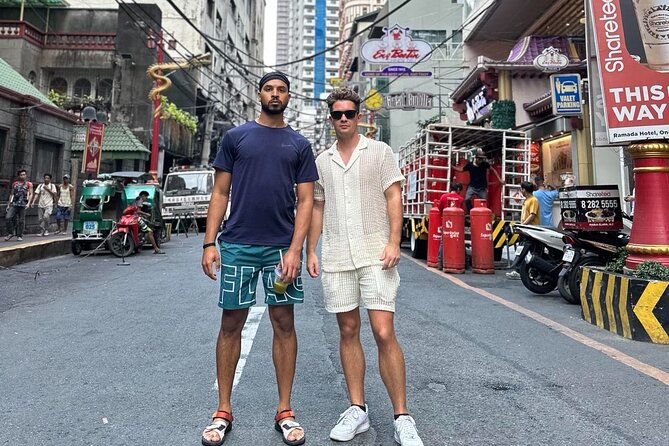
At $55 per person, this is not the cheapest way to walk around Binondo. You could enter the district on your own without paying an admission fee, and you could choose your own food and transport.
The value comes from having Venus select the stops, explain the Chinese-Filipino connection, manage the route, and help you move through two busy areas in a short time. The local rides and food tastings can also add value, but you should verify which costs are covered in the price.
I see the tour as better value for a first visit than for someone who already knows Binondo well. A repeat visitor who enjoys independent food hunting may prefer to spend $55 directly on meals, shopping, and transport. A first-time visitor with limited time may find the guide’s route and local judgment worth the cost.
The small group cap helps support that value. You are not paying for a large sightseeing operation. You are paying for a short, guided introduction led by a local person who can make quick choices in a complicated district.
Who should book this Chinatown experience?
I would recommend it to you if you want food to lead the sightseeing. It is also a good choice if you are curious about jeepneys, tricycles, markets, and ordinary city movement, rather than only Manila’s famous historic buildings.
It suits solo visitors and couples who want a friendly, guided start to Manila. Families may appreciate the short duration, though the crowded streets and market setting require close attention to children.
Food lovers should ask about the tasting details before booking, especially if you have allergies, dietary restrictions, or a strong preference for particular dishes. The exact food list is not fixed in the information provided.
This tour is less suitable if you want a slow pace, a private group, or a long historical lecture. The two-hour schedule covers a lot, so you should expect movement and variety rather than extended time at each location.
Practical details before you go
You receive confirmation when you book, and the experience uses a mobile ticket. The tour is available to most participants and is close to public transportation.
The starting point is in Tondo, Manila. The finishing point is the Samsung Experience Store on the third floor of SM City Manila, on San Marcelino Street near Manila City Hall. Because you finish in a different district from where you begin, plan your onward route in advance.
The experience can be canceled for a full refund if you cancel at least 24 hours before the start time. Cancellations or changes made within 24 hours are not refunded or accepted, and the cut-off follows local Manila time.
The tour is often booked well ahead, with an average booking lead time of about 63 days. That does not mean every date sells out, but it is a good reason to reserve early if your schedule is fixed.
Should you book the Binondo and Divisoria tour?
Book it if you want a quick, food-centered introduction to Manila led by Venus, with local transport and a market stop folded into the route. The best parts are the selected food stalls, the Chinese-Filipino context, and the chance to ride a jeepney or tricycle instead of simply walking from one landmark to another.
Skip it if you want a full-day exploration, a private vehicle, or a detailed tour of every historic site in Binondo. At two hours, this is a lively first look, not the final word on Manila’s Chinatown.
For most first-time visitors, I would place it near the beginning of a Manila stay. It can give you a taste of the city, a few useful food leads, and a better feel for where to return on your own.
FAQ
How long does the tour last?
The tour lasts approximately two hours.
Where does the tour start?
The starting point is in Tondo, Manila, in Metro Manila, Philippines.
Where does the tour end?
The tour ends at the Samsung Experience Store on the third floor of SM City Manila, near Manila City Hall.
How many people can join the tour?
The tour accepts a maximum of 10 travelers.
Is the tour available with a mobile ticket?
Yes. A mobile ticket is available, and confirmation is received when you book.
Does the tour visit both Binondo and Divisoria Market?
Yes. The listed route includes Binondo Chinatown and Divisoria Market, with about one hour assigned to each stop.
What is the cancellation policy?
You can receive a full refund if you cancel at least 24 hours before the experience start time. Cancellations and changes made less than 24 hours before the start time are not accepted, and the amount paid is not refunded.
Just added around Luzon
- Villa Escudero Tour with Lunch From Manila (SHARED)★ 5.0 · 5 reviews
- Private Filipino Cooking Class in the Heart of Manila,Makati City★ 5.0 · 5 reviews
- Villa Escudero Coconut Plantation Day Trip from Manila★ 3.5 · 9 reviews
- VILLA ESCUDERO DAY TOUR with Carabao Cart Ride and Bamboo from Manila★ 4.0 · 6 reviews
- Angeles City / Clark Airport to La Union (Bauang, San Fernando, San Juan)★ 3.5 · 4 reviews
- The Jeepney & Tuk Tuk Adventure ride with Local Guide★ 4.5 · 4 reviews
- Sagada and Banaue Rice Terraces 4-Day Tour★ 5.0 · 4 reviews
- Pagsanjan Falls Adventure with Lunch and Rapids Experience★ 4.5 · 3 reviews
Manila Street Food Tours, compared.

Intramuros, Chinatown, and Old Manila Half-Day Tour
Read our review →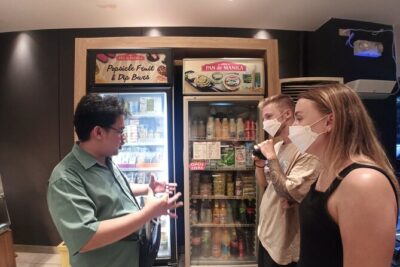
Manila Food Tour: Introduction to Philippine Street Food
Read our review →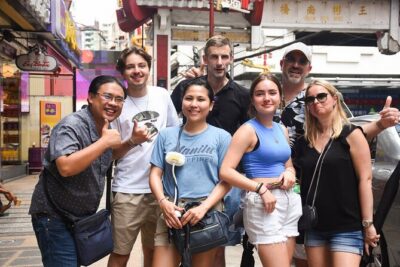
Manila Food Tour: Explore World’s Oldest Chinatown
Read our review →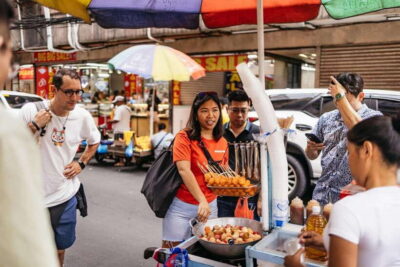
Street Food and Drinks Walking Tour with Tastings
Read our review →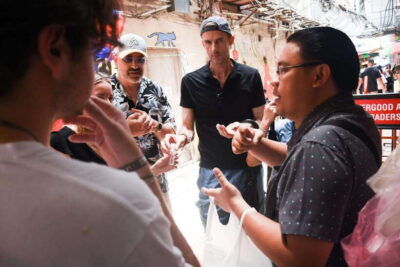
Intramuros, Chinatown, and Old Manila Half-Day Tour
Read our review →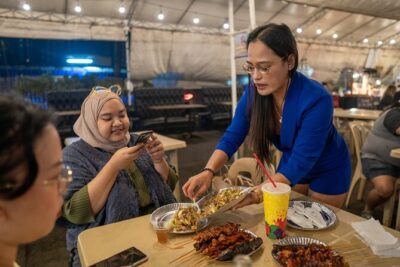
Makati Street Food Experience end with a Rooftop Bar
Read our review →
Intramuros & Chinatown Manila Tour – Walking, Food & Culture
Read our review →Browse the lists this tour appears in